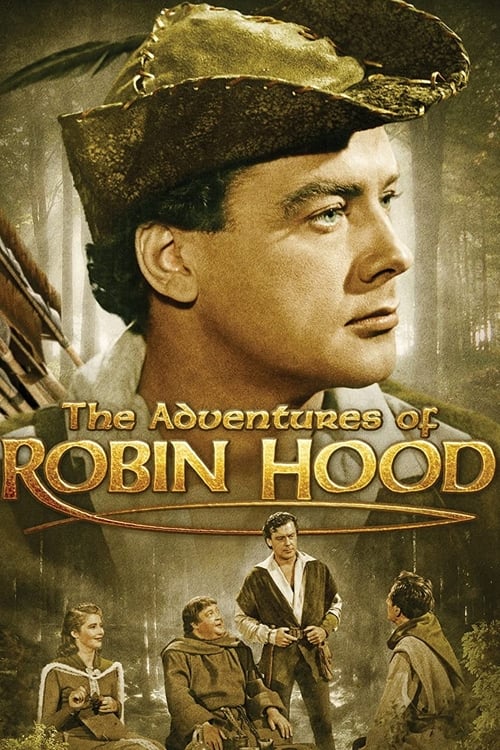
 The Adventures of Robin Hood1955–1960 · TV SeriesDirector
TV Person
Compton Bennett
Director
Born Jan 15, 1900 Died Aug 13, 1974 Turnbridge Wells, Kent, U.K. 1 database credit
Herbert William Compton Bennett (15 January 1900 – 11 August 1974), better known as Compton Bennett, was an English film director, writer and producer. He is perhaps best known for directing the 1945 film The Seventh Veil and the 1950 version of the film King Solomon's Mines, an adaptation of an Allan Quatermain story. Bennett was born in Tunbridge Wells, England. At the beginning of his career, he worked as a band leader and a commercial artist before trying his hand at amateur filmmaking. One of these early films helped him land a job at Alexander Korda's London Films in 1932. There, he became a film editor; later he would help make instructional and propaganda films for the British armed forces during World War II. Bennett's films tended to be sombre, but were very popular with the moviegoing public. In 1946, Bennett accepted an invitation to go to Hollywood for Universal. It was, however, during this time that he directed King Solomon's Mines. He was replaced during filming by Andrew Marton. Bennett eventually returned to the UK. From 1954 to 1957, he left film work to pursue interests in the theatre and television, but produced four films in 1957, After the Ball, Man-Eater, That Woman Opposite and The Flying Scot. Although he continued to write and direct for film and television, his subsequent productions were not as well received.
Support in Rankings
Improve this page
About Compton Bennett
Biography and verified database information.
Herbert William Compton Bennett (15 January 1900 – 11 August 1974), better known as Compton Bennett, was an English film director, writer and producer. He is perhaps best known for directing the 1945 film The Seventh Veil and the 1950 version of the film King Solomon's Mines, an adaptation of an Allan Quatermain story.
Bennett was born in Tunbridge Wells, England. At the beginning of his career, he worked as a band leader…
Read full biography
Herbert William Compton Bennett (15 January 1900 – 11 August 1974), better known as Compton Bennett, was an English film director, writer and producer. He is perhaps best known for directing the 1945 film The Seventh Veil and the 1950 version of the film King Solomon's Mines, an adaptation of an Allan Quatermain story.
Bennett was born in Tunbridge Wells, England. At the beginning of his career, he worked as a band leader and a commercial artist before trying his hand at amateur filmmaking. One of these early films helped him land a job at Alexander Korda's London Films in 1932. There, he became a film editor; later he would help make instructional and propaganda films for the British armed forces during World War II.
Bennett's films tended to be sombre, but were very popular with the moviegoing public. In 1946, Bennett accepted an invitation to go to Hollywood for Universal.
It was, however, during this time that he directed King Solomon's Mines. He was replaced during filming by Andrew Marton.
Bennett eventually returned to the UK. From 1954 to 1957, he left film work to pursue interests in the theatre and television, but produced four films in 1957, After the Ball, Man-Eater, That Woman Opposite and The Flying Scot. Although he continued to write and direct for film and television, his subsequent productions were not as well received.
- Full name
- Compton Bennett
- Also known as
- Bob Compton-Bennett
- Birthday
- Jan 15, 1900
- Death date
- Aug 13, 1974
- Birthplace
- Turnbridge Wells, Kent, U.K.
- Occupation
- Director
TV Shows & Filmography
1 unique database title.
The Adventures of Robin Hood1955–1960 · TV SeriesDirectorPhotos
Database media gallery.
▧No additional gallery photos
The database currently contains only the primary portrait, so it is not duplicated here.
Discussions
Community posts linked directly to Compton Bennett.
Sign in to start or join the discussion.Login to Discuss
No discussions are linked to this person yet.
More Information
External references and contribution tools.
Contribute
Suggest sourced corrections to biography, personal facts, external IDs, or the primary photo.
Improve this page →