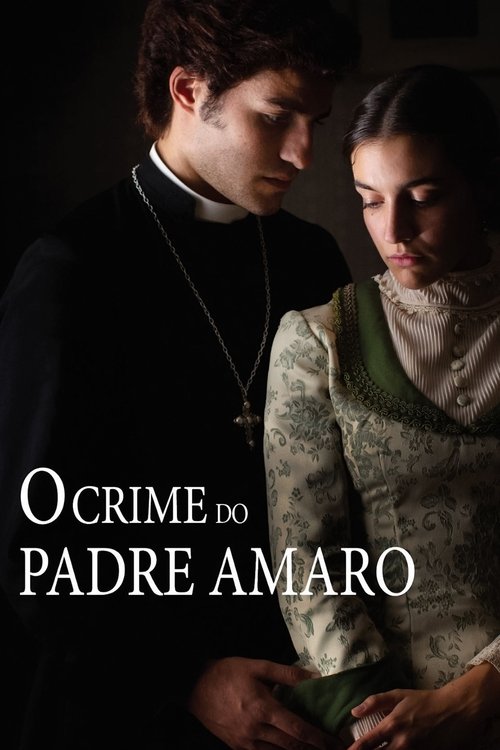
 The Crime of Father Amaro2023 · TV SeriesNovel
E
TV Person
Eça de Queirós
Novel
Born Nov 25, 1845 Died Aug 16, 1900 Póvoa de Varzim, Porto, Portugal 2 database credits
Novelist committed to social reform who introduced Naturalism and Realism to Portugal. He is often considered to be the greatest Portuguese novelist, certainly the leading 19th-century Portuguese novelist whose fame was international. The son of a prominent magistrate, Eça de Queiroz spent his early years with relatives and was sent to boarding school at the age of five. After receiving his degree in law in 1866 from the University of Coimbra, where he read widely French, he settled in Lisbon. There his father, who had since married Eça de Queiroz' mother, made up for past neglect by helping the young man make a start in the legal profession. Eça de Queiroz' real interest lay in literature, however, and soon his short stories - ironic, fantastic, macabre, and often gratuitously shocking - and essays on a wide variety of subjects began to appear in the "Gazeta de Portugal". By 1871 he had become closely associated with a group of rebellious Portuguese intellectuals committed to social and artistic reform and known as the Generation of '70. Eça de Queiroz gave one of a series of lectures sponsored by the group in which he denounced contemporary Portuguese literature as unoriginal and hypocritical. He served as consul, first in Havana (1872-74), then in England, UK - in Newcastle upon Tyne (1874-79) and in Bristol (1879-88). During this time he wrote the novels for which he is best remembered, attempting to bring about social reform in Portugal through literature by exposing what he held to be the evils and the absurdities of the traditional order. His first novel, "O crime do Padre Amaro" (1875; "The Sin of Father Amaro", 1962), describes the destructive effects of celibacy on a priest of weak character and the dangers of fanaticism in a provincial Portuguese town. A biting satire on the romantic ideal of passion and its tragic consequences appears in his next novel, "O Primo Basílio" (1878; "Cousin Bazilio", 1953). Caustic satire characterizes the novel that is generally considered Eça de Queiroz' masterpiece, "Os Maias (1888; "The Maias", 1965), a detailed depiction of upper middle-class and aristocratic Portuguese society. His last novels are sentimental, unlike his earlier work. "A Cidade e as Serras" (1901; "The City and the Mountains", 1955) extols the beauty of the Portuguese countryside and the joys of rural life. Eça de Queiroz was appointed consul in Paris in 1888, where he served until his death. Of his posthumously published works, "Contos" (1902) is a collection of short stories, and "Últimas Páginas" (1912) includes saints' legends. Translations of his works persisted into the second half of the 20th century.
Support in Rankings
Improve this page
About Eça de Queirós
Biography and verified database information.
Novelist committed to social reform who introduced Naturalism and Realism to Portugal. He is often considered to be the greatest Portuguese novelist, certainly the leading 19th-century Portuguese novelist whose fame was international. The son of a prominent magistrate, Eça de Queiroz spent his early years with relatives and was sent to boarding school at the age of five. After receiving his degree in law in 1866 from the…
Read full biography
Novelist committed to social reform who introduced Naturalism and Realism to Portugal. He is often considered to be the greatest Portuguese novelist, certainly the leading 19th-century Portuguese novelist whose fame was international. The son of a prominent magistrate, Eça de Queiroz spent his early years with relatives and was sent to boarding school at the age of five. After receiving his degree in law in 1866 from the University of Coimbra, where he read widely French, he settled in Lisbon. There his father, who had since married Eça de Queiroz' mother, made up for past neglect by helping the young man make a start in the legal profession. Eça de Queiroz' real interest lay in literature, however, and soon his short stories - ironic, fantastic, macabre, and often gratuitously shocking - and essays on a wide variety of subjects began to appear in the "Gazeta de Portugal". By 1871 he had become closely associated with a group of rebellious Portuguese intellectuals committed to social and artistic reform and known as the Generation of '70. Eça de Queiroz gave one of a series of lectures sponsored by the group in which he denounced contemporary Portuguese literature as unoriginal and hypocritical. He served as consul, first in Havana (1872-74), then in England, UK - in Newcastle upon Tyne (1874-79) and in Bristol (1879-88). During this time he wrote the novels for which he is best remembered, attempting to bring about social reform in Portugal through literature by exposing what he held to be the evils and the absurdities of the traditional order. His first novel, "O crime do Padre Amaro" (1875; "The Sin of Father Amaro", 1962), describes the destructive effects of celibacy on a priest of weak character and the dangers of fanaticism in a provincial Portuguese town. A biting satire on the romantic ideal of passion and its tragic consequences appears in his next novel, "O Primo Basílio" (1878; "Cousin Bazilio", 1953). Caustic satire characterizes the novel that is generally considered Eça de Queiroz' masterpiece, "Os Maias (1888; "The Maias", 1965), a detailed depiction of upper middle-class and aristocratic Portuguese society. His last novels are sentimental, unlike his earlier work. "A Cidade e as Serras" (1901; "The City and the Mountains", 1955) extols the beauty of the Portuguese countryside and the joys of rural life. Eça de Queiroz was appointed consul in Paris in 1888, where he served until his death. Of his posthumously published works, "Contos" (1902) is a collection of short stories, and "Últimas Páginas" (1912) includes saints' legends. Translations of his works persisted into the second half of the 20th century.
- Full name
- Eça de Queirós
- Also known as
- Eça de Queiroz, José Maria de Eça de Queiroz
- Birthday
- Nov 25, 1845
- Death date
- Aug 16, 1900
- Birthplace
- Póvoa de Varzim, Porto, Portugal
- Occupation
- Novel
TV Shows & Filmography
2 unique database titles.
The Crime of Father Amaro2023 · TV SeriesNovel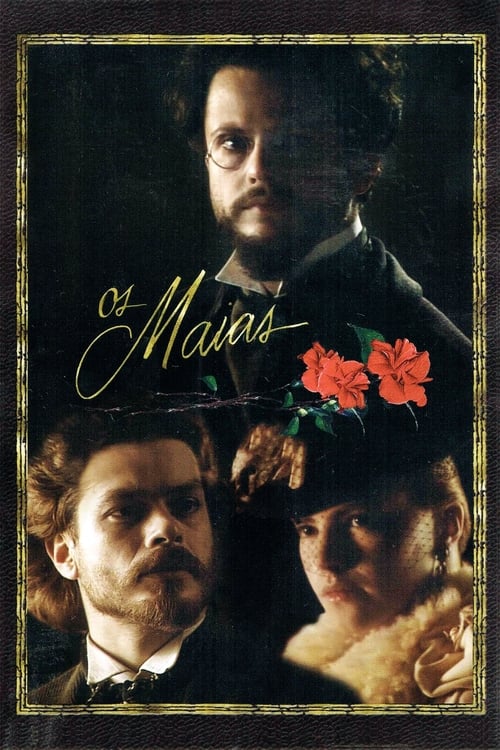 Os Maias2001 · TV SeriesNovel
Photos
Database media gallery.
▧No additional gallery photos
The database currently contains only the primary portrait, so it is not duplicated here.
Discussions
Community posts linked directly to Eça de Queirós.
Sign in to start or join the discussion.Login to Discuss
No discussions are linked to this person yet.
More Information
External references and contribution tools.
Contribute
Suggest sourced corrections to biography, personal facts, external IDs, or the primary photo.
Improve this page →