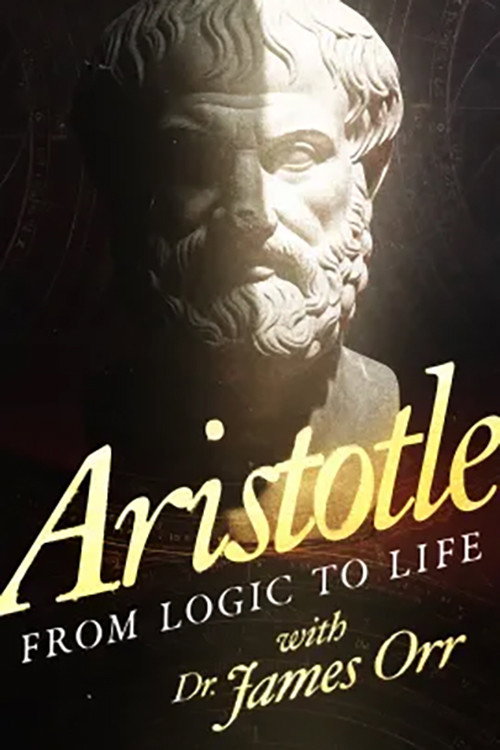
Aristotle: From Logic to Life

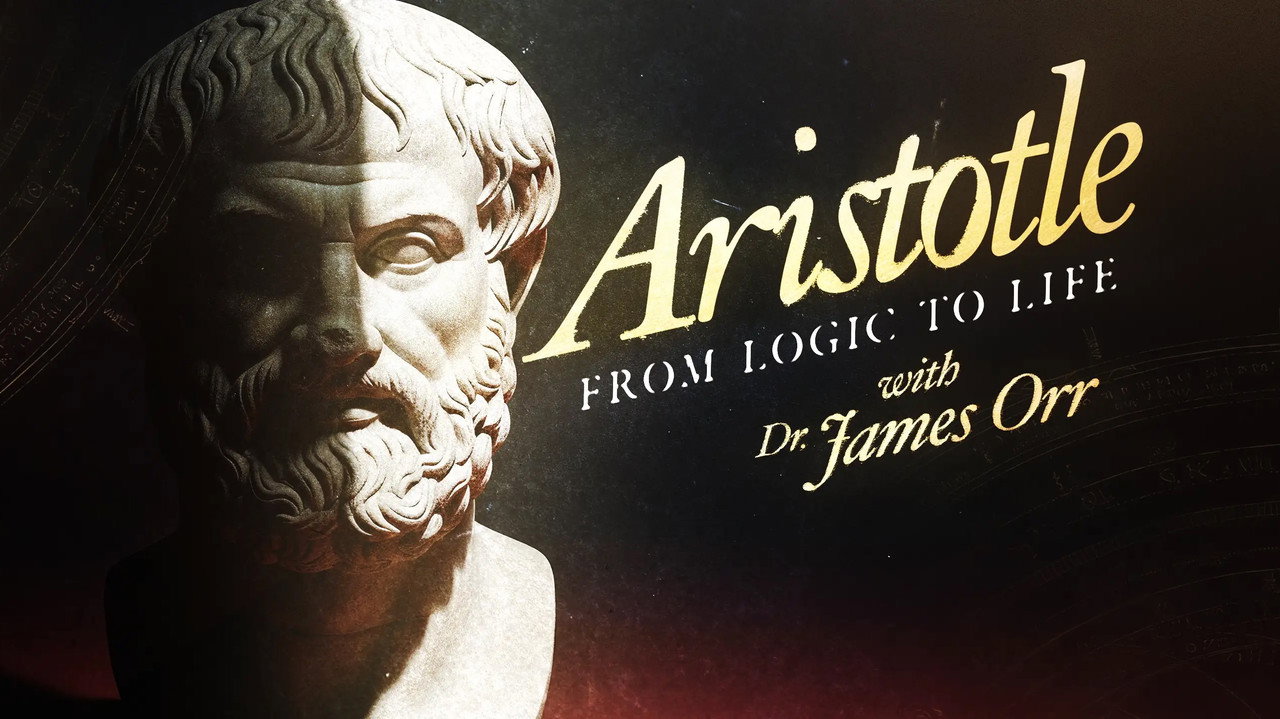
Aristotle: From Logic to Life

Ended First aired 05/Mar/2026 United States English 1 season(s) 8 episode(s)
In Aristotle: From Logic to Life, an eight-hour course, Dr. Orr explores Aristotle's comprehensive philosophical system, tracing his life, empirical methodology, and key contributions to logic, metaphysics, ethics, politics, and poetics. We examine his theories of substance, causation, virtue ethics, eudaimonia (human thriving), political life, and his analysis of tragedy and catharsis. The course follows his impact from medieval rediscovery and tensions with monotheism to contemporary revivals, showing why Aristotle remains a vital guide for modern philosophy.

Episode Time in Your Timezone

See when new episodes air in your local time.

Air Time

Source: UTC · Your timezone: America/New_York

When does the episode air near you?

The local release time is not available yet because this show has no schedule time.


Notice: Schedule time is not available yet.

Show Insights

See how viewers feel about this show before you start watching.

TimeScore 33% Skip It
Binge Meter 48% Slow Burn
Episode Pulse Quiet 40% activity score
Drop Rate 0% Very Low

Scores are based on audience votes, watchlist activity, episode progress, and viewer behavior on EpisodeTime.

Seasons & Episodes

Browse episodes by season.

Season 1 · Course 1
8 episode(s) · Air date: 05/Mar/2026
Improve Season
Season Overview

--

S1E8
Aristotle's Legacy
Air date: 05/Mar/2026 · Runtime: 56 min
Summary

In our eighth and final lecture, we explore Aristotle’s powerful influence on 20th- and 21st-century philosophy, highlighting his “revenge” against logical positivism, which confined meaning to analytic and empirical claims. We examine how Elizabeth Anscombe, Philippa Foot, and Alasdair Mactyre revived virtue ethics by returning to human flourishing, character, and practical wisdom, and how Saul Kripke’s work on necessity and essence reopened metaphysics to Aristotelian ideas about substance and natural kinds. Dr. Orr closes by reflecting on Aristotle’s undeniable and enduring relevance as a living guide for contemporary philosophy.
Summary

In our eighth and final lecture, we explore Aristotle’s powerful influence on 20th- and 21st-century philosophy, highlighting his “revenge” against logical positivism, which confined meaning to analytic and empirical claims. We examine how Elizabeth Anscombe, Philippa Foot, and Alasdair Mactyre revived virtue ethics by returning to human flourishing, character, and practical wisdom, and how Saul Kripke’s work on necessity and essence reopened metaphysics to Aristotelian ideas about substance and natural kinds. Dr. Orr closes by reflecting on Aristotle’s undeniable and enduring relevance as a living guide for contemporary philosophy.

S1E7
Aristotle's Revival
Air date: 05/Mar/2026 · Runtime: 55 min
Summary

In lecture seven, we witness Aristotle’s enduring impact on Western thought, tracing how his works were lost to Europe for centuries before their dramatic rediscovery through Arabic translations in medieval Spain and Byzantium—transforming universities and intellectual life. We explore the tensions between Aristotelian philosophy and Abrahamic monotheism, particularly over the eternity of the universe and the soul’s immortality, and how thinkers like Thomas Aquinas sought reconciliation. The lecture concludes by noting Aristotle’s decline during the Scientific Revolution and Enlightenment, followed by his significant revival in contemporary ethics and metaphysics.

Summary

In lecture seven, we witness Aristotle’s enduring impact on Western thought, tracing how his works were lost to Europe for centuries before their dramatic rediscovery through Arabic translations in medieval Spain and Byzantium—transforming universities and intellectual life. We explore the tensions between Aristotelian philosophy and Abrahamic monotheism, particularly over the eternity of the universe and the soul’s immortality, and how thinkers like Thomas Aquinas sought reconciliation. The lecture concludes by noting Aristotle’s decline during the Scientific Revolution and Enlightenment, followed by his significant revival in contemporary ethics and metaphysics.

S1E6
Aristotle's Poetics
Air date: 05/Mar/2026 · Runtime: 58 min
Summary

In lecture six, we consider Aristotle’s Poetics, focusing on his theory of mimesis (artistic representation) and his defense of poetry—especially tragedy—against Plato’s claim that poets should be excluded from the ideal city. Aristotle argues that poetry does more than imitate appearances; it reveals universal patterns of human action, making it “more philosophical than history” because it shows what could happen according to probability and necessity. The lecture concludes with his definition of tragedy and the concept of catharsis, highlighting how tragic drama educates the emotions and contributes to moral and civic formation.

Summary

In lecture six, we consider Aristotle’s Poetics, focusing on his theory of mimesis (artistic representation) and his defense of poetry—especially tragedy—against Plato’s claim that poets should be excluded from the ideal city. Aristotle argues that poetry does more than imitate appearances; it reveals universal patterns of human action, making it “more philosophical than history” because it shows what could happen according to probability and necessity. The lecture concludes with his definition of tragedy and the concept of catharsis, highlighting how tragic drama educates the emotions and contributes to moral and civic formation.

S1E5
Aristotle's Politics
Air date: 05/Mar/2026 · Runtime: 63 min
Summary

In lecture five, we investigate Aristotle’s Politics, focusing on his view that humans are “political animals” who achieve flourishing within a political community. He traces the natural development from household to village to the polis and argues that the city-state enables the good life. Dr. Orr also examines his sixfold classification of constitutions and his claim that a balanced polity—blending oligarchic and democratic elements and supported by public education—offers the most stable and practical form of government.

Summary

In lecture five, we investigate Aristotle’s Politics, focusing on his view that humans are “political animals” who achieve flourishing within a political community. He traces the natural development from household to village to the polis and argues that the city-state enables the good life. Dr. Orr also examines his sixfold classification of constitutions and his claim that a balanced polity—blending oligarchic and democratic elements and supported by public education—offers the most stable and practical form of government.

S1E4
Aristotle's Ethics
Air date: 05/Mar/2026 · Runtime: 61 min
Summary

In lecture four, we study Aristotle's ethics, focusing on his concept of eudaimonia (human flourishing) as the highest good, achieved through the activity of the soul in accordance with reason and virtue. We examine his doctrine of the mean, where virtues represent a balance between extremes, his emphasis on character formation through habituation, and the central importance of friendship in the good life. The lecture also addresses contemporary situationist critiques of virtue ethics, which challenge the stability of character traits, while defending Aristotle's view that moral excellence develops over time through practice and exemplary models.

Summary

In lecture four, we study Aristotle's ethics, focusing on his concept of eudaimonia (human flourishing) as the highest good, achieved through the activity of the soul in accordance with reason and virtue. We examine his doctrine of the mean, where virtues represent a balance between extremes, his emphasis on character formation through habituation, and the central importance of friendship in the good life. The lecture also addresses contemporary situationist critiques of virtue ethics, which challenge the stability of character traits, while defending Aristotle's view that moral excellence develops over time through practice and exemplary models.

S1E3
Aristotle's Metaphysics
Air date: 05/Mar/2026 · Runtime: 54 min
Summary

In lecture three, we turn to Aristotle’s metaphysics, focusing on “being as being” and the question of why anything exists at all. We explore his theory of substance as form–matter composites, his concept of the unmoved mover as pure actuality, and how this connects to his ethics, where contemplation is the highest human activity. The lecture concludes with his psychology in De Anima, where the soul is the organizing principle of living beings, and humans uniquely possess a rational soul that enables both practical and theoretical reason.

Summary

In lecture three, we turn to Aristotle’s metaphysics, focusing on “being as being” and the question of why anything exists at all. We explore his theory of substance as form–matter composites, his concept of the unmoved mover as pure actuality, and how this connects to his ethics, where contemplation is the highest human activity. The lecture concludes with his psychology in De Anima, where the soul is the organizing principle of living beings, and humans uniquely possess a rational soul that enables both practical and theoretical reason.

S1E2
Aristotle's Logic
Air date: 05/Mar/2026 · Runtime: 59 min
Summary

In lecture two, we explore Aristotle’s groundbreaking work in logic, focusing on the Organon, which formalized human reasoning and shaped logical thought for over two millennia. We examine the laws of thought, syllogistic reasoning, and the distinction between validity and soundness. Dr. Orr concludes by introducing his four causes and his theory of change as the movement from potentiality to actuality, linking logic to natural philosophy and metaphysics.

Summary

In lecture two, we explore Aristotle’s groundbreaking work in logic, focusing on the Organon, which formalized human reasoning and shaped logical thought for over two millennia. We examine the laws of thought, syllogistic reasoning, and the distinction between validity and soundness. Dr. Orr concludes by introducing his four causes and his theory of change as the movement from potentiality to actuality, linking logic to natural philosophy and metaphysics.

S1E1
Aristotle's Life
Air date: 05/Mar/2026 · Runtime: 68 min
Summary

In our introductory lecture, we examine Aristotle’s foundational role in Western philosophy, exploring his life, historical context, and wide-ranging contributions to logic, metaphysics, ethics, politics, and literary theory. We trace his twenty years studying under Plato at the Academy, his work as tutor to Alexander the Great, and his founding of the Lyceum, where his empirical approach contrasted with Plato’s abstract method. The lecture concludes by highlighting Aristotle’s systematic thinking and his lasting influence on medieval education and contemporary philosophy.

Summary

In our introductory lecture, we examine Aristotle’s foundational role in Western philosophy, exploring his life, historical context, and wide-ranging contributions to logic, metaphysics, ethics, politics, and literary theory. We trace his twenty years studying under Plato at the Academy, his work as tutor to Alexander the Great, and his founding of the Lyceum, where his empirical approach contrasted with Plato’s abstract method. The lecture concludes by highlighting Aristotle’s systematic thinking and his lasting influence on medieval education and contemporary philosophy.

Cast

Main cast members.

Crew

Creators, directors, writers, and production crew.

Similar TV Shows

Community picks and smart matches based on genre, network, country, and language.

Smart picks

Suggest a Similar Show

Login to suggest similar TV shows.

User Reviews & Ratings

Audience score, review cards, votes, comments, and watch activity.

+ Review
0.0 0 review(s)
No ratings yet.
Watch Activity
Watching0
Completed0
Dropped0
Not Interested0
Watched Episode0
Season Rating Chart

Season Rating Chart

Average rating from all episode ratings in each season.

No episode ratings yet. Rate episodes below to build this chart.
Top Rated Episodes

Top Rated Episodes

Episodes ranked by audience rating.

No top episodes yet.
No reviews yet. Be the first to rate this show.
My Rating

My Rating

What did you think of Aristotle: From Logic to Life?

Login to Review