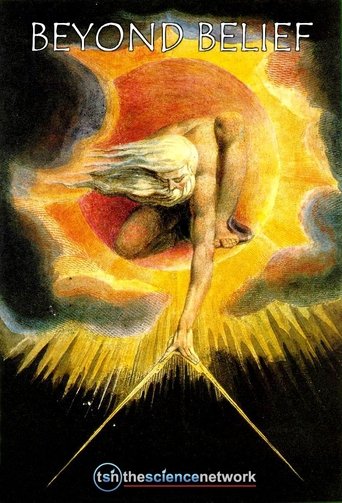
Beyond Belief

Beyond Belief

Ended First aired 05/Nov/2006 United Kingdom English 4 season(s) 91 episode(s)
Beyond Belief: Science, Religion, Reason and Survival was the first gathering of The Science Network's annual Beyond Belief symposia, held from November 5–7, 2006, at the Salk Institute for Biological Studies in La Jolla, California.

Episode Time in Your Timezone

See when new episodes air in your local time.

Air Time

Source: UTC · Your timezone: America/New_York

When does the episode air near you?

The local release time is not available yet because this show has no schedule time.


Notice: Schedule time is not available yet.

Show Insights

See how viewers feel about this show before you start watching.

TimeScore 33% Skip It
Binge Meter 48% Slow Burn
Episode Pulse Quiet 40% activity score
Drop Rate 0% Very Low

Scores are based on audience votes, watchlist activity, episode progress, and viewer behavior on EpisodeTime.

Seasons & Episodes

Browse episodes by season.

Season 2008 · Season 2008
44 episode(s) · Air date: 04/Oct/2008
Improve Season
Season Overview

--

S2008E44
Peter Atkins
Air date: 05/Oct/2008
Summary

Peter Atkins was Professor of Chemistry at the University of Oxford from 1965 until his retirement in 2007. He is the author of over 60 books including Four Laws That Drive the Universe; Galileo's Fingers: The Ten Great Ideas of Science; and the world-renowned textbook Physical Chemistry. He is involved in a variety of international activities including chairing the Committee on Chemistry Education of the International Union of Pure and Applied Chemistry and organizing the Malta series of conferences.

Summary

Peter Atkins was Professor of Chemistry at the University of Oxford from 1965 until his retirement in 2007. He is the author of over 60 books including Four Laws That Drive the Universe; Galileo's Fingers: The Ten Great Ideas of Science; and the world-renowned textbook Physical Chemistry. He is involved in a variety of international activities including chairing the Committee on Chemistry Education of the International Union of Pure and Applied Chemistry and organizing the Malta series of conferences.

S2008E43
This Is Your Brain on Politics Continued
Air date: 05/Oct/2008
Summary

With Lawrence Krauss, Leon Lederman, Chris Mooney, Sheril Kirshenbaum, Michael Shermer, Beatrice Golomb, and Harold Kroto. Moderated by Roger Bingham

Summary

With Lawrence Krauss, Leon Lederman, Chris Mooney, Sheril Kirshenbaum, Michael Shermer, Beatrice Golomb, and Harold Kroto. Moderated by Roger Bingham

S2008E42
Michael Shermer
Air date: 05/Oct/2008
Summary

Michael Shermer is the Founding Publisher of Skeptic magazine, a monthly columnist for Scientific American, the host of the Skeptics Distinguished Science Lecture Series at Caltech and Adjunct Professor of Economics at Claremont Graduate University. His most recent book on evolutionary economics is The Mind of the Market. He is also the author of Why Darwin Matters: Evolution and the Case Against Intelligent Design and How We Believe: Science, Skepticism, and the Search for God.

Summary

Michael Shermer is the Founding Publisher of Skeptic magazine, a monthly columnist for Scientific American, the host of the Skeptics Distinguished Science Lecture Series at Caltech and Adjunct Professor of Economics at Claremont Graduate University. His most recent book on evolutionary economics is The Mind of the Market. He is also the author of Why Darwin Matters: Evolution and the Case Against Intelligent Design and How We Believe: Science, Skepticism, and the Search for God.

S2008E41
Leon Lederman
Air date: 05/Oct/2008
Summary

Leon Lederman is Director Emeritus of Fermi National Accelerator Laboratory (Fermilab) in Batavia, Illinois and Professor of Science at Illinois Institute of Technology in Chicago. He founded the Illinois Mathematics and Science Academy in Aurora, Illinois in 1986, and has served in the capacity of Resident Scholar since 1998. He has also served as President and Chairman of the American Association for the Advancement of Science, is a member of the National Academy of Sciences, and has received numerous awards including the Nobel Prize in Physics (1988).

Summary

Leon Lederman is Director Emeritus of Fermi National Accelerator Laboratory (Fermilab) in Batavia, Illinois and Professor of Science at Illinois Institute of Technology in Chicago. He founded the Illinois Mathematics and Science Academy in Aurora, Illinois in 1986, and has served in the capacity of Resident Scholar since 1998. He has also served as President and Chairman of the American Association for the Advancement of Science, is a member of the National Academy of Sciences, and has received numerous awards including the Nobel Prize in Physics (1988).

S2008E40
Chris Mooney and Sheril Kirshenbaum
Air date: 05/Oct/2008
Summary

Sheril Kirshenbaum is co-author of Unscientific America: How Scientific Illiteracy Threatens Our Future with Chris Mooney describing the growing disconnect between science and society. She has worked in the Senate on energy, climate, and ocean policy and helped found ScienceDebate2008. A former pop radio disc jockey and musician, Sheril is now a science writer and Seed blogger based at Duke University. Chris Mooney is a contributing editor to Science Progress, senior correspondent for The American Prospect magazine and author of two books - The New York Times bestselling The Republican War on Science and Storm World: Hurricanes, Politics, and the Battle Over Global Warming. He also writes “The Intersection” blog with Sheril Kirshenbaum.

Summary

Sheril Kirshenbaum is co-author of Unscientific America: How Scientific Illiteracy Threatens Our Future with Chris Mooney describing the growing disconnect between science and society. She has worked in the Senate on energy, climate, and ocean policy and helped found ScienceDebate2008. A former pop radio disc jockey and musician, Sheril is now a science writer and Seed blogger based at Duke University. Chris Mooney is a contributing editor to Science Progress, senior correspondent for The American Prospect magazine and author of two books - The New York Times bestselling The Republican War on Science and Storm World: Hurricanes, Politics, and the Battle Over Global Warming. He also writes “The Intersection” blog with Sheril Kirshenbaum.

S2008E39
Sir Harold Kroto
Air date: 05/Oct/2008
Summary

Sir Harold Kroto is Francis Eppes Professor in the Department of Chemistry and Biochemistry at Florida State University. In 1996, he was awarded the Nobel Prize in Chemistry for the discovery of C60 Buckminsterfullerene. In 1995, he inaugurated the Vega Science Trust, and in 2007, he started the Global Education Outreach in Science, Engineering and Technology (GEOSET) at FSU. He has received many scientific awards including the Royal Society's prestigious Michael Faraday Award. He was elected to the National Academy of Sciences in 2007.

Summary

Sir Harold Kroto is Francis Eppes Professor in the Department of Chemistry and Biochemistry at Florida State University. In 1996, he was awarded the Nobel Prize in Chemistry for the discovery of C60 Buckminsterfullerene. In 1995, he inaugurated the Vega Science Trust, and in 2007, he started the Global Education Outreach in Science, Engineering and Technology (GEOSET) at FSU. He has received many scientific awards including the Royal Society's prestigious Michael Faraday Award. He was elected to the National Academy of Sciences in 2007.

S2008E38
Beatrice Golomb
Air date: 05/Oct/2008
Summary

Beatrice Golomb is Associate Professor of Medicine at UC San Diego, best known for her work on Gulf War Illness (she has testified before Congress, her RAND reports have changed US policy, and she served as Scientific Director and Chief Scientist for the Department of Veterans Affairs Research Advisory Committee on Gulf War Veterans Illnesses). She also heads the UC San Diego Statin Study group. Her work has engendered broad media interest, from The New York Times to Jon Stewart's The Daily Show.

Summary

Beatrice Golomb is Associate Professor of Medicine at UC San Diego, best known for her work on Gulf War Illness (she has testified before Congress, her RAND reports have changed US policy, and she served as Scientific Director and Chief Scientist for the Department of Veterans Affairs Research Advisory Committee on Gulf War Veterans Illnesses). She also heads the UC San Diego Statin Study group. Her work has engendered broad media interest, from The New York Times to Jon Stewart's The Daily Show.

S2008E37
Lawrence Krauss
Air date: 05/Oct/2008
Summary

Lawrence M. Krauss is Foundation Professor in the School of Earth and Space Exploration and the Physics Department, Co-Director of the Cosmology Initiative and Inaugural Director of the Origins Initiative at Arizona State University. He is an internationally known theoretical physicist with wide research interests, including the interface between elementary particle physics and cosmology, where his studies include the early universe, the nature of dark matter, general relativity and neutrino astrophysics.

Summary

Lawrence M. Krauss is Foundation Professor in the School of Earth and Space Exploration and the Physics Department, Co-Director of the Cosmology Initiative and Inaugural Director of the Origins Initiative at Arizona State University. He is an internationally known theoretical physicist with wide research interests, including the interface between elementary particle physics and cosmology, where his studies include the early universe, the nature of dark matter, general relativity and neutrino astrophysics.

S2008E35
Erin O'Hara
Air date: 05/Oct/2008
Summary

Erin O'Hara is Professor of Law, Associate Dean for Academic Affairs, and Director of the Law and Human Behavior Program at Vanderbilt University Law School. One of Erin’s primary research interests involves conciliation: the effort to integrate theoretical and empirical insights from multiple academic fields, including economics, positive political theory, cognitive psychology, behavioral biology, and neuroscience, to more effectively formulate legal policies that regulate human behavior.

Summary

Erin O'Hara is Professor of Law, Associate Dean for Academic Affairs, and Director of the Law and Human Behavior Program at Vanderbilt University Law School. One of Erin’s primary research interests involves conciliation: the effort to integrate theoretical and empirical insights from multiple academic fields, including economics, positive political theory, cognitive psychology, behavioral biology, and neuroscience, to more effectively formulate legal policies that regulate human behavior.

S2008E34
Adam Kolber
Air date: 05/Oct/2008
Summary

Adam Kolber is a law professor at the University of San Diego who recently completed a Laurance S. Rockefeller Visiting Fellowship at Princeton University's Center for Human Values. He writes about legal and ethical implications of emerging neurotechnologies. Most recently, he has written about methods of measuring pain and punishment. He runs the "Neuroethics & Law Blog" and is an associate editor of the journal Neuroethics.

Summary

Adam Kolber is a law professor at the University of San Diego who recently completed a Laurance S. Rockefeller Visiting Fellowship at Princeton University's Center for Human Values. He writes about legal and ethical implications of emerging neurotechnologies. Most recently, he has written about methods of measuring pain and punishment. He runs the "Neuroethics & Law Blog" and is an associate editor of the journal Neuroethics.

S2008E33
Nita Farahany
Air date: 05/Oct/2008
Summary

Nita Farahany researches and writes about the intersection of criminal law, genetics, neuroscience and philosophy. She does so with an interdisciplinary background in Genetics from Dartmouth College, a master's degree concentrating in biology, from Harvard University, and a J.D., M.A. and Ph.D. in philosophy of biology and philosophy of law from Duke University. She is the editor of forthcoming volume Genes and Justice: The Impact of Behavioral Genetics and Neuroscience on Criminal Law.

Summary

Nita Farahany researches and writes about the intersection of criminal law, genetics, neuroscience and philosophy. She does so with an interdisciplinary background in Genetics from Dartmouth College, a master's degree concentrating in biology, from Harvard University, and a J.D., M.A. and Ph.D. in philosophy of biology and philosophy of law from Duke University. She is the editor of forthcoming volume Genes and Justice: The Impact of Behavioral Genetics and Neuroscience on Criminal Law.

S2008E32
Amanda Pustilnik
Air date: 05/Oct/2008
Summary

Amanda Pustilnik conducts research and teaches in the area of law and neuroscience at Harvard Law School. She is a graduate of Yale Law School, practiced litigation at Sullivan & Cromwell and Covington & Burling, and has served as a visiting scholar at Emmanuel College, Cambridge, in History of Science. She is also counsel to the Board of Network 20/20, a foreign policy not-for-profit organization.

Summary

Amanda Pustilnik conducts research and teaches in the area of law and neuroscience at Harvard Law School. She is a graduate of Yale Law School, practiced litigation at Sullivan & Cromwell and Covington & Burling, and has served as a visiting scholar at Emmanuel College, Cambridge, in History of Science. She is also counsel to the Board of Network 20/20, a foreign policy not-for-profit organization.

S2008E31
Walter Sinnott-Armstrong
Air date: 05/Oct/2008
Summary

Walter Sinnott-Armstrong is Professor of Philosophy and the Hardy Professor of Legal Studies at Dartmouth College, as well as the Co-director of the MacArthur Law and Neuroscience Project. His research interests include ethics, philosophy of law, epistemology, and informal logic. Currently he is working on moral psychology and brain science, and the uses and implications of neuroscience for legal systems. He has recently edited three volumes on the evolution, cognitive science and neuroscience of morality.

Summary

Walter Sinnott-Armstrong is Professor of Philosophy and the Hardy Professor of Legal Studies at Dartmouth College, as well as the Co-director of the MacArthur Law and Neuroscience Project. His research interests include ethics, philosophy of law, epistemology, and informal logic. Currently he is working on moral psychology and brain science, and the uses and implications of neuroscience for legal systems. He has recently edited three volumes on the evolution, cognitive science and neuroscience of morality.

S2008E29
Philip Zimbardo
Air date: 05/Oct/2008
Summary

Philip Zimbardo is Professor Emeritus at Stanford University and is internationally recognized as a leading "voice and face of contemporary psychology" through his widely seen PBS-TV series, Discovering Psychology, his media appearances, best-selling trade books on shyness, and his classic research, The Stanford Prison Experiment. He is the author of over 300 professional publications and 50 books including the oldest current textbook in psychology, Psychology and Life, and The Lucifer Effect: Understanding How Good People Turn Evil.

Summary

Philip Zimbardo is Professor Emeritus at Stanford University and is internationally recognized as a leading "voice and face of contemporary psychology" through his widely seen PBS-TV series, Discovering Psychology, his media appearances, best-selling trade books on shyness, and his classic research, The Stanford Prison Experiment. He is the author of over 300 professional publications and 50 books including the oldest current textbook in psychology, Psychology and Life, and The Lucifer Effect: Understanding How Good People Turn Evil.

S2008E28
Terry Sejnowski
Air date: 05/Oct/2008
Summary

Terrence Sejnowski is an HHMI investigator, the Francis Crick Professor and Director of the Crick-Jacobs Center for Theoretical and Computational Biology at the Salk Institute. He is author of several books including The Computational Brain and Liars, Lovers, and Heroes: What the New Brain Science Reveals About How We Become Who We Are.

Summary

Terrence Sejnowski is an HHMI investigator, the Francis Crick Professor and Director of the Crick-Jacobs Center for Theoretical and Computational Biology at the Salk Institute. He is author of several books including The Computational Brain and Liars, Lovers, and Heroes: What the New Brain Science Reveals About How We Become Who We Are.

S2008E27
Paul Zak
Air date: 05/Oct/2008
Summary

Paul J. Zak is the founding Director of the Center for Neuroeconomics Studies and Professor of Economics at Claremont Graduate University. Zak also serves as Professor of Neurology at Loma Linda University Medical Center, and is a Senior Researcher at UCLA. Zak is credited with the first published use of the term “neuroeconomics” and has been a vanguard in this new discipline. He organized and administers the first doctoral program in neuroeconomics in the world.

Summary

Paul J. Zak is the founding Director of the Center for Neuroeconomics Studies and Professor of Economics at Claremont Graduate University. Zak also serves as Professor of Neurology at Loma Linda University Medical Center, and is a Senior Researcher at UCLA. Zak is credited with the first published use of the term “neuroeconomics” and has been a vanguard in this new discipline. He organized and administers the first doctoral program in neuroeconomics in the world.

S2008E26
Brian Knutson
Air date: 05/Oct/2008
Summary

Brian Knutson is Associate Professor of Psychology and Neuroscience at Stanford University. His laboratory uses multiple methods (e.g., psychometrics, psychophysiology, brain imaging, and pharmacology) to investigate neural mechanisms that support emotional experience, and explores implications for clinical disorders of affect and addiction, as well as for economic decision-making. He has received Young Investigator Awards from the American Psychiatric Association, the National Alliance for Research on Schizophrenia and Depression, and the Academy of Behavioral Medicine Research.

Summary

Brian Knutson is Associate Professor of Psychology and Neuroscience at Stanford University. His laboratory uses multiple methods (e.g., psychometrics, psychophysiology, brain imaging, and pharmacology) to investigate neural mechanisms that support emotional experience, and explores implications for clinical disorders of affect and addiction, as well as for economic decision-making. He has received Young Investigator Awards from the American Psychiatric Association, the National Alliance for Research on Schizophrenia and Depression, and the Academy of Behavioral Medicine Research.

S2008E25
Roger Bingham
Air date: 05/Oct/2008
Summary

Roger Bingham is Co-founder and Director of The Science Network. He is also a member of the Computational Neurobiology Laboratory at the Salk Institute of Biological Studies and the Institute for Neural Computation at UC San Diego. He is the co-author of The Origin of Minds: Evolution, Uniqueness, and the New Science of the Self, and the creator and host of Emmy award-winning PBS science programs on evolutionary psychology and cognitive neuroscience, including the critically acclaimed series The Human Quest.

Summary

Roger Bingham is Co-founder and Director of The Science Network. He is also a member of the Computational Neurobiology Laboratory at the Salk Institute of Biological Studies and the Institute for Neural Computation at UC San Diego. He is the co-author of The Origin of Minds: Evolution, Uniqueness, and the New Science of the Self, and the creator and host of Emmy award-winning PBS science programs on evolutionary psychology and cognitive neuroscience, including the critically acclaimed series The Human Quest.

S2008E23
Patricia Churchland
Air date: 05/Oct/2008
Summary

Patricia Smith Churchland, UC President's Professor of Philosophy, UC San Diego, focuses on neuroethics and attempts to understand choice, responsibility and the basis of moral norms in terms of brain function, evolution and brain-culture interactions. Her books include Brain-Wise, Neurophilosophy: Towrds a Unified Science of the Mind-Brain and On the Contrary, with Paul M. Churchland.

Summary

Patricia Smith Churchland, UC President's Professor of Philosophy, UC San Diego, focuses on neuroethics and attempts to understand choice, responsibility and the basis of moral norms in terms of brain function, evolution and brain-culture interactions. Her books include Brain-Wise, Neurophilosophy: Towrds a Unified Science of the Mind-Brain and On the Contrary, with Paul M. Churchland.

S2008E22
Marco Iacoboni
Air date: 05/Oct/2008
Summary

Marco Iacoboni is Professor of Psychiatry and Biobehavioral Sciences and Director of the Transcranial Magnetic Stimulation Lab at the Ahmanson-Lovelace Brain Mapping Center. He is also a member of the Brain Research Institute and of the UCLA Center for Culture, Brain, and Development. Iacoboni studies the neural mechanisms of imitation and social cognition in humans, and he is author of the recent book on mirror neurons entitled Mirroring People: The New Science of How We Connect with Others.

Summary

Marco Iacoboni is Professor of Psychiatry and Biobehavioral Sciences and Director of the Transcranial Magnetic Stimulation Lab at the Ahmanson-Lovelace Brain Mapping Center. He is also a member of the Brain Research Institute and of the UCLA Center for Culture, Brain, and Development. Iacoboni studies the neural mechanisms of imitation and social cognition in humans, and he is author of the recent book on mirror neurons entitled Mirroring People: The New Science of How We Connect with Others.

S2008E21
Jonathan Glover
Air date: 05/Oct/2008
Summary

Jonathan Glover is Professor at the Centre of Medical Law & Ethics at King's College London, as well as a Distinguished Research Fellow at the Oxford Uehiro Centre for Practical Ethics. His books include Humanity: A Moral History of the Twentieth Century, What Sort of People Should There Be? and Causing Death and Saving Lives, the first philosophical study of the then futuristic issues of genetic engineering and of neuroethics. He is currently interested in a number of issues in global ethics and ethical issues in psychiatry.

Summary

Jonathan Glover is Professor at the Centre of Medical Law & Ethics at King's College London, as well as a Distinguished Research Fellow at the Oxford Uehiro Centre for Practical Ethics. His books include Humanity: A Moral History of the Twentieth Century, What Sort of People Should There Be? and Causing Death and Saving Lives, the first philosophical study of the then futuristic issues of genetic engineering and of neuroethics. He is currently interested in a number of issues in global ethics and ethical issues in psychiatry.

S2008E20
Sam Harris: Can We Ever Be Right About Right and Wrong?
Air date: 05/Oct/2008
Summary

Sam Harris is the author of The New York Times bestsellers, The End of Faith: Religion, Terror and the Future of Reason which won the 2005 PEN/Martha Albrand Award for First Nonfiction, and Letter to a Christian Nation. His writing has appeared in Newsweek, Los Angeles Times, The Atlantic, The Times (London), The Boston Globe, The Annals of Neurology, and elsewhere. He is currently researching the neural basis of religious belief while completing a doctorate in neuroscience. He is also a Co-Founder and Chairman of The Reason Project.

Summary

Sam Harris is the author of The New York Times bestsellers, The End of Faith: Religion, Terror and the Future of Reason which won the 2005 PEN/Martha Albrand Award for First Nonfiction, and Letter to a Christian Nation. His writing has appeared in Newsweek, Los Angeles Times, The Atlantic, The Times (London), The Boston Globe, The Annals of Neurology, and elsewhere. He is currently researching the neural basis of religious belief while completing a doctorate in neuroscience. He is also a Co-Founder and Chairman of The Reason Project.

S2008E19
Jonathan Haidt
Air date: 05/Oct/2008
Summary

Jonathan Haidt is an Associate Professor of Psychology at the University of Virginia. He studies the emotional and intuitive foundations of morality. His current work is based on the idea that morality is a team sport and that political liberals don't understand the game the other side is playing. He is the author of The Happiness Hypothesis and is currently writing The Righteous Mind: Why Good People are Divided by Politics and Religion.

Summary

Jonathan Haidt is an Associate Professor of Psychology at the University of Virginia. He studies the emotional and intuitive foundations of morality. His current work is based on the idea that morality is a team sport and that political liberals don't understand the game the other side is playing. He is the author of The Happiness Hypothesis and is currently writing The Righteous Mind: Why Good People are Divided by Politics and Religion.

S2008E18
Roger Bingham
Air date: 05/Oct/2008
Summary

Roger Bingham is Co-founder and Director of The Science Network. He is also a member of the Computational Neurobiology Laboratory at the Salk Institute of Biological Studies and the Institute for Neural Computation at UC San Diego. He is the co-author of The Origin of Minds: Evolution, Uniqueness, and the New Science of the Self, and the creator and host of Emmy award-winning PBS science programs on evolutionary psychology and cognitive neuroscience, including the critically acclaimed series The Human Quest.

Summary

Roger Bingham is Co-founder and Director of The Science Network. He is also a member of the Computational Neurobiology Laboratory at the Salk Institute of Biological Studies and the Institute for Neural Computation at UC San Diego. He is the co-author of The Origin of Minds: Evolution, Uniqueness, and the New Science of the Self, and the creator and host of Emmy award-winning PBS science programs on evolutionary psychology and cognitive neuroscience, including the critically acclaimed series The Human Quest.

S2008E16
V.S. Ramachandran
Air date: 04/Oct/2008
Summary

V.S. Ramachandran is Director of the Center for Brain and Cognition and Professor with the Psychology Department and the Neurosciences Program at UC San Diego. A former BBC Reith Lecturer, he co-authored Phantoms in the Brain: Probing the Mysteries of the Human Mind, with Sandra Blakeslee, and is the author of A Brief Tour of Human Consciousness and a forthcoming book on human uniqueness.

Summary

V.S. Ramachandran is Director of the Center for Brain and Cognition and Professor with the Psychology Department and the Neurosciences Program at UC San Diego. A former BBC Reith Lecturer, he co-authored Phantoms in the Brain: Probing the Mysteries of the Human Mind, with Sandra Blakeslee, and is the author of A Brief Tour of Human Consciousness and a forthcoming book on human uniqueness.

S2008E15
Sally Saytel
Air date: 04/Oct/2008
Summary

Sally Satel is a scholar at the American Enterprise Institute, and staff psychiatrist at the Oasis Clinic in Washington, D.C. She has published articles on cultural aspects of medicine and science in The New York Times, New Republic, Commentary, Atlantic Monthly, New York Times Magazine, and Wall Street Journal. Dr. Satel is the author of PC, M.D.: How Political Correctness Is Corrupting Medicine; Drug Treatment: The Case for Coercion; and coauthor of One Nation Under Therapy.

Summary

Sally Satel is a scholar at the American Enterprise Institute, and staff psychiatrist at the Oasis Clinic in Washington, D.C. She has published articles on cultural aspects of medicine and science in The New York Times, New Republic, Commentary, Atlantic Monthly, New York Times Magazine, and Wall Street Journal. Dr. Satel is the author of PC, M.D.: How Political Correctness Is Corrupting Medicine; Drug Treatment: The Case for Coercion; and coauthor of One Nation Under Therapy.

S2008E14
Peter Turchin
Air date: 04/Oct/2008
Summary

Peter Turchin is Professor of Ecology and Mathematics at the University of Connecticut. He is the author of more than 100 articles including ten in Nature and Science. He has written five books, the latest of which is War and Peace and War: The Life Cycles of Imperial Nations, Pi Press. Much of his work concerns a new field known as cliodynamics, which attempts to discover general principles that explain the functioning and dynamics of historical societies.

Summary

Peter Turchin is Professor of Ecology and Mathematics at the University of Connecticut. He is the author of more than 100 articles including ten in Nature and Science. He has written five books, the latest of which is War and Peace and War: The Life Cycles of Imperial Nations, Pi Press. Much of his work concerns a new field known as cliodynamics, which attempts to discover general principles that explain the functioning and dynamics of historical societies.

S2008E13
Roger Bingham
Air date: 04/Oct/2008
Summary

Roger Bingham is Co-founder and Director of The Science Network. He is also a member of the Computational Neurobiology Laboratory at the Salk Institute of Biological Studies and the Institute for Neural Computation at UC San Diego. He is the co-author of The Origin of Minds: Evolution, Uniqueness, and the New Science of the Self, and the creator and host of Emmy award-winning PBS science programs on evolutionary psychology and cognitive neuroscience, including the critically acclaimed series The Human Quest.

Summary

Roger Bingham is Co-founder and Director of The Science Network. He is also a member of the Computational Neurobiology Laboratory at the Salk Institute of Biological Studies and the Institute for Neural Computation at UC San Diego. He is the co-author of The Origin of Minds: Evolution, Uniqueness, and the New Science of the Self, and the creator and host of Emmy award-winning PBS science programs on evolutionary psychology and cognitive neuroscience, including the critically acclaimed series The Human Quest.

S2008E11
Tony Haymet
Air date: 04/Oct/2008
Summary

Tony Haymet is the tenth director of Scripps Institution of Oceanography at UC San Diego. Haymet also serves as UC San Diego's Vice Chancellor for Marine Sciences and Dean of the Graduate School of Marine Sciences, and is a Professor of Oceanography at Scripps and Chemistry at UC San Diego. Tony is a founder and currently Vice-Chair of CleanTech San Diego, a business development organization dedicated to the practical response to climate change issues.

Summary

Tony Haymet is the tenth director of Scripps Institution of Oceanography at UC San Diego. Haymet also serves as UC San Diego's Vice Chancellor for Marine Sciences and Dean of the Graduate School of Marine Sciences, and is a Professor of Oceanography at Scripps and Chemistry at UC San Diego. Tony is a founder and currently Vice-Chair of CleanTech San Diego, a business development organization dedicated to the practical response to climate change issues.

S2008E10
Chris Mooney & Sheril Kirshenbaum
Air date: 04/Oct/2008
Summary

Sheril Kirshenbaum is co-author of Unscientific America: How Scientific Illiteracy Threatens Our Future with Chris Mooney describing the growing disconnect between science and society. She has worked in the Senate on energy, climate, and ocean policy and helped found ScienceDebate2008. A former pop radio disc jockey and musician, Sheril is now a science writer and Seed blogger based at Duke University. Chris Mooney is a contributing editor to Science Progress, senior correspondent for The American Prospect magazine and author of two books - the New York Times bestselling The Republican War on Science and Storm World: Hurricanes, Politics, and the Battle Over Global Warming. He also writes “The Intersection” blog with Sheril Kirshenbaum.

Summary

Sheril Kirshenbaum is co-author of Unscientific America: How Scientific Illiteracy Threatens Our Future with Chris Mooney describing the growing disconnect between science and society. She has worked in the Senate on energy, climate, and ocean policy and helped found ScienceDebate2008. A former pop radio disc jockey and musician, Sheril is now a science writer and Seed blogger based at Duke University. Chris Mooney is a contributing editor to Science Progress, senior correspondent for The American Prospect magazine and author of two books - the New York Times bestselling The Republican War on Science and Storm World: Hurricanes, Politics, and the Battle Over Global Warming. He also writes “The Intersection” blog with Sheril Kirshenbaum.

S2008E9
Naomi Oreskes
Air date: 04/Oct/2008
Summary

Naomi Oreskes is Provost of Sixth College, Professor of History and Science Studies and Adjunct Professor of Geosciences at UC San Diego and one of the nation's leading experts on the history of the earth and environmental science. Her work came to public attention in 2004 with the publication of "The Scientific Consensus on Climate Change" in Science and was featured in Vice President Gore's film, An Inconvenient Truth. Her forthcoming book is FIGHTING FACTS: How a Handful of Scientists Have Muddied the Waters on Environmental Issues From Tobacco to Global Warming.

Summary

Naomi Oreskes is Provost of Sixth College, Professor of History and Science Studies and Adjunct Professor of Geosciences at UC San Diego and one of the nation's leading experts on the history of the earth and environmental science. Her work came to public attention in 2004 with the publication of "The Scientific Consensus on Climate Change" in Science and was featured in Vice President Gore's film, An Inconvenient Truth. Her forthcoming book is FIGHTING FACTS: How a Handful of Scientists Have Muddied the Waters on Environmental Issues From Tobacco to Global Warming.

S2008E8
Roger Bingham
Air date: 04/Oct/2008
Summary

Roger Bingham is Co-founder and Director of The Science Network. He is also a member of the Computational Neurobiology Laboratory at the Salk Institute of Biological Studies and the Institute for Neural Computation at UC San Diego. He is the co-author of The Origin of Minds: Evolution, Uniqueness, and the New Science of the Self, and the creator and host of Emmy award-winning PBS science programs on evolutionary psychology and cognitive neuroscience, including the critically acclaimed series The Human Quest.

Summary

Roger Bingham is Co-founder and Director of The Science Network. He is also a member of the Computational Neurobiology Laboratory at the Salk Institute of Biological Studies and the Institute for Neural Computation at UC San Diego. He is the co-author of The Origin of Minds: Evolution, Uniqueness, and the New Science of the Self, and the creator and host of Emmy award-winning PBS science programs on evolutionary psychology and cognitive neuroscience, including the critically acclaimed series The Human Quest.

S2008E6
George Koob
Air date: 04/Oct/2008
Summary

George F. Koob is a Professor and Chair of the Committee on the Neurobiology of Addictive Disorders at The Scripps Research Institute and Adjunct Professor in the Departments of Psychology and Psychiatry, and Adjunct Professor in the Skaggs School of Pharmacy and Pharmaceutical Sciences at UC San Diego. Dr. Koob's research interests are directed at the neurobiology of drug addiction, with a focus on the theoretical constructs of reward and stress.

Summary

George F. Koob is a Professor and Chair of the Committee on the Neurobiology of Addictive Disorders at The Scripps Research Institute and Adjunct Professor in the Departments of Psychology and Psychiatry, and Adjunct Professor in the Skaggs School of Pharmacy and Pharmaceutical Sciences at UC San Diego. Dr. Koob's research interests are directed at the neurobiology of drug addiction, with a focus on the theoretical constructs of reward and stress.

S2008E5
Guven Guzeldere
Air date: 04/Oct/2008
Summary

Güven Güzeldere is Associate Professor of Psychological and Brain Sciences and of Neurobiology at Duke University. He has published articles on philosophy of mind, history and philosophy of psychology, and artificial intelligence. He is a founder of Stanford Electronic Humanities Review, a founding associate editor of Psyche: An Interdisciplinary Journal of Research on Consciousness, and a founding member of the Association for the Scientific Study of Consciousness.

Summary

Güven Güzeldere is Associate Professor of Psychological and Brain Sciences and of Neurobiology at Duke University. He has published articles on philosophy of mind, history and philosophy of psychology, and artificial intelligence. He is a founder of Stanford Electronic Humanities Review, a founding associate editor of Psyche: An Interdisciplinary Journal of Research on Consciousness, and a founding member of the Association for the Scientific Study of Consciousness.

S2008E4
Owen Flanagan
Air date: 04/Oct/2008
Summary

Owen Flanagan is James B. Duke Professor of Philosophy at Duke University. He also holds appointments in Psychology and Neurobiology and is a Faculty Fellow in Cognitive Neuroscience. In 1998, he was recipient of the Romanell National Phi Beta Kappa award, given annually to one American philosopher for distinguished contributions to philosophy and the public understanding of philosophy. He has written several books; the most recent is The Really Hard Problem: Meaning in a Material World.

Summary

Owen Flanagan is James B. Duke Professor of Philosophy at Duke University. He also holds appointments in Psychology and Neurobiology and is a Faculty Fellow in Cognitive Neuroscience. In 1998, he was recipient of the Romanell National Phi Beta Kappa award, given annually to one American philosopher for distinguished contributions to philosophy and the public understanding of philosophy. He has written several books; the most recent is The Really Hard Problem: Meaning in a Material World.

S2008E3
Sonja Lyubormirsky
Air date: 04/Oct/2008
Summary

Sonja Lyubomirsky is Professor of Psychology at the University of California, Riverside. Her honors include a Faculty of the Year Award, Faculty Mentor of the Year Award, a Templeton Positive Psychology Prize, and a million-dollar grant from NIMH to conduct research on the possibility of permanently increasing happiness. Her book, The How of Happiness, was released in January 2008 by Penguin Press and translated into 15 languages.

Summary

Sonja Lyubomirsky is Professor of Psychology at the University of California, Riverside. Her honors include a Faculty of the Year Award, Faculty Mentor of the Year Award, a Templeton Positive Psychology Prize, and a million-dollar grant from NIMH to conduct research on the possibility of permanently increasing happiness. Her book, The How of Happiness, was released in January 2008 by Penguin Press and translated into 15 languages.

S2008E2
Anthony Grayling
Air date: 04/Oct/2008
Summary

Anthony Grayling is Professor of Philosophy at Birbeck College, University of London, and a Supernumerary Fellow of St Anne's College, Oxford. He has written and edited many books on philosophy and other subjects; among his most recent are a biography of William Hazlitt and a collection of essays. For several years he wrote the "Last Word" column for the Guardian and is a regular reviewer for the Times Literary Review and the Financial Times.

Summary

Anthony Grayling is Professor of Philosophy at Birbeck College, University of London, and a Supernumerary Fellow of St Anne's College, Oxford. He has written and edited many books on philosophy and other subjects; among his most recent are a biography of William Hazlitt and a collection of essays. For several years he wrote the "Last Word" column for the Guardian and is a regular reviewer for the Times Literary Review and the Financial Times.

S2008E1
Roger Bingham
Air date: 04/Oct/2008
Summary

Roger Bingham is Co-founder and Director of The Science Network. He is also a member of the Computational Neurobiology Laboratory at the Salk Institute of Biological Studies and the Institute for Neural Computation at UC San Diego. He is the co-author of The Origin of Minds: Evolution, Uniqueness, and the New Science of the Self, and the creator and host of Emmy award-winning PBS science programs on evolutionary psychology and cognitive neuroscience, including the critically acclaimed series The Human Quest.

Summary

Roger Bingham is Co-founder and Director of The Science Network. He is also a member of the Computational Neurobiology Laboratory at the Salk Institute of Biological Studies and the Institute for Neural Computation at UC San Diego. He is the co-author of The Origin of Minds: Evolution, Uniqueness, and the New Science of the Self, and the creator and host of Emmy award-winning PBS science programs on evolutionary psychology and cognitive neuroscience, including the critically acclaimed series The Human Quest.

Season 2007 · Season 2007
35 episode(s) · Air date: 31/Oct/2007
Improve Season
Season Overview

--

S2007E35
PZ Myers (overview from audience)
Air date: 02/Nov/2007
Summary

PZ Myers is a developmental biologist at the University of Minnesota, Morris who focuses on the interplay of developmental and evolutionary processes. He is a columnist for Seed magazine and maintains a somewhat popular weblog, "Pharyngula", which takes a ruthlessly godless view of biology, evolution and the culture wars.

Summary

PZ Myers is a developmental biologist at the University of Minnesota, Morris who focuses on the interplay of developmental and evolutionary processes. He is a columnist for Seed magazine and maintains a somewhat popular weblog, "Pharyngula", which takes a ruthlessly godless view of biology, evolution and the culture wars.

S2007E34
Jeff Hawkins
Air date: 02/Nov/2007
Summary

Jeff Hawkins is the founder of two computer companies, Palm and Handspring, and the designer of many computing products including the PalmPilot and Treo Smartphone. He also founded and ran the nonprofit Redwood Neuroscience Institute (now part of UC Berkeley) and founded the for-profit Numenta, which is developing a new technology, Hierarchical Temporal Memory, based on neocortical memory architecture. Hawkins has a BSEE from Cornell University. He was elected to the National Academy of Engineers in 2003.

Summary

Jeff Hawkins is the founder of two computer companies, Palm and Handspring, and the designer of many computing products including the PalmPilot and Treo Smartphone. He also founded and ran the nonprofit Redwood Neuroscience Institute (now part of UC Berkeley) and founded the for-profit Numenta, which is developing a new technology, Hierarchical Temporal Memory, based on neocortical memory architecture. Hawkins has a BSEE from Cornell University. He was elected to the National Academy of Engineers in 2003.

S2007E33
Daniel Smail
Air date: 02/Nov/2007
Summary

Daniel Lord Smail has an abiding passion: to bring time depth back into the ways in which we teach and research history in this country. He is a history professor at Harvard University. In his book, On Deep History and the Brain, he joins other historians who seek to transcend the legacy of Judeo-Christian sacred chronology. When not otherwise pursuing a history that begins in Africa, he is a European historian who works on law and justice in late medieval Mediterranean cities.

Summary

Daniel Lord Smail has an abiding passion: to bring time depth back into the ways in which we teach and research history in this country. He is a history professor at Harvard University. In his book, On Deep History and the Brain, he joins other historians who seek to transcend the legacy of Judeo-Christian sacred chronology. When not otherwise pursuing a history that begins in Africa, he is a European historian who works on law and justice in late medieval Mediterranean cities.

S2007E32
Sam Harris
Air date: 02/Nov/2007
Summary

Sam Harris has authored the New York Times bestsellers, The End of Faith: Religion, Terror and the Future of Reason, which won the 2005 PEN/Martha Albrand Award for First Nonfiction, and Letter to a Christian Nation. His essays have appeared in Newsweek, The Los Angeles Times, The Times of London, The Boston Globe and elsewhere. He is currently researching the neural basis of religious belief while completing a doctorate in neuroscience.

Summary

Sam Harris has authored the New York Times bestsellers, The End of Faith: Religion, Terror and the Future of Reason, which won the 2005 PEN/Martha Albrand Award for First Nonfiction, and Letter to a Christian Nation. His essays have appeared in Newsweek, The Los Angeles Times, The Times of London, The Boston Globe and elsewhere. He is currently researching the neural basis of religious belief while completing a doctorate in neuroscience.

S2007E31
Welcome by Roger Bingham
Air date: 02/Nov/2007
Summary

Roger Bingham is a scientist in the Computational Neurobiology Laboratory at the Salk Institute, and a member of the research faculty at the Center for Brain and Cognition, University of California, San Diego. He is the co-author of The Origin of Minds: Evolution, Uniqueness, and the New Science of the Self, and the creator and host of Emmy award-winning PBS science programs on evolutionary psychology and cognitive neuroscience, including the critically acclaimed series "The Human Quest". He is co-founder and Director of The Science Network.

Summary

Roger Bingham is a scientist in the Computational Neurobiology Laboratory at the Salk Institute, and a member of the research faculty at the Center for Brain and Cognition, University of California, San Diego. He is the co-author of The Origin of Minds: Evolution, Uniqueness, and the New Science of the Self, and the creator and host of Emmy award-winning PBS science programs on evolutionary psychology and cognitive neuroscience, including the critically acclaimed series "The Human Quest". He is co-founder and Director of The Science Network.

S2007E30
Robert Winter
Air date: 01/Nov/2007
Summary

Robert Winter, scholar, pianist, and media author, holds the Presidential Chair in Music and Interactive Arts at UCLA. His very non-linear career has encompassed Beethoven scholarship, the evolution of the piano, several public radio series, popular culture, the history of technology, seven new media projects (starting with Beethoven's 9th) hailed as milestones in multimedia publishing, and countless appearances as an advocate for the arts in a No-Child-Left-Behind world.

Summary

Robert Winter, scholar, pianist, and media author, holds the Presidential Chair in Music and Interactive Arts at UCLA. His very non-linear career has encompassed Beethoven scholarship, the evolution of the piano, several public radio series, popular culture, the history of technology, seven new media projects (starting with Beethoven's 9th) hailed as milestones in multimedia publishing, and countless appearances as an advocate for the arts in a No-Child-Left-Behind world.

S2007E29
David Brin
Air date: 01/Nov/2007
Summary

David Brin's bestselling novels, such as Earth and Kiln People, have been translated into more than 20 languages. The Postman was loosely Kevin Costnerized in 1998. A scientist and futurist, Brin speaks and consults widely about over-the-horizon social and technological trends. The Transparent Society won the nonfiction Freedom of Speech Award of the American Library Association.

Summary

David Brin's bestselling novels, such as Earth and Kiln People, have been translated into more than 20 languages. The Postman was loosely Kevin Costnerized in 1998. A scientist and futurist, Brin speaks and consults widely about over-the-horizon social and technological trends. The Transparent Society won the nonfiction Freedom of Speech Award of the American Library Association.

S2007E28
Jonathan Gottschall
Air date: 01/Nov/2007
Summary

Jonathan Gottschall teaches English at Washington & Jefferson College in Washington, PA. His work seeks to bridge the humanities-sciences divide. He is co-editor of The Literary Animal: Evolution and the Nature of Narrative, and the author of The Rape of Troy: Evolution, Violence, and the World of Homer. His next book will be Literature, Science, and a New Humanities.

Summary

Jonathan Gottschall teaches English at Washington & Jefferson College in Washington, PA. His work seeks to bridge the humanities-sciences divide. He is co-editor of The Literary Animal: Evolution and the Nature of Narrative, and the author of The Rape of Troy: Evolution, Violence, and the World of Homer. His next book will be Literature, Science, and a New Humanities.

S2007E27
Adam Kolber
Air date: 01/Nov/2007
Summary

Adam Kolber is a visiting fellow at Princeton University's Center for Human Values and a law professor at the University of San Diego. He writes about the legal and ethical implications of emerging neurotechnologies, including drugs to dampen traumatic memories and brain imaging techniques to assess subjective experiences. He runs the "Neuroethics & Law Blog" and is an associate editor of the journal Neuroethics.

Summary

Adam Kolber is a visiting fellow at Princeton University's Center for Human Values and a law professor at the University of San Diego. He writes about the legal and ethical implications of emerging neurotechnologies, including drugs to dampen traumatic memories and brain imaging techniques to assess subjective experiences. He runs the "Neuroethics & Law Blog" and is an associate editor of the journal Neuroethics.

S2007E26
V.S. Ramachandran
Air date: 01/Nov/2007
Summary

VS Ramachandran, Director for the Center of Brain and Cognition and professor with the Psychology Department and the Neurosciences Program at the University of California, San Diego, co-authored Phantoms in the Brain: Probing the Mysteries of the Human Mind, with Sandra Blakeslee, and is the author of A Brief Tour of Human Consciousness.

Summary

VS Ramachandran, Director for the Center of Brain and Cognition and professor with the Psychology Department and the Neurosciences Program at the University of California, San Diego, co-authored Phantoms in the Brain: Probing the Mysteries of the Human Mind, with Sandra Blakeslee, and is the author of A Brief Tour of Human Consciousness.

S2007E25
John Allen Paulos
Air date: 01/Nov/2007
Summary

John Allen Paulos, professor of mathematics at Temple University, Philadelphia, is an author, public speaker, and columnist for ABCNews and the Guardian. His writings include Innumeracy, A Mathematician Reads the Newspaper, Once Upon a Number, A Mathematician Plays the Stock Market and scholarly papers on probability, logic, and the philosophy of science as well as OpEds, book reviews, and articles in publications from The New York Times and The Wall Street Journal, Discover, The American Scholar, and the London Review of Books.

Summary

John Allen Paulos, professor of mathematics at Temple University, Philadelphia, is an author, public speaker, and columnist for ABCNews and the Guardian. His writings include Innumeracy, A Mathematician Reads the Newspaper, Once Upon a Number, A Mathematician Plays the Stock Market and scholarly papers on probability, logic, and the philosophy of science as well as OpEds, book reviews, and articles in publications from The New York Times and The Wall Street Journal, Discover, The American Scholar, and the London Review of Books.

S2007E24
Rebecca Newberger Goldstein
Air date: 01/Nov/2007
Summary

Rebecca Newberger Goldstein is a philosopher and novelist. She is the author of eight books, including the novels The Mind-Body Problem and Properties of Light: A Novel of Love, Betrayal and Quantum Physics. Her last two books were non-fiction: Incompleteness: The Proof and Paradox of Kurt Godel and Betraying Spinoza. She has received many awards for her fiction and scholarship, including a MacArthur, and is currently at work on a novel.

Summary

Rebecca Newberger Goldstein is a philosopher and novelist. She is the author of eight books, including the novels The Mind-Body Problem and Properties of Light: A Novel of Love, Betrayal and Quantum Physics. Her last two books were non-fiction: Incompleteness: The Proof and Paradox of Kurt Godel and Betraying Spinoza. She has received many awards for her fiction and scholarship, including a MacArthur, and is currently at work on a novel.

S2007E23
Patricia Churchland
Air date: 01/Nov/2007
Summary

Patricia Churchland, who chairs the University of California, San Diego Philosophy Department, focuses also on neuroethics and attempts to understand choice, responsibility and the basis of moral norms in terms of brain function, evolution and brain-culture interactions. Her books include Brain-Wise, Neurophilosophy: Toward a Unified Science of the Mind-Brain and On the Contrary, with Paul M. Churchland.

Summary

Patricia Churchland, who chairs the University of California, San Diego Philosophy Department, focuses also on neuroethics and attempts to understand choice, responsibility and the basis of moral norms in terms of brain function, evolution and brain-culture interactions. Her books include Brain-Wise, Neurophilosophy: Toward a Unified Science of the Mind-Brain and On the Contrary, with Paul M. Churchland.

S2007E22
Roland de Sousa
Air date: 01/Nov/2007
Summary

Ronald de Sousa is Professor Emeritus of Philosophy at the University of Toronto. He was educated in Switzerland, Oxford, UK, and Princeton, USA. He is the author of The Rationality of Emotion and of Why Think?: Evolution and the Rational Mind. His current research interests focus on emotions, evolutionary theory, cognitive science, sex, and the puzzle of religious belief.

Summary

Ronald de Sousa is Professor Emeritus of Philosophy at the University of Toronto. He was educated in Switzerland, Oxford, UK, and Princeton, USA. He is the author of The Rationality of Emotion and of Why Think?: Evolution and the Rational Mind. His current research interests focus on emotions, evolutionary theory, cognitive science, sex, and the puzzle of religious belief.

S2007E21
Greg Epstein
Air date: 01/Nov/2007
Summary

Greg M. Epstein serves as the Humanist Chaplain of Harvard University, and sits on the executive committee of the 38-member interfaith corps of Harvard Chaplains. Ordained as a Humanist rabbi, Epstein holds graduate degrees from the University of Michigan and Harvard Divinity School. He was lead organizer of The New Humanism, an international conference held at Harvard University in April 2007, and blogs for the Washington Post/Newsweek magazine project, "On Faith."

Summary

Greg M. Epstein serves as the Humanist Chaplain of Harvard University, and sits on the executive committee of the 38-member interfaith corps of Harvard Chaplains. Ordained as a Humanist rabbi, Epstein holds graduate degrees from the University of Michigan and Harvard Divinity School. He was lead organizer of The New Humanism, an international conference held at Harvard University in April 2007, and blogs for the Washington Post/Newsweek magazine project, "On Faith."

S2007E20
Lee Silver
Air date: 01/Nov/2007
Summary

ee Silver is Professor of Molecular Biology and Public Policy at Princeton University. He received a doctorate in biophysics from Harvard University and trained at Cold Spring Harbor Laboratory. He is the author of Challenging Nature: The Clash Between Biotechnology and Spirituality; Remaking Eden; and Mouse Genetics, and co-author of an undergraduate genetics textbook. He has published 180 articles in the fields of genetics, evolution, embryology and behavioral genetics.

Summary

ee Silver is Professor of Molecular Biology and Public Policy at Princeton University. He received a doctorate in biophysics from Harvard University and trained at Cold Spring Harbor Laboratory. He is the author of Challenging Nature: The Clash Between Biotechnology and Spirituality; Remaking Eden; and Mouse Genetics, and co-author of an undergraduate genetics textbook. He has published 180 articles in the fields of genetics, evolution, embryology and behavioral genetics.

S2007E19
Scott Atran
Air date: 01/Nov/2007
Summary

Scott Atran, Research Director at the National Center for Scientific Research in Paris, France, has experimented extensively on the ways scientists and ordinary people categorize and reason about nature. He currently is an organizer of a NATO working group on suicide terrorism. His publications include In Gods We Trust: The Evolutionary Landscape of Religion and The Native Mind: Cognition and Culture in Human Knowledge of Nature (co-authored with Douglas Medin and forthcoming from Oxford University Press).

Summary

Scott Atran, Research Director at the National Center for Scientific Research in Paris, France, has experimented extensively on the ways scientists and ordinary people categorize and reason about nature. He currently is an organizer of a NATO working group on suicide terrorism. His publications include In Gods We Trust: The Evolutionary Landscape of Religion and The Native Mind: Cognition and Culture in Human Knowledge of Nature (co-authored with Douglas Medin and forthcoming from Oxford University Press).

S2007E18
Sir Harold Kroto
Air date: 01/Nov/2007
Summary

Sir Harold Kroto, Chairman of the Board of the Vega Science Trust, a UK educational charity that produces science programs for television, in 1996 shared the Nobel Prize in chemistry with Robert Curl and Richard Smalley for the discovery of a new form of carbon, the C60 Buckminsterfullerene. He has received the Royal Society's prestigious Michael Faraday Award, given annually to a scientist who has done the most to further public communication of science, engineering or technology in the United Kingdom.

Summary

Sir Harold Kroto, Chairman of the Board of the Vega Science Trust, a UK educational charity that produces science programs for television, in 1996 shared the Nobel Prize in chemistry with Robert Curl and Richard Smalley for the discovery of a new form of carbon, the C60 Buckminsterfullerene. He has received the Royal Society's prestigious Michael Faraday Award, given annually to a scientist who has done the most to further public communication of science, engineering or technology in the United Kingdom.

S2007E17
Peter Atkins
Air date: 01/Nov/2007
Summary

Peter Atkins is Professor of Chemistry at the University of Oxford, Fellow of Lincoln College. He is the author of nearly 60 books, including Galileo's Finger: The Ten Great Ideas of Science; Four Laws that Drive the Universe; and the world-renowned textbook Physical Chemistry. He has been a visiting professor in France, Israel, New Zealand, China, and Japan, and continues to lecture widely throughout the world.

Summary

Peter Atkins is Professor of Chemistry at the University of Oxford, Fellow of Lincoln College. He is the author of nearly 60 books, including Galileo's Finger: The Ten Great Ideas of Science; Four Laws that Drive the Universe; and the world-renowned textbook Physical Chemistry. He has been a visiting professor in France, Israel, New Zealand, China, and Japan, and continues to lecture widely throughout the world.

S2007E16
Welcome by Roger Bingham
Air date: 01/Nov/2007
Summary

Roger Bingham is a scientist in the Computational Neurobiology Laboratory at the Salk Institute, and a member of the research faculty at the Center for Brain and Cognition, University of California, San Diego. He is the co-author of The Origin of Minds: Evolution, Uniqueness, and the New Science of the Self, and the creator and host of Emmy award-winning PBS science programs on evolutionary psychology and cognitive neuroscience, including the critically acclaimed series "The Human Quest". He is co-founder and Director of The Science Network.

Summary

Roger Bingham is a scientist in the Computational Neurobiology Laboratory at the Salk Institute, and a member of the research faculty at the Center for Brain and Cognition, University of California, San Diego. He is the co-author of The Origin of Minds: Evolution, Uniqueness, and the New Science of the Self, and the creator and host of Emmy award-winning PBS science programs on evolutionary psychology and cognitive neuroscience, including the critically acclaimed series "The Human Quest". He is co-founder and Director of The Science Network.

S2007E15
David Albert
Air date: 31/Oct/2007
Summary

David Albert is a Professor of Philosophy and Director of the M.A. Program in the Philosophical Foundations of Physics at Columbia University. He studies in particular the quantum mechanical measurement problem and the problem of the direction of time. Dr. Albert has published two books, Quantum Mechanics and Experience and Time and Chance, and numerous articles on quantum mechanics.

Summary

David Albert is a Professor of Philosophy and Director of the M.A. Program in the Philosophical Foundations of Physics at Columbia University. He studies in particular the quantum mechanical measurement problem and the problem of the direction of time. Dr. Albert has published two books, Quantum Mechanics and Experience and Time and Chance, and numerous articles on quantum mechanics.

S2007E14
Sean Carroll
Air date: 31/Oct/2007
Summary

Sean Carroll is a Senior Research Associate in Physics at the California Institute of Technology. He previously worked at MIT, UC Santa Barbara, and the University of Chicago. He studies topics in theoretical physics, focusing on cosmology, field theory, particle physics, and gravitation. He is currently studying the nature of dark matter and dark energy, connections between cosmology, quantum gravity, and statistical mechanics, and scenarios for the beginning of the universe. He is a contributor to the blog "Cosmic Variance".

Summary

Sean Carroll is a Senior Research Associate in Physics at the California Institute of Technology. He previously worked at MIT, UC Santa Barbara, and the University of Chicago. He studies topics in theoretical physics, focusing on cosmology, field theory, particle physics, and gravitation. He is currently studying the nature of dark matter and dark energy, connections between cosmology, quantum gravity, and statistical mechanics, and scenarios for the beginning of the universe. He is a contributor to the blog "Cosmic Variance".

S2007E13
Stuart Kauffman
Air date: 31/Oct/2007
Summary

Stuart Kauffman has had an unusually varied career in biological science, with forays into quantum gravity and economics. His interests are theoretical biology, origin of life, origin of agency, developmental genetics, and evolution. He has published four books: Origins of Order; At Home in the Universe; Investigations; and Reinventing the Sacred (due April 2008).

Summary

Stuart Kauffman has had an unusually varied career in biological science, with forays into quantum gravity and economics. His interests are theoretical biology, origin of life, origin of agency, developmental genetics, and evolution. He has published four books: Origins of Order; At Home in the Universe; Investigations; and Reinventing the Sacred (due April 2008).

S2007E12
Deirdre McCloskey
Air date: 31/Oct/2007
Summary

Deirdre McCloskey teaches at the University of Illinois at Chicago. She has written fourteen books on economic theory, history, philosophy, rhetoric, and ethics. She taught for twelve years in economics at the University of Chicago, and describes herself as a "postmodern freemarket quantitative Episcopalian feminist Aristotelian." Her latest books are The Bourgeois Virtues: Ethics for an Age of Capitalism and (with Stephen Ziliak) The Cult of Statistical Significances.

Summary

Deirdre McCloskey teaches at the University of Illinois at Chicago. She has written fourteen books on economic theory, history, philosophy, rhetoric, and ethics. She taught for twelve years in economics at the University of Chicago, and describes herself as a "postmodern freemarket quantitative Episcopalian feminist Aristotelian." Her latest books are The Bourgeois Virtues: Ethics for an Age of Capitalism and (with Stephen Ziliak) The Cult of Statistical Significances.

S2007E11
Gregory Clark
Air date: 31/Oct/2007
Summary

Gregory Clark chairs the Department of Economics at the University of California, Davis. He is author of the recent book A Farewell to Alms: A Brief Economic History of the World, which in part details how the economic systems of the long pre-industrial era helped shape modern cultures, and perhaps even modern human preferences at the genetic level.

Summary

Gregory Clark chairs the Department of Economics at the University of California, Davis. He is author of the recent book A Farewell to Alms: A Brief Economic History of the World, which in part details how the economic systems of the long pre-industrial era helped shape modern cultures, and perhaps even modern human preferences at the genetic level.

S2007E9
Michael Shermer
Air date: 31/Oct/2007
Summary

Michael Shermer, a former college professor, is the founding publisher and Editor-in-Chief of Skeptic magazine. A monthly columnist for Scientific American, he is the author of The Science of Good and Evil. His most recent book is Why Darwin Matters: The Case Against Intelligent Design, a discussion of the boundary between religion and science.

Summary

Michael Shermer, a former college professor, is the founding publisher and Editor-in-Chief of Skeptic magazine. A monthly columnist for Scientific American, he is the author of The Science of Good and Evil. His most recent book is Why Darwin Matters: The Case Against Intelligent Design, a discussion of the boundary between religion and science.

S2007E8
Jonathan Haidt
Air date: 31/Oct/2007
Summary

Jonathan Haidt, an Associate Professor of Psychology at the University of Virginia, studies the emotional basis of moral judgment and political ideology. He received his Ph.D. from the University of Pennsylvania in 1992 and then did post-doctoral research in cultural psychology at the University of Chicago. He was awarded the Templeton Prize in Positive Psychology in 2001 and is the author of The Happiness Hypothesis: Finding Modern Truth in Ancient Wisdom.

Summary

Jonathan Haidt, an Associate Professor of Psychology at the University of Virginia, studies the emotional basis of moral judgment and political ideology. He received his Ph.D. from the University of Pennsylvania in 1992 and then did post-doctoral research in cultural psychology at the University of Chicago. He was awarded the Templeton Prize in Positive Psychology in 2001 and is the author of The Happiness Hypothesis: Finding Modern Truth in Ancient Wisdom.

S2007E7
David Sloan Wilson
Air date: 31/Oct/2007
Summary

David Sloan Wilson, Professor in the Biology and Anthropology Departments at Binghamton University, is director of EvoS, a unique campus-wide evolutionary studies program. He is known for championing the theory of multilevel selection, which has implications ranging from the origin of life to the nature of religion. His most recent book is Evolution for Everyone: How Darwin's Theory Can Change the Way We Think About Our Lives.

Summary

David Sloan Wilson, Professor in the Biology and Anthropology Departments at Binghamton University, is director of EvoS, a unique campus-wide evolutionary studies program. He is known for championing the theory of multilevel selection, which has implications ranging from the origin of life to the nature of religion. His most recent book is Evolution for Everyone: How Darwin's Theory Can Change the Way We Think About Our Lives.

S2007E6
Daniel Dennett
Air date: 31/Oct/2007
Summary

Daniel C. Dennett, the author of Breaking the Spell; Freedom Evolves; and Darwin's Dangerous Idea, is University Professor and Austin B. Fletcher Professor of Philosophy, and Co-Director of the Center for Cognitive Studies at Tufts University. He was the Co-founder (in 1985) and Co-director of the Curricular Software Studio at Tufts, and has helped to design museum exhibits on computers for the Smithsonian Institution, the Museum of Science in Boston, and the Computer Museum in Boston.

Summary

Daniel C. Dennett, the author of Breaking the Spell; Freedom Evolves; and Darwin's Dangerous Idea, is University Professor and Austin B. Fletcher Professor of Philosophy, and Co-Director of the Center for Cognitive Studies at Tufts University. He was the Co-founder (in 1985) and Co-director of the Curricular Software Studio at Tufts, and has helped to design museum exhibits on computers for the Smithsonian Institution, the Museum of Science in Boston, and the Computer Museum in Boston.

S2007E5
Donald Rutherford
Air date: 31/Oct/2007
Summary

Donald Rutherford is a member of the UCSD Philosophy Department whose main research interests are in the history of modern philosophy. Much of his work has dealt with the philosophy of Leibniz, leading to a book, Leibniz and the Rational Order of Nature, and to a critical edition and translation (with Brandon Look) of the Leibniz-Des Bosses correspondence. His current research focuses on the role of eudaimonistic ethical theory in the seventeenth century.

Summary

Donald Rutherford is a member of the UCSD Philosophy Department whose main research interests are in the history of modern philosophy. Much of his work has dealt with the philosophy of Leibniz, leading to a book, Leibniz and the Rational Order of Nature, and to a critical edition and translation (with Brandon Look) of the Leibniz-Des Bosses correspondence. His current research focuses on the role of eudaimonistic ethical theory in the seventeenth century.

S2007E4
Edward Slingerland
Air date: 31/Oct/2007
Summary

Edward Slingerland is Canada Research Chair in Chinese Thought and Embodied Cognition at the University of British Columbia. His research includes Warring States Chinese thought, cognitive linguistics, cognitive science, evolutionary psychology, methodologies for comparative religion, virtue ethics and the classical Chinese language. His forthcoming book, What Science Offers the Humanities: Integrating Body & Culture, argues for the relevance of the natural sciences to the humanities, and outlines an integrated, embodied approach to the study of culture.

Summary

Edward Slingerland is Canada Research Chair in Chinese Thought and Embodied Cognition at the University of British Columbia. His research includes Warring States Chinese thought, cognitive linguistics, cognitive science, evolutionary psychology, methodologies for comparative religion, virtue ethics and the classical Chinese language. His forthcoming book, What Science Offers the Humanities: Integrating Body & Culture, argues for the relevance of the natural sciences to the humanities, and outlines an integrated, embodied approach to the study of culture.

S2007E3
Margaret Jacob
Air date: 31/Oct/2007
Summary

Margaret Jacob, a professor of History at UCLA, is an authority on the scientific roots of the Enlightenment, the origins of Western cosmopolitanism, and the freemasons, freethinkers and other radicals and revolutionaries of the 18th century. Her books include Strangers Nowhere in the World: The Rise of Cosmopolitanism in Early Modern Europe; The Enlightenment: A Brief History with Documents; and (with Larry Stewart) Practical Matter: Newton's Science in the Service of Industry and Empire, 1687-1851.

Summary

Margaret Jacob, a professor of History at UCLA, is an authority on the scientific roots of the Enlightenment, the origins of Western cosmopolitanism, and the freemasons, freethinkers and other radicals and revolutionaries of the 18th century. Her books include Strangers Nowhere in the World: The Rise of Cosmopolitanism in Early Modern Europe; The Enlightenment: A Brief History with Documents; and (with Larry Stewart) Practical Matter: Newton's Science in the Service of Industry and Empire, 1687-1851.

S2007E2
Darrin McMahon
Air date: 31/Oct/2007
Summary

Darrin McMahon is the Ben Weider Professor of History at Florida State University. He is the author of Enemies of the Enlightenment and Happiness: A History, which was awarded Best Books of the Year honors for 2006 by The New York Times, The Washington Post, Slate Magazine, and the Library Journal. His writings have appeared in The New York Times, The Wall Street Journal, The Washington Post, The Boston Globe, Daedalus, and The New Republic's "Open University."

Summary

Darrin McMahon is the Ben Weider Professor of History at Florida State University. He is the author of Enemies of the Enlightenment and Happiness: A History, which was awarded Best Books of the Year honors for 2006 by The New York Times, The Washington Post, Slate Magazine, and the Library Journal. His writings have appeared in The New York Times, The Wall Street Journal, The Washington Post, The Boston Globe, Daedalus, and The New Republic's "Open University."

S2007E1
Welcome by Roger Bingham
Air date: 31/Oct/2007
Summary

Roger Bingham is a scientist in the Computational Neurobiology Laboratory at the Salk Institute, and a member of the research faculty at the Center for Brain and Cognition, University of California, San Diego. He is the co-author of The Origin of Minds: Evolution, Uniqueness, and the New Science of the Self, and the creator and host of Emmy award-winning PBS science programs on evolutionary psychology and cognitive neuroscience, including the critically acclaimed series "The Human Quest". He is co-founder and Director of The Science Network.

Summary

Roger Bingham is a scientist in the Computational Neurobiology Laboratory at the Salk Institute, and a member of the research faculty at the Center for Brain and Cognition, University of California, San Diego. He is the co-author of The Origin of Minds: Evolution, Uniqueness, and the New Science of the Self, and the creator and host of Emmy award-winning PBS science programs on evolutionary psychology and cognitive neuroscience, including the critically acclaimed series "The Human Quest". He is co-founder and Director of The Science Network.

Season 2006 · Season 2006
10 episode(s) · Air date: 05/Nov/2006
Improve Season
Season Overview

--

S2006E4
Stuart Hameroff & V.S. Ramachandran
Air date: 05/Nov/2006
Summary

Topics: drugs, Hallucinogens, Kant, Mental State, Platonics, Prayer, Quantum Coherency, Quantum Mechanics, Sexuality, consciousness, neuroscience, religion

Summary

Topics: drugs, Hallucinogens, Kant, Mental State, Platonics, Prayer, Quantum Coherency, Quantum Mechanics, Sexuality, consciousness, neuroscience, religion

S2006E3
Joan Roughgarden, Richard Dawkins, Francisco Ayala & Carolyn Porco
Air date: 05/Nov/2006
Summary

Topics: Astronomy, Bible, Buddhism, Cosmology, Darwin, Evolution, Francis Crick, Intelligent Design, Morality, Sexuality, gender, religion.

Summary

Topics: Astronomy, Bible, Buddhism, Cosmology, Darwin, Evolution, Francis Crick, Intelligent Design, Morality, Sexuality, gender, religion.

S2006E2
Neil deGrasse Tyson
Air date: 05/Nov/2006
Summary

Topics: Astronomy, Cosmology, Darwin, Evolution, George Bush, Intelligent Design, Islam, Newton, Physics, Ptolemy, War, religion, science education. Discussion: Tyson, Weinberg, Krauss, Harris & Shermer.

Summary

Topics: Astronomy, Cosmology, Darwin, Evolution, George Bush, Intelligent Design, Islam, Newton, Physics, Ptolemy, War, religion, science education. Discussion: Tyson, Weinberg, Krauss, Harris & Shermer.

S2006E1
Steven Weinberg, Lawrence Krauss, Sam Harris & Michael Shermer
Air date: 05/Nov/2006
Summary

Topics: Cardinal Schonborn, Catholicism, Clash Of Cultures, Darwin, Einstein, Evolution, Galileo, God, Intelligent Design, Islam, Morality, Newton, Richard Dawkins, Two Cultures, Religion

Summary

Topics: Cardinal Schonborn, Catholicism, Clash Of Cultures, Darwin, Einstein, Evolution, Galileo, God, Intelligent Design, Islam, Morality, Newton, Richard Dawkins, Two Cultures, Religion

Season Overview

--

Cast

Main cast members.

No cast available yet.

Similar TV Shows

Community picks and smart matches based on genre, network, country, and language.

Smart picks

Suggest a Similar Show

Login to suggest similar TV shows.

User Reviews & Ratings

Audience score, review cards, votes, comments, and watch activity.

+ Review
0.0 0 review(s)
No ratings yet.
Watch Activity
Watching0
Completed0
Dropped0
Not Interested0
Watched Episode0
Season Rating Chart

Season Rating Chart

Average rating from all episode ratings in each season.

No episode ratings yet. Rate episodes below to build this chart.
Top Rated Episodes

Top Rated Episodes

Episodes ranked by audience rating.

No top episodes yet.
No reviews yet. Be the first to rate this show.
My Rating

My Rating

What did you think of Beyond Belief?

Login to Review