Intro to Nietzsche

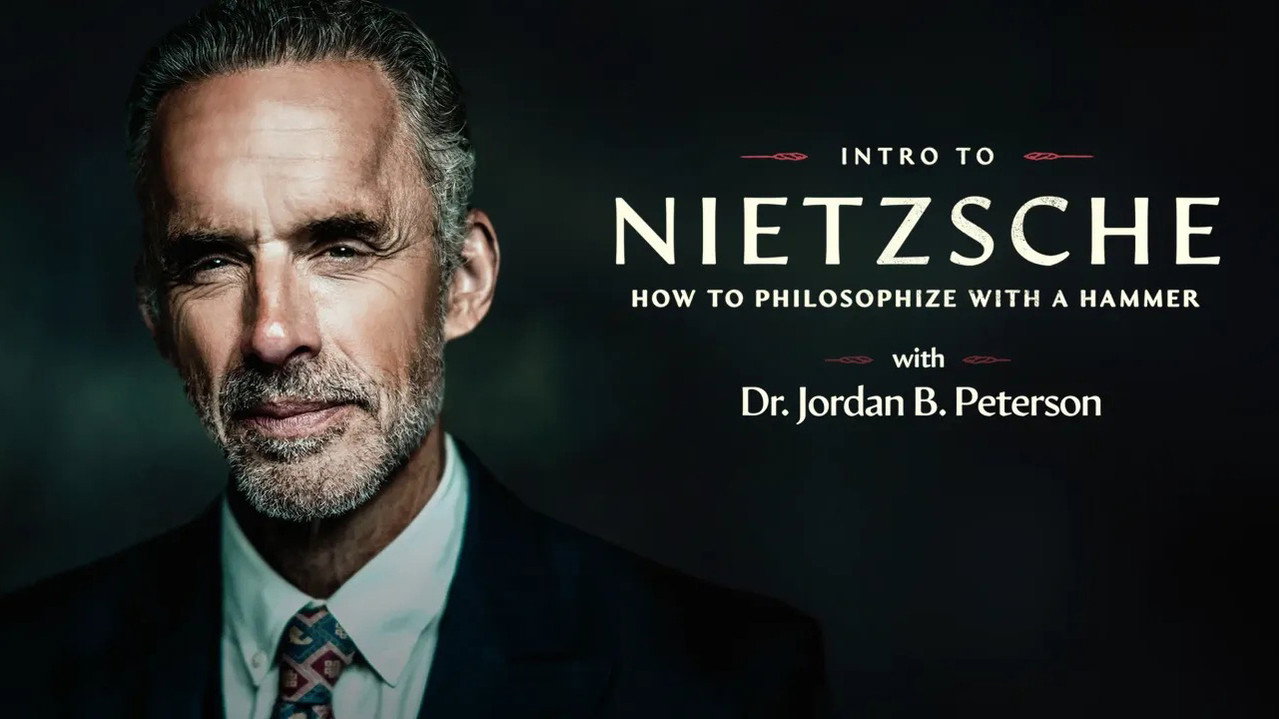
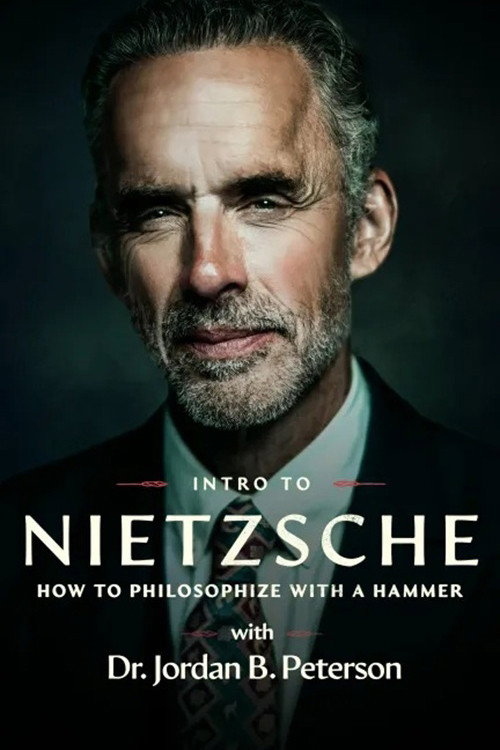
Intro to Nietzsche

How to philosophize with a hammer

Ended First aired 10/May/2026 United States English 1 season(s) 8 episode(s)
In Introduction to Nietzsche, an eight-hour course, Dr. Peterson embarks on a deep exploration of the life, philosophy, and enduring influence of Friedrich Nietzsche. Set against the backdrop of the late 19th century, we examine how Nietzsche's ideas challenged traditional moral and philosophical foundations, paving the way for new perspectives on the human condition. The course delves into key concepts such as the will to power, the critique of truth and morality, and the affirmation of life in the face of nihilism, while also exploring Nietzsche's complex relationship with religion, academia, and the works of other thinkers. Ultimately, we are invited to confront uncomfortable realities, embrace necessary struggles, and cultivate the courage and gratitude needed to realize our full potential.

Episode Time in Your Timezone

See when new episodes air in your local time.

Air Time

Source: UTC · Your timezone: America/New_York

When does the episode air near you?

The local release time is not available yet because this show has no schedule time.


Notice: Schedule time is not available yet.

Show Insights

See how viewers feel about this show before you start watching.

TimeScore 33% Skip It
Binge Meter 48% Slow Burn
Episode Pulse Quiet 40% activity score
Drop Rate 0% Very Low

Scores are based on audience votes, watchlist activity, episode progress, and viewer behavior on EpisodeTime.

Seasons & Episodes

Browse episodes by season.

Season 1 · Course 1
8 episode(s) · Air date: 10/May/2026
Improve Season
Season Overview

--

S1E8
Views on Christianity
Air date: 10/May/2026 · Runtime: 75 min
Summary

In this eighth and final lecture, Dr. Peterson delves into Nietzsche's critique of Christianity and slave morality, exploring the philosopher's complex views on religion, power, and resentment. We examine Nietzsche's admiration for the Old Testament and classical Greek culture, contrasting it with his disdain for what he perceived as the "global infantilizing compassion" of Christianity. The course concludes by exploring the dangers of resentment and victimhood as political forces, and the importance of gratitude and voluntary service in the face of suffering.


Summary

In this eighth and final lecture, Dr. Peterson delves into Nietzsche's critique of Christianity and slave morality, exploring the philosopher's complex views on religion, power, and resentment. We examine Nietzsche's admiration for the Old Testament and classical Greek culture, contrasting it with his disdain for what he perceived as the "global infantilizing compassion" of Christianity. The course concludes by exploring the dangers of resentment and victimhood as political forces, and the importance of gratitude and voluntary service in the face of suffering.

S1E7
Embracing Struggle
Air date: 10/May/2026 · Runtime: 56 min
Summary

In lecture seven, we navigate Nietzsche's critique of the modern philosophical and societal tendency to prioritize security, comfort, and the abolition of suffering above all else. Nietzsche argues that this "leveling" impulse, driven by a misguided sense of compassion and egalitarianism, ultimately undermines the pursuit of greatness and the willingness to embrace necessary struggles. The lecture explores the importance of exposing oneself and others to optimal challenges as a means of fostering growth, courage, and the realization of human potential.

Summary

In lecture seven, we navigate Nietzsche's critique of the modern philosophical and societal tendency to prioritize security, comfort, and the abolition of suffering above all else. Nietzsche argues that this "leveling" impulse, driven by a misguided sense of compassion and egalitarianism, ultimately undermines the pursuit of greatness and the willingness to embrace necessary struggles. The lecture explores the importance of exposing oneself and others to optimal challenges as a means of fostering growth, courage, and the realization of human potential.

S1E6
Courageous Trust
Air date: 10/May/2026 · Runtime: 70 min
Summary

In lecture six, we dive further into Nietzsche's philosophy, exploring the concept of the will to power and its implications for understanding human nature and morality. Dr. Peterson discusses how philosophical concepts are interconnected and evolve together, much like biological systems, and how the pursuit of truth often requires confronting uncomfortable realities. We also touch on the role of cynicism as a transitional stage between naivety and wisdom, emphasizing the importance of courageous trust in relationships and the necessity of allowing for overproduction and error in the pursuit of progress and mastery.

Summary

In lecture six, we dive further into Nietzsche's philosophy, exploring the concept of the will to power and its implications for understanding human nature and morality. Dr. Peterson discusses how philosophical concepts are interconnected and evolve together, much like biological systems, and how the pursuit of truth often requires confronting uncomfortable realities. We also touch on the role of cynicism as a transitional stage between naivety and wisdom, emphasizing the importance of courageous trust in relationships and the necessity of allowing for overproduction and error in the pursuit of progress and mastery.

S1E5
The Will to Power
Air date: 10/May/2026 · Runtime: 59 min
Summary

In lecture five, we delve into Nietzsche's critique of the axiomatic presuppositions underlying human thought and the notion of the "I" as the source of thinking. We explore Nietzsche's idea that thoughts come unbidden, challenging the assumption that the subject "I" is the condition for the predicate "think." This leads to a discussion of the unifying spirit or will to power that Nietzsche posits as a potential replacement for the concept of God. We also touch on Jung's attempt to identify the commonality in narratives across cultures as a way to understand this central unifying structure. The lecture concludes by emphasizing that sanity is not merely an internal state but is related to one's optimal embeddedness in coherent systems of hierarchy and relationships.

Summary

In lecture five, we delve into Nietzsche's critique of the axiomatic presuppositions underlying human thought and the notion of the "I" as the source of thinking. We explore Nietzsche's idea that thoughts come unbidden, challenging the assumption that the subject "I" is the condition for the predicate "think." This leads to a discussion of the unifying spirit or will to power that Nietzsche posits as a potential replacement for the concept of God. We also touch on Jung's attempt to identify the commonality in narratives across cultures as a way to understand this central unifying structure. The lecture concludes by emphasizing that sanity is not merely an internal state but is related to one's optimal embeddedness in coherent systems of hierarchy and relationships.

S1E4
Challenging Morality
Air date: 10/May/2026 · Runtime: 57 min
Summary

In lecture four, we investigate Nietzsche's provocative ideas in Beyond Good and Evil, exploring his challenges to traditional notions of truth, morality, and the nature of philosophical thinking itself. Nietzsche questions the existence of simple opposites, the role of unconscious instincts in shaping thought, and the idea that every philosophy is a disguised autobiography of its author, urging us to reexamine our assumptions about good and evil.

Summary

In lecture four, we investigate Nietzsche's provocative ideas in Beyond Good and Evil, exploring his challenges to traditional notions of truth, morality, and the nature of philosophical thinking itself. Nietzsche questions the existence of simple opposites, the role of unconscious instincts in shaping thought, and the idea that every philosophy is a disguised autobiography of its author, urging us to reexamine our assumptions about good and evil.

S1E3
Questioning Truth
Air date: 10/May/2026 · Runtime: 65 min
Summary

In lecture three, we begin our study of Nietzsche's Beyond Good and Evil, examining his aphoristic and ironic writing style as he questions the fundamental assumptions underlying the philosophical pursuit of truth. Nietzsche challenges the axiom that truth is inherently valuable and redemptive, asking whether untruth, uncertainty, or even ignorance might be preferable for happiness and well-being. The lecture explores these profound questions, highlighting the complexity of determining the value of truth and its relationship to the human condition.

Summary

In lecture three, we begin our study of Nietzsche's Beyond Good and Evil, examining his aphoristic and ironic writing style as he questions the fundamental assumptions underlying the philosophical pursuit of truth. Nietzsche challenges the axiom that truth is inherently valuable and redemptive, asking whether untruth, uncertainty, or even ignorance might be preferable for happiness and well-being. The lecture explores these profound questions, highlighting the complexity of determining the value of truth and its relationship to the human condition.

S1E2
Nietzsche and Dostoevsky
Air date: 10/May/2026 · Runtime: 73 min
Summary

In lecture two, we look at the life and thought of Friedrich Nietzsche, exploring his influential ideas on perspectivism, the critique of morality, and the affirmation of life in the face of nihilism. The lecture highlights Nietzsche's complex relationship with academia, his creative genius, and the parallels between his philosophy and the works of Fyodor Dostoevsky, ultimately culminating in a tragic breakdown and untimely death.

Summary

In lecture two, we look at the life and thought of Friedrich Nietzsche, exploring his influential ideas on perspectivism, the critique of morality, and the affirmation of life in the face of nihilism. The lecture highlights Nietzsche's complex relationship with academia, his creative genius, and the parallels between his philosophy and the works of Fyodor Dostoevsky, ultimately culminating in a tragic breakdown and untimely death.

S1E1
Philosophical Foundations
Air date: 10/May/2026 · Runtime: 43 min
Summary

In this introductory lecture, we delve into the life and philosophy of Friedrich Nietzsche, with Dr. Jordan Peterson, exploring his profound impact on Western thought and his unique approach to "philosophizing with a hammer." Set against the backdrop of the dynamic late 19th century, characterized by rapid industrialization, scientific breakthroughs, and sociopolitical upheavals, Nietzsche's ideas challenged traditional moral and philosophical foundations, paving the way for new perspectives on the human condition.

Summary

In this introductory lecture, we delve into the life and philosophy of Friedrich Nietzsche, with Dr. Jordan Peterson, exploring his profound impact on Western thought and his unique approach to "philosophizing with a hammer." Set against the backdrop of the dynamic late 19th century, characterized by rapid industrialization, scientific breakthroughs, and sociopolitical upheavals, Nietzsche's ideas challenged traditional moral and philosophical foundations, paving the way for new perspectives on the human condition.

Cast

Main cast members.

Crew

Creators, directors, writers, and production crew.

Similar TV Shows

Community picks and smart matches based on genre, network, country, and language.

Smart picks

Suggest a Similar Show

Login to suggest similar TV shows.

User Reviews & Ratings

Audience score, review cards, votes, comments, and watch activity.

+ Review
0.0 0 review(s)
No ratings yet.
Watch Activity
Watching0
Completed0
Dropped0
Not Interested0
Watched Episode0
Season Rating Chart

Season Rating Chart

Average rating from all episode ratings in each season.

No episode ratings yet. Rate episodes below to build this chart.
Top Rated Episodes

Top Rated Episodes

Episodes ranked by audience rating.

No top episodes yet.
No reviews yet. Be the first to rate this show.
My Rating

My Rating

What did you think of Intro to Nietzsche?

Login to Review