NOVA: The Planets

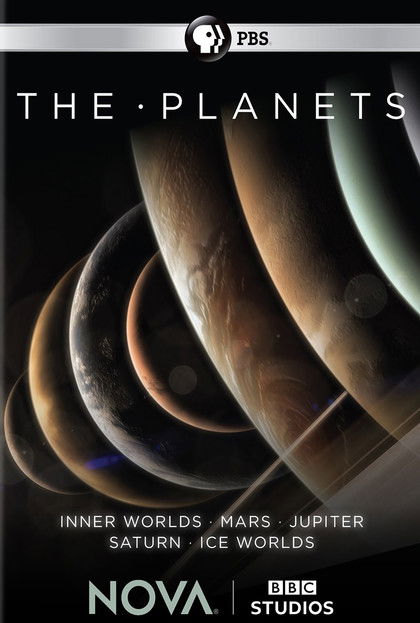
NOVA: The Planets

Ended First aired 25/Jul/2019 United States English 1 season(s) 5 episode(s)
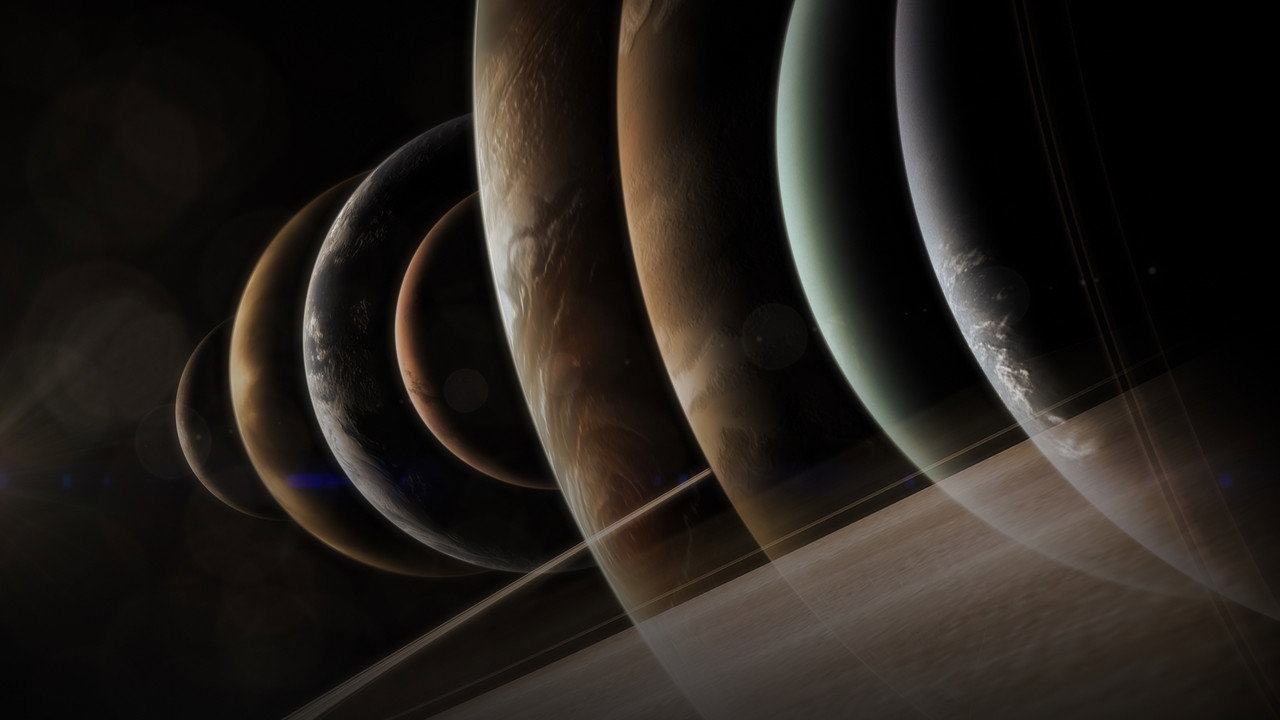
The life of our solar system told in five dramatic stories spanning billions of years.

Episode Time in Your Timezone

See when new episodes air in your local time.

Improve air time

Air Time

Source: UTC · Your timezone: America/New_York

When does the episode air in United States?

The local release time is not available yet because this show has no schedule time.


Notice: Schedule time is not available yet.
Improve release time Schedule day · Air time · Original timezone

Add or correct the official timezone, weekly air day, and air time only when you know the real source schedule. EpisodeTime uses this to convert episodes into every visitor’s local time.

Add release time

Show Insights

See how viewers feel about this show before you start watching.

TimeScore 33% Skip It
Binge Meter 48% Slow Burn
Episode Pulse Quiet 40% activity score
Drop Rate 0% Very Low

Scores are based on audience votes, watchlist activity, episode progress, and viewer behavior on EpisodeTime.

Seasons & Episodes

Browse episodes by season.

Season 1 · Season 1
5 episode(s) · Air date: 25/Jul/2019
Improve Season
Season Overview

--

S1E5
Ice Worlds
Air date: 14/Aug/2019 · Runtime: 60 min
Summary

Over a billion miles from the sun, beyond the rocky inner planets and the gas giants, lie the ice words—Uranus and Neptune. NOVA takes you inside the missions that rewrote the story of the outer solar system: NASA’s Voyager 1 & 2 capture Neptune’s supersonic winds, and rings around a tipped-over Uranus. And when New Horizons flies by Pluto in 2015, it reveals jagged ice mountains and an underground ocean.


Summary

Over a billion miles from the sun, beyond the rocky inner planets and the gas giants, lie the ice words—Uranus and Neptune. NOVA takes you inside the missions that rewrote the story of the outer solar system: NASA’s Voyager 1 & 2 capture Neptune’s supersonic winds, and rings around a tipped-over Uranus. And when New Horizons flies by Pluto in 2015, it reveals jagged ice mountains and an underground ocean.

S1E4
Saturn
Air date: 07/Aug/2019 · Runtime: 60 min
Summary

Over the past 40 years, a handful of space probes has given us glimpses of Saturn. But NASA’s Cassini, which explored the gas giant’s realm for 13 years, delivered the most breathtaking new insights. NOVA takes you inside Cassini’s epic journey as it makes stunning discoveries: Saturn’s rings are younger than the dinosaurs and may be remnants of an ice moon. And geysers erupting ice and gas on the moon Enceladus show that it could have all the ingredients for life. But to protect it, the Cassini mission team makes a bittersweet decision.

Summary

Over the past 40 years, a handful of space probes has given us glimpses of Saturn. But NASA’s Cassini, which explored the gas giant’s realm for 13 years, delivered the most breathtaking new insights. NOVA takes you inside Cassini’s epic journey as it makes stunning discoveries: Saturn’s rings are younger than the dinosaurs and may be remnants of an ice moon. And geysers erupting ice and gas on the moon Enceladus show that it could have all the ingredients for life. But to protect it, the Cassini mission team makes a bittersweet decision.

S1E3
Jupiter
Air date: 31/Jul/2019 · Runtime: 60 min
Summary

Jupiter is not just the oldest planet orbiting the sun—it’s also the largest. So when the young gas giant went on a rampage through the inner solar system, it shaped the fate of everything in its path. Speeding towards the Sun, Jupiter’s massive gravitational force hurled debris into interstellar space, stunting the growth of would-be planets. Earth might have been doomed had Saturn not pulled Jupiter back. Today, Jupiter resides in the outer solar system, where its gravity bends the paths of asteroids and stokes volcanic activity on its moon Io. But it could one day wreak havoc again.

Summary

Jupiter is not just the oldest planet orbiting the sun—it’s also the largest. So when the young gas giant went on a rampage through the inner solar system, it shaped the fate of everything in its path. Speeding towards the Sun, Jupiter’s massive gravitational force hurled debris into interstellar space, stunting the growth of would-be planets. Earth might have been doomed had Saturn not pulled Jupiter back. Today, Jupiter resides in the outer solar system, where its gravity bends the paths of asteroids and stokes volcanic activity on its moon Io. But it could one day wreak havoc again.

S1E2
Mars
Air date: 24/Jul/2019 · Runtime: 60 min
Summary

The Red Planet was once a vibrant blue water-world, home to raging rivers, active volcanoes, and even an ocean. But as the young planet’s core cooled, its magnetic field and protective atmosphere faded, eventually exposing it to the wrath of the sun. With its volcanoes extinguished and its water lost to space, Mars became the frozen desert planet we know today. But if it once had many of the ingredients necessary to form life, how far along might that process have gotten?

Summary

The Red Planet was once a vibrant blue water-world, home to raging rivers, active volcanoes, and even an ocean. But as the young planet’s core cooled, its magnetic field and protective atmosphere faded, eventually exposing it to the wrath of the sun. With its volcanoes extinguished and its water lost to space, Mars became the frozen desert planet we know today. But if it once had many of the ingredients necessary to form life, how far along might that process have gotten?

S1E1
Inner Worlds
Air date: 25/Jul/2019 · Runtime: 60 min
Summary

The four planets closest to the sun, called the rocky planets, were born from the same material in the same era. But they couldn’t be more different: Tiny Mercury is the runt of the litter, almost like a moon. Venus is devilishly hot, and Mars is a frozen desert world. Only on Earth do we find the unique conditions for life as we know it. But why only here? Were Earth's neighbors always so extreme? And is there somewhere else in the solar system life might flourish?

Summary

The four planets closest to the sun, called the rocky planets, were born from the same material in the same era. But they couldn’t be more different: Tiny Mercury is the runt of the litter, almost like a moon. Venus is devilishly hot, and Mars is a frozen desert world. Only on Earth do we find the unique conditions for life as we know it. But why only here? Were Earth's neighbors always so extreme? And is there somewhere else in the solar system life might flourish?

Cast

Main cast members.

Crew

Creators, directors, writers, and production crew.

Similar TV Shows

Community picks and smart matches based on genre, network, country, and language.

Smart picks

Suggest a Similar Show

Login to suggest similar TV shows.

User Reviews & Ratings

Audience score, review cards, votes, comments, and watch activity.

+ Review
0.0 0 review(s)
No ratings yet.
Watch Activity
Watching0
Completed0
Dropped0
Not Interested0
Watched Episode0
Season Rating Chart

Season Rating Chart

Average rating from all episode ratings in each season.

No episode ratings yet. Rate episodes below to build this chart.
Top Rated Episodes

Top Rated Episodes

Episodes ranked by audience rating.

No top episodes yet.
No reviews yet. Be the first to rate this show.
My Rating

My Rating

What did you think of NOVA: The Planets?

Login to Review