Printing Films

Printing Films

Continuing First aired 08/Feb/2026 United States English 3 season(s) 31 episode(s)
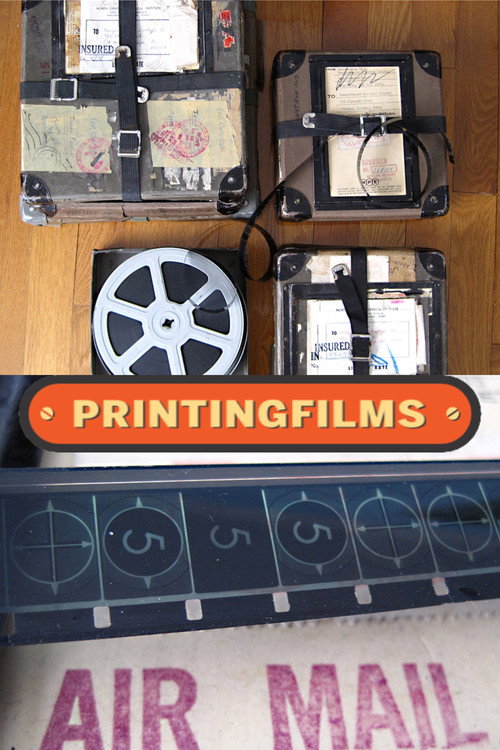
A series of vintage films that showcase the technologies and processes of printing, journalism, and typography.

Episode Time in Your Timezone

See when new episodes air in your local time.

Improve air time

Air Time

Source: UTC · Your timezone: America/New_York

When does the episode air in United States?

The local release time is not available yet because this show has no schedule time.


Notice: Schedule time is not available yet.
Improve release time Schedule day · Air time · Original timezone

Add or correct the official timezone, weekly air day, and air time only when you know the real source schedule. EpisodeTime uses this to convert episodes into every visitor’s local time.

Add release time

Show Insights

See how viewers feel about this show before you start watching.

TimeScore 33% Skip It
Binge Meter 48% Slow Burn
Episode Pulse Quiet 40% activity score
Drop Rate 0% Very Low

Scores are based on audience votes, watchlist activity, episode progress, and viewer behavior on EpisodeTime.

Seasons & Episodes

Browse episodes by season.

Season 3 · Printing & Journalism Films
13 episode(s) · Air date: 08/Feb/2026
Improve Season
Season Overview

--

S3E13
The Manhattan Alphabetical Phone Directory
Air date: 03/May/2026 · Runtime: 22 min
Summary

This silent, black & white film was made as an in-house film for the New York Telephone Company and shows the process of updating the Manhattan telephone directory daily and then incorporating them into the massive yearly book. It describes how a Linotype works, shows proofreading, lockup, printing, binding, paper cutting, stereotyping, and gluing. There are also some pretty goofy title cards and a crazy final scene with a guy smoking in a mirror for no apparent reason. Ca. 1940s
Summary

This silent, black & white film was made as an in-house film for the New York Telephone Company and shows the process of updating the Manhattan telephone directory daily and then incorporating them into the massive yearly book. It describes how a Linotype works, shows proofreading, lockup, printing, binding, paper cutting, stereotyping, and gluing. There are also some pretty goofy title cards and a crazy final scene with a guy smoking in a mirror for no apparent reason. Ca. 1940s

S3E12
The Art and Technique of Photoengraving
Air date: 26/Apr/2026 · Runtime: 29 min
Summary

This film, created by Horan Engraving, shows the entire process of photoengraving. Starting with taking a photo, it shows camera work, engraving, etching, plate preparation, touch-up, zinc & copper plates, one-color process, four-color process and more. If you want to learn how a photograph becomes a printing plate and a final print in a newspaper or book, look no further. Ca. 1950s

Summary

This film, created by Horan Engraving, shows the entire process of photoengraving. Starting with taking a photo, it shows camera work, engraving, etching, plate preparation, touch-up, zinc & copper plates, one-color process, four-color process and more. If you want to learn how a photograph becomes a printing plate and a final print in a newspaper or book, look no further. Ca. 1950s

S3E11
Printing Through the Ages
Air date: 19/Apr/2026 · Runtime: 12 min
Summary

A very easy to understand and simplified explanation of how printing began. The film starts with the beginning of writing and continues to tell the story of printing including Gutenberg, punch cutting, iron hand presses, hot-metal type casting, high-speed rotary presses, and newspaper production. Year: 1950

Summary

A very easy to understand and simplified explanation of how printing began. The film starts with the beginning of writing and continues to tell the story of printing including Gutenberg, punch cutting, iron hand presses, hot-metal type casting, high-speed rotary presses, and newspaper production. Year: 1950

S3E10
Hand Composition at R.R. Donnelley & Sons Co.
Air date: 12/Apr/2026 · Runtime: 12 min
Summary

This silent, black & white training film was created for The Lakeside Press in Chicago, Illinois. Using title cards, the film shows the step-by-step method of properly assembling hand type in a composing stick, kerning, display line composition, initials, cutting leads and slugs, spacing, and proofing. This is a great film for learning the basics of hand composition for letterpress printing. Ca: 1940s

Summary

This silent, black & white training film was created for The Lakeside Press in Chicago, Illinois. Using title cards, the film shows the step-by-step method of properly assembling hand type in a composing stick, kerning, display line composition, initials, cutting leads and slugs, spacing, and proofing. This is a great film for learning the basics of hand composition for letterpress printing. Ca: 1940s

S3E9
Communications the Printed World
Air date: 05/Apr/2026 · Runtime: 18 min
Summary

Using the Kimberly-Clark Corporation “Graphic Communications Through the Ages” series of oil paintings, this film goes through the history of printing starting with paper making in Egypt and shows most of the major advancements in printing technology from Gutenberg to Mergenthaler to Frederic Goudy. At 16:30, there is a small break from the oil paintings to “modern day” footage before the film ends. Year: 1973

Summary

Using the Kimberly-Clark Corporation “Graphic Communications Through the Ages” series of oil paintings, this film goes through the history of printing starting with paper making in Egypt and shows most of the major advancements in printing technology from Gutenberg to Mergenthaler to Frederic Goudy. At 16:30, there is a small break from the oil paintings to “modern day” footage before the film ends. Year: 1973

S3E8
You and the World of Print
Air date: 29/Mar/2026 · Runtime: 19 min
Summary

“Where does print come from?” is the question asked at the beginning of the film and it attempts to show the process of printing from press to final product. Using a few of the Kimberly-Clark Corporation “Graphic Communications Through the Ages” series of oil paintings, the film shows the history and technological improvements of printing. A simple explanation of offset-lithography is given along with views of large, web presses, bindery techniques, and paper making. Created by the Printing Industries Association of Texas, the film ends with a pitch for people to join the printing industry and get jobs that will eventually become high-paying and skilled. Year: 1976

Summary

“Where does print come from?” is the question asked at the beginning of the film and it attempts to show the process of printing from press to final product. Using a few of the Kimberly-Clark Corporation “Graphic Communications Through the Ages” series of oil paintings, the film shows the history and technological improvements of printing. A simple explanation of offset-lithography is given along with views of large, web presses, bindery techniques, and paper making. Created by the Printing Industries Association of Texas, the film ends with a pitch for people to join the printing industry and get jobs that will eventually become high-paying and skilled. Year: 1976

S3E7
The Wide Window of Mr. Malone
Air date: 22/Mar/2026 · Runtime: 26 min
Summary

“George Malone sees the world through many windows” but the window that allows him to see the most is his daily newspaper The New York Times. The film tracks back the history of the newspaper and relates it to “today” in 1965. It shows the many departments and people involved in creating one of the most well-known newspapers in the world. There is an extensive display of the various foreign offices in London, Paris, Brussels, Rome, Bombay, Hong Kong, and Tokyo. The end of the film shows the production process and schedule for printing a new edition every day. Year: 1965

Summary

“George Malone sees the world through many windows” but the window that allows him to see the most is his daily newspaper The New York Times. The film tracks back the history of the newspaper and relates it to “today” in 1965. It shows the many departments and people involved in creating one of the most well-known newspapers in the world. There is an extensive display of the various foreign offices in London, Paris, Brussels, Rome, Bombay, Hong Kong, and Tokyo. The end of the film shows the production process and schedule for printing a new edition every day. Year: 1965

S3E6
Special to the Times
Air date: 15/Mar/2026 · Runtime: 22 min
Summary

A film created by The New York Times to show how the newspaper goes from idea to printed product in 1982. With A.M. Rosenthal as the Executive Editor, they show the meeting of editors and leaders of different parts of the newspaper deciding what goes on the front page. The film also features foreign corespondents and photographers covering the 1982 war between Israel and Lebanon and PLO refugee camps. The Washington D.C. Bureau is shown to demonstrate the depth of experience and knowledge of the reporters and photographers. The editorial staff is shown deciding on the often-controversial editorial articles published. Many other departments of the newspaper are shown including the financial section, arts critics, police reporters, city reporters, architecture section, etc. Year: 1982

Summary

A film created by The New York Times to show how the newspaper goes from idea to printed product in 1982. With A.M. Rosenthal as the Executive Editor, they show the meeting of editors and leaders of different parts of the newspaper deciding what goes on the front page. The film also features foreign corespondents and photographers covering the 1982 war between Israel and Lebanon and PLO refugee camps. The Washington D.C. Bureau is shown to demonstrate the depth of experience and knowledge of the reporters and photographers. The editorial staff is shown deciding on the often-controversial editorial articles published. Many other departments of the newspaper are shown including the financial section, arts critics, police reporters, city reporters, architecture section, etc. Year: 1982

S3E5
I.T.U. Electronic Progress
Air date: 08/Mar/2026 · Runtime: 17 min
Summary

A film created by the International Typographic Union to display the advancing electronic technology being introduced to typesetting and printing. It specifically demonstrates “A System to Computerize Advertising Composition at the Washington Evening Star” in Washington D.C. This film shows an IBM 1620 computer and additional storage disks working with Linofilm typesetters that were installed in July of 1963. There is a very in-depth explanation of the process of early computer and film typesetting. Additionally, new forms of plate making with cameras and photo composition are shown. Year: 1966

Summary

A film created by the International Typographic Union to display the advancing electronic technology being introduced to typesetting and printing. It specifically demonstrates “A System to Computerize Advertising Composition at the Washington Evening Star” in Washington D.C. This film shows an IBM 1620 computer and additional storage disks working with Linofilm typesetters that were installed in July of 1963. There is a very in-depth explanation of the process of early computer and film typesetting. Additionally, new forms of plate making with cameras and photo composition are shown. Year: 1966

S3E4
From Hot Metal to Cold Type
Air date: 01/Mar/2026 · Runtime: 24 min
Summary

This film was created by the International Typographic Union to encourage their members to become more comfortable with the new “Cold Type” technology revolutionizing the typesetting industry. Starting with an explanation of the hot-metal process, they feature the Intertype Fotosetter and then go through the entire photo-composition process. The film shows camera work, stripping, chemical development, and paste-up. It ends with an aerial view of the ITU building in Colorado Springs, CO. Ca. 1965

Summary

This film was created by the International Typographic Union to encourage their members to become more comfortable with the new “Cold Type” technology revolutionizing the typesetting industry. Starting with an explanation of the hot-metal process, they feature the Intertype Fotosetter and then go through the entire photo-composition process. The film shows camera work, stripping, chemical development, and paste-up. It ends with an aerial view of the ITU building in Colorado Springs, CO. Ca. 1965

S3E3
Type Speaks
Air date: 22/Feb/2026 · Runtime: 25 min
Summary

For anyone interested in seeing the entire process of type manufacturing, this is one of the best films made. Created by the American Type Founders Company, this film features the appearance and narration of Ben Grauer, a famous NBC radio personality explaining his love of books and modern printing. The history of printing is briefly shown followed by showing the in-depth process of matrix and punch making. The film shows the most in-depth and visually easy-to-understand process of making type. It follows the entire process of type making from original design (showcasing Lydian by Warren Chappell) to pattern making, punch cutting, matrix making, and the use of the Benton engraving machine. Year: 1948

Summary

For anyone interested in seeing the entire process of type manufacturing, this is one of the best films made. Created by the American Type Founders Company, this film features the appearance and narration of Ben Grauer, a famous NBC radio personality explaining his love of books and modern printing. The history of printing is briefly shown followed by showing the in-depth process of matrix and punch making. The film shows the most in-depth and visually easy-to-understand process of making type. It follows the entire process of type making from original design (showcasing Lydian by Warren Chappell) to pattern making, punch cutting, matrix making, and the use of the Benton engraving machine. Year: 1948

S3E2
Hot Line to Profit
Air date: 15/Feb/2026 · Runtime: 15 min
Summary

Are you a printer, typesetter, binder, screen printer, or image scanner in need of help with technical problems and are your shirt collars wide-enough to prove that it is the 1970s? If so, this is the film for you. The Graphic Arts Technical Foundation (GATF) has a telephone hotline that you can call for technical assistance and problem-solving to help you stay profitable in the printing business. The GATF was established in Pittsburgh, PA to help over 1,200 printers and reproduction facilities of all sizes deal with common issues affecting production and to increase profitability. They offered on-call trouble shooting, research and development in new technologies and tactics, and education to keep you and your staff informed and abreast of all new ideas in printing. Ca. 1970

Summary

Are you a printer, typesetter, binder, screen printer, or image scanner in need of help with technical problems and are your shirt collars wide-enough to prove that it is the 1970s? If so, this is the film for you. The Graphic Arts Technical Foundation (GATF) has a telephone hotline that you can call for technical assistance and problem-solving to help you stay profitable in the printing business. The GATF was established in Pittsburgh, PA to help over 1,200 printers and reproduction facilities of all sizes deal with common issues affecting production and to increase profitability. They offered on-call trouble shooting, research and development in new technologies and tactics, and education to keep you and your staff informed and abreast of all new ideas in printing. Ca. 1970

S3E1
Graphic Communications: We Used to Call it Printing
Air date: 08/Feb/2026 · Runtime: 23 min
Summary

Starting out with the funkiest song the late 1960s could create, the film shows a fashion photo shoot for the title screen of the film. It shows all of the processes involved in making the final print including photography, laser scanning, platemaking, printing, and trimming. The film features the printing of The Wall Street Journal in California showing the way that the articles are transferred using phone, microwave, and paper-punch tape. All forms of printing are displayed from small, letterpress jobs to printing on pharmaceutical drugs and packaging for toothpaste. Beginning at 17:41, there is a five minute “music video” (for lack of a better term) for printing that has the grooviest pan flute and beats you’ve ever heard. Worth watching just for this! Year: 1969

Summary

Starting out with the funkiest song the late 1960s could create, the film shows a fashion photo shoot for the title screen of the film. It shows all of the processes involved in making the final print including photography, laser scanning, platemaking, printing, and trimming. The film features the printing of The Wall Street Journal in California showing the way that the articles are transferred using phone, microwave, and paper-punch tape. All forms of printing are displayed from small, letterpress jobs to printing on pharmaceutical drugs and packaging for toothpaste. Beginning at 17:41, there is a five minute “music video” (for lack of a better term) for printing that has the grooviest pan flute and beats you’ve ever heard. Worth watching just for this! Year: 1969

Season 2 · Monotype
10 episode(s) · Air date: 08/Feb/2026
Improve Season
Season Overview

--

S2E10
Monotype: A Monotype Composing Machine
Air date: 12/Apr/2026 · Runtime: 59 min
Summary

This silent film starts with a brief overview of the Monotype Works buildings as well as the company homes for workers. See hundreds of Monotypes being built in the factory from raw materials to the casting machine and keyboards. At 33:25, His Majesty the King, Duke of York (whom “The King’s Speech” was based on) visits the Monotype factory. He inspects the workers and factory and then learns how to type on a Monotype keyboard. Year: 1925

Summary

This silent film starts with a brief overview of the Monotype Works buildings as well as the company homes for workers. See hundreds of Monotypes being built in the factory from raw materials to the casting machine and keyboards. At 33:25, His Majesty the King, Duke of York (whom “The King’s Speech” was based on) visits the Monotype factory. He inspects the workers and factory and then learns how to type on a Monotype keyboard. Year: 1925

S2E9
Monotype: Getting to Know Monophoto Filmsetters
Air date: 05/Apr/2026 · Runtime: 38 min
Summary

Learn all about the ‘Monophoto’ Filmsetter from Monotype. This machine attempts to bridge the gap in typesetting from the hot metal machines to the “new and exciting” world of photo typesetting. Using light-sensitive paper, a photographic lens, and photo type matrices, the Monotype casts type that can be used for offset printing instead of the old, hot-metal process. See diagrams of the machine, dark room processing, and in-depth explanation of paste-up techniques. (note: audio is missing for the first 35 seconds) Year: 1963

Summary

Learn all about the ‘Monophoto’ Filmsetter from Monotype. This machine attempts to bridge the gap in typesetting from the hot metal machines to the “new and exciting” world of photo typesetting. Using light-sensitive paper, a photographic lens, and photo type matrices, the Monotype casts type that can be used for offset printing instead of the old, hot-metal process. See diagrams of the machine, dark room processing, and in-depth explanation of paste-up techniques. (note: audio is missing for the first 35 seconds) Year: 1963

S2E8
Monotype: ‘Monophoto’ Filmsetting Machine
Air date: 29/Mar/2026 · Runtime: 23 min
Summary

This film showcases Monotype’s answer to the upcoming phototypesetting revolution. They take great pains to show how little has changed from the old, hot-metal Monotype machines by replacing the hot-metal pot with a light source and the brass matrices with individual, photo negative matrices for exposure on paper or film. This cautious approach was in order to assuage the fears of printers who did not want to change. Throughout this film, you see what is new (including a session in the red-light darkroom) along with everything that has stayed the same (same keyboard and punched paper tape). Watch a woman “stripping” in new lines of text using techniques that would have seemed futuristic and fanciful in the late 1950s. Ca. 1958

Summary

This film showcases Monotype’s answer to the upcoming phototypesetting revolution. They take great pains to show how little has changed from the old, hot-metal Monotype machines by replacing the hot-metal pot with a light source and the brass matrices with individual, photo negative matrices for exposure on paper or film. This cautious approach was in order to assuage the fears of printers who did not want to change. Throughout this film, you see what is new (including a session in the red-light darkroom) along with everything that has stayed the same (same keyboard and punched paper tape). Watch a woman “stripping” in new lines of text using techniques that would have seemed futuristic and fanciful in the late 1950s. Ca. 1958

S2E7
Monotype: Stay Put! The Use of a Revolutionary Darkroom Camera
Air date: 22/Mar/2026 · Runtime: 22 min
Summary

The ‘Rotadon’ darkroom camera from Monotype’s subsidiary, Pictorial Machinery Limited, is a revolutionary, new camera made for photographing, enlarging and reducing, and creating photo positive and negatives for photographic reproduction and printing. It is so revolutionary that it allows the operator to STAY PUT and not have to move anywhere compared to old and outdated copy cameras (which is hilariously acted out by a chain-smoking, bumbling operator). The camera has a vacuum back for creating exposures on plates, films, and papers with a mirror setup and easy adjustment for enlarging and reducing images and illustrations to any size needed for film output. Lots of obscure buttons, switches, and gauges are on display along with diagrams and darkroom shots to show how the system works. Year: 1955

Summary

The ‘Rotadon’ darkroom camera from Monotype’s subsidiary, Pictorial Machinery Limited, is a revolutionary, new camera made for photographing, enlarging and reducing, and creating photo positive and negatives for photographic reproduction and printing. It is so revolutionary that it allows the operator to STAY PUT and not have to move anywhere compared to old and outdated copy cameras (which is hilariously acted out by a chain-smoking, bumbling operator). The camera has a vacuum back for creating exposures on plates, films, and papers with a mirror setup and easy adjustment for enlarging and reducing images and illustrations to any size needed for film output. Lots of obscure buttons, switches, and gauges are on display along with diagrams and darkroom shots to show how the system works. Year: 1955

S2E6
Monotype: Modules Make Sense
Air date: 15/Mar/2026 · Runtime: 26 min
Summary

Monotype made this film to showcase their newer, computer technologies that were finally coming to the market in the late 1960s. Based on the idea of modules which could be interchanged as needed for printers’ and typesetters’ specific needs, Monotype is desperate to show they are using modern circuit boards and tape-reading “computers” and are not behind the times. Even though they are doing their best to talk about computers and modern technology, this film still has a great deal about their mechanical keyboards, composition casters, and non-digital machinery. At the very end of the film, they literally walk over to their R&D department to show a preview of their Monophoto 600 Film Setter, which is their first truly-electronic typesetting machine. Ca. 1968

Summary

Monotype made this film to showcase their newer, computer technologies that were finally coming to the market in the late 1960s. Based on the idea of modules which could be interchanged as needed for printers’ and typesetters’ specific needs, Monotype is desperate to show they are using modern circuit boards and tape-reading “computers” and are not behind the times. Even though they are doing their best to talk about computers and modern technology, this film still has a great deal about their mechanical keyboards, composition casters, and non-digital machinery. At the very end of the film, they literally walk over to their R&D department to show a preview of their Monophoto 600 Film Setter, which is their first truly-electronic typesetting machine. Ca. 1968

S2E5
Monotype: Monotype Casting Good Type
Air date: 08/Mar/2026 · Runtime: 38 min
Summary

Has your Monotype ever produced low-quality type and you can’t figure out why? This film was created to show you how to properly maintain your Monotype Casting Machine to cast perfect type, every time. The film features an easy-to-understand series of diagrams showing how the Monotype casts type from molten metal as well as the correct way to clean dross out of your type metal. It is as exciting as it sounds! Year: 1958

Summary

Has your Monotype ever produced low-quality type and you can’t figure out why? This film was created to show you how to properly maintain your Monotype Casting Machine to cast perfect type, every time. The film features an easy-to-understand series of diagrams showing how the Monotype casts type from molten metal as well as the correct way to clean dross out of your type metal. It is as exciting as it sounds! Year: 1958

S2E4
Monotype: Monotype School Story
Air date: 01/Mar/2026 · Runtime: 14 min
Summary

This film was created to convince printing and typesetting shops to send their employees to the school to learn Monotype skills. After a strange—and quite romantically awkward—beginning, this film showcases the Monotype School in London where students can learn the skills required to operate a Monotype keyboard for casting or photo typesetting. We see typing and keyboarding practice using light-up keyboard boards, very close-up shots of a student’s eyes, and students listening to tapes of people speaking to test their speed of typing. Year; 1968

Summary

This film was created to convince printing and typesetting shops to send their employees to the school to learn Monotype skills. After a strange—and quite romantically awkward—beginning, this film showcases the Monotype School in London where students can learn the skills required to operate a Monotype keyboard for casting or photo typesetting. We see typing and keyboarding practice using light-up keyboard boards, very close-up shots of a student’s eyes, and students listening to tapes of people speaking to test their speed of typing. Year; 1968

S2E3
Monotype: Making Sure - How the Machines are Made
Air date: 22/Feb/2026 · Runtime: 28 min
Summary

The Monotype is a wonder of mechanics and engineering and in this film you will see the process of manufacturing the Monotype keyboard and composition caster from beginning to end. The film starts by showing the Salfords, UK train station and entrance into the Monotype factory, then shows all of the milling, drilling, cutting, and casting required to make the casting machine. After that, we see the keyboard and paper-punch apparatus being constructed. The film ends with footage of testing and calibrating the machine and images of the Monotypes being shipped all over the world. Ca. 1955

Summary

The Monotype is a wonder of mechanics and engineering and in this film you will see the process of manufacturing the Monotype keyboard and composition caster from beginning to end. The film starts by showing the Salfords, UK train station and entrance into the Monotype factory, then shows all of the milling, drilling, cutting, and casting required to make the casting machine. After that, we see the keyboard and paper-punch apparatus being constructed. The film ends with footage of testing and calibrating the machine and images of the Monotypes being shipped all over the world. Ca. 1955

S2E2
Monotype: Handle with Care and Understanding
Air date: 15/Feb/2026 · Runtime: 24 min
Summary

This film was created to explain how to properly care and maintain a Monotype Casting Machine mould block (where the molten hot-metal is cast into the matrices). For anyone interested in the inner-workings of the Monotype Casting Machine, there is a great, slow-motion explanation with parts of the machine in clear plastic so you can see how it functions. Year: 1965

Summary

This film was created to explain how to properly care and maintain a Monotype Casting Machine mould block (where the molten hot-metal is cast into the matrices). For anyone interested in the inner-workings of the Monotype Casting Machine, there is a great, slow-motion explanation with parts of the machine in clear plastic so you can see how it functions. Year: 1965

S2E1
Monotype: Type Faces in the Making
Air date: 08/Feb/2026 · Runtime: 35 min
Summary

If you ever wondered how a typeface went from a designer’s drawing to a finished, cast piece of type from the Monotype; this is the film for you. Starting with an original drawing, this film goes through the painstaking and multi-step process of creating a single typeface in a single style in a single size for the Monotype composition caster. It shows the entire process of type design and creation at Monotype including tracing using custom-made projectors, making a technical drawing (showcasing the drawing office with many women workers), making a pattern plate using a pantograph, creating a brass pattern, using a pantograph to engrave a punch, punching the brass to make matrices for the full matrix case, and finally casting the letters in type metal using a composition caster. Ca. 1955

Summary

If you ever wondered how a typeface went from a designer’s drawing to a finished, cast piece of type from the Monotype; this is the film for you. Starting with an original drawing, this film goes through the painstaking and multi-step process of creating a single typeface in a single style in a single size for the Monotype composition caster. It shows the entire process of type design and creation at Monotype including tracing using custom-made projectors, making a technical drawing (showcasing the drawing office with many women workers), making a pattern plate using a pantograph, creating a brass pattern, using a pantograph to engrave a punch, punching the brass to make matrices for the full matrix case, and finally casting the letters in type metal using a composition caster. Ca. 1955

Season 1 · Linotype
8 episode(s) · Air date: 07/Feb/2026
Improve Season
Season Overview

--

S1E8
Linotype: The Tactics of Tapesetting
Air date: 29/Mar/2026 · Runtime: 10 min
Summary

Created by Mergenthaler to show off the newest typesetting, film and computer machines to the American Newspaper Publishers Association. This film was created at a time when all newspapers knew film and computer technology were the future, but they were not yet convinced in which technology to invest. It features the Elektron, tape-perforating keyboard center, Linofilm Quick, and other early-computer machines. Many newspaper men in suits, thick glasses, and skinny black ties. Year: 1967

Summary

Created by Mergenthaler to show off the newest typesetting, film and computer machines to the American Newspaper Publishers Association. This film was created at a time when all newspapers knew film and computer technology were the future, but they were not yet convinced in which technology to invest. It features the Elektron, tape-perforating keyboard center, Linofilm Quick, and other early-computer machines. Many newspaper men in suits, thick glasses, and skinny black ties. Year: 1967

S1E7
Linotype: The Diagrammer
Air date: 22/Mar/2026 · Runtime: 9 min
Summary

Promotional film for the Mergenthaler Diagrammer which helped automate technical drawings for schematics, electrical diagrams and drafting. With a “James Bond” style introduction, this amazingly complex machine seems more exciting than you would think. There is a great little sequence showing the 1886 Blower Linotype (before its restoration and acquisition by the Smithsonian Institution) and the Elektron. It also gives a quick overview of typing for tape perforation. Year: 1970

Summary

Promotional film for the Mergenthaler Diagrammer which helped automate technical drawings for schematics, electrical diagrams and drafting. With a “James Bond” style introduction, this amazingly complex machine seems more exciting than you would think. There is a great little sequence showing the 1886 Blower Linotype (before its restoration and acquisition by the Smithsonian Institution) and the Elektron. It also gives a quick overview of typing for tape perforation. Year: 1970

S1E6
Linotype: Blue Streak Linotypes
Air date: 15/Mar/2026 · Runtime: 21 min
Summary

This film features the Model 31 (with up to four magazines) and the Model 32 (with up to 8 magazines with the auxiliary magazines). Many new safety features and speed improvements are displayed. Key features: one revolution magazine shifting, swinging keyboard for ease of service, pot safety stops, easy knife adjusting, Mohr Lino Saw, mechanical quadding, and the thermo-blow mold blower. Year: 1955

Summary

This film features the Model 31 (with up to four magazines) and the Model 32 (with up to 8 magazines with the auxiliary magazines). Many new safety features and speed improvements are displayed. Key features: one revolution magazine shifting, swinging keyboard for ease of service, pot safety stops, easy knife adjusting, Mohr Lino Saw, mechanical quadding, and the thermo-blow mold blower. Year: 1955

S1E5
Linotype: Linotron 505
Air date: 08/Mar/2026 · Runtime: 14 min
Summary

Featuring the cathode-ray tube Linotron 505 for high-speed film typesetting. Although this is a film machine, the input is still controlled by perforated tape. The film features many line diagrams on how the CRT machine works and exposes the characters onto paper or film. It goes into depth about the optical grid system of characters on glass plates. The ability to photographically create “fake” italics is possible for the first time and the facilities that create the grids are shown in detail. The film ends with an aerial view of the Mergenthaler (a division of Eltra) production plant in Long Island, New York. Year: 1969

Summary

Featuring the cathode-ray tube Linotron 505 for high-speed film typesetting. Although this is a film machine, the input is still controlled by perforated tape. The film features many line diagrams on how the CRT machine works and exposes the characters onto paper or film. It goes into depth about the optical grid system of characters on glass plates. The ability to photographically create “fake” italics is possible for the first time and the facilities that create the grids are shown in detail. The film ends with an aerial view of the Mergenthaler (a division of Eltra) production plant in Long Island, New York. Year: 1969

S1E4
Linotype: Linotron 1010
Air date: 01/Mar/2026 · Runtime: 10 min
Summary

The Linotron is a very early CRT exposure machine. It creates a page (not just a line) of text at one time. Using a film grid of characters, it can create up to 1,000 characters per second. The film starts with a great animated sequence showing the speed of change and the overwhelming mass of communication. The Linotron 1010 is a CRT machine in three parts; the control unit, the character generator, and the output/display unit. It no longer uses tape input, but now uses magnetic tape from computers. Year: 1966

Summary

The Linotron is a very early CRT exposure machine. It creates a page (not just a line) of text at one time. Using a film grid of characters, it can create up to 1,000 characters per second. The film starts with a great animated sequence showing the speed of change and the overwhelming mass of communication. The Linotron 1010 is a CRT machine in three parts; the control unit, the character generator, and the output/display unit. It no longer uses tape input, but now uses magnetic tape from computers. Year: 1966

S1E3
Linotype: Linotype Elektron
Air date: 22/Feb/2026 · Runtime: 10 min
Summary

“In the age of jet speed, Mergenthaler presents the Elektron: fully automated typesetting that is jet fast and all new from the base up.” This film showcases the completely re-designed Elektron Linotype. Fed by perforated tape, the Elektron can cast up to 15 lines per minute without an operator at the machine. With many electronic and hydraulic parts, the Elektron was Linotype’s last hot-metal type casting machine. Although many improvements were made, the limits of mechanical type setting had been reached and the Elektron was too little too late for the market that had moved on to photo and computer composition. Year: 1962

Summary

“In the age of jet speed, Mergenthaler presents the Elektron: fully automated typesetting that is jet fast and all new from the base up.” This film showcases the completely re-designed Elektron Linotype. Fed by perforated tape, the Elektron can cast up to 15 lines per minute without an operator at the machine. With many electronic and hydraulic parts, the Elektron was Linotype’s last hot-metal type casting machine. Although many improvements were made, the limits of mechanical type setting had been reached and the Elektron was too little too late for the market that had moved on to photo and computer composition. Year: 1962

S1E2
Linotype: The Eighth Wonder
Air date: 15/Feb/2026 · Runtime: 25 min
Summary

Made for the 75th anniversary of the Linotype in 1961, this film shows the impact that the invention of the Linotype had on the printing industry and the world. There are excellent sections on typeface design, cutting steel punches, using the Benton engraving machine, and the manufacture of Linotype matrices. The film showcases various models of Linotypes, machines running via tape and Teletypesetting, as well as Linofilm machines and the process of producing film type matrices. (note: audio is missing for the first 10 seconds) Year: 1961

Summary

Made for the 75th anniversary of the Linotype in 1961, this film shows the impact that the invention of the Linotype had on the printing industry and the world. There are excellent sections on typeface design, cutting steel punches, using the Benton engraving machine, and the manufacture of Linotype matrices. The film showcases various models of Linotypes, machines running via tape and Teletypesetting, as well as Linofilm machines and the process of producing film type matrices. (note: audio is missing for the first 10 seconds) Year: 1961

S1E1
Linotype: Farewell etaoin shrdlu
Air date: 08/Feb/2026 · Runtime: 29 min
Summary

A film created by Carl Schlesinger and David Loeb Weiss documenting the last day of hot metal typesetting at The New York Times. This film shows the entire newspaper production process from hot-metal typesetting to creating stereo moulds to high-speed press operation. At the end of the film, the new typesetting and photographic production process is shown in contrast to the old ways. There are interviews with workers at NYT that are for and against the new technology. In fact, one typesetter is retiring on this final day as he does not want to learn the new process and technology. This is the first time the film has ever been available in HD from the original 16mm master film. Ca. 1978

Summary

A film created by Carl Schlesinger and David Loeb Weiss documenting the last day of hot metal typesetting at The New York Times. This film shows the entire newspaper production process from hot-metal typesetting to creating stereo moulds to high-speed press operation. At the end of the film, the new typesetting and photographic production process is shown in contrast to the old ways. There are interviews with workers at NYT that are for and against the new technology. In fact, one typesetter is retiring on this final day as he does not want to learn the new process and technology. This is the first time the film has ever been available in HD from the original 16mm master film. Ca. 1978

Cast

Main cast members.

No cast available yet.

Similar TV Shows

Community picks and smart matches based on genre, network, country, and language.

Smart picks

Suggest a Similar Show

Login to suggest similar TV shows.

User Reviews & Ratings

Audience score, review cards, votes, comments, and watch activity.

+ Review
0.0 0 review(s)
No ratings yet.
Watch Activity
Watching0
Completed0
Dropped0
Not Interested0
Watched Episode0
Season Rating Chart

Season Rating Chart

Average rating from all episode ratings in each season.

No episode ratings yet. Rate episodes below to build this chart.
Top Rated Episodes

Top Rated Episodes

Episodes ranked by audience rating.

No top episodes yet.
No reviews yet. Be the first to rate this show.
My Rating

My Rating

What did you think of Printing Films?

Login to Review