S2011E20
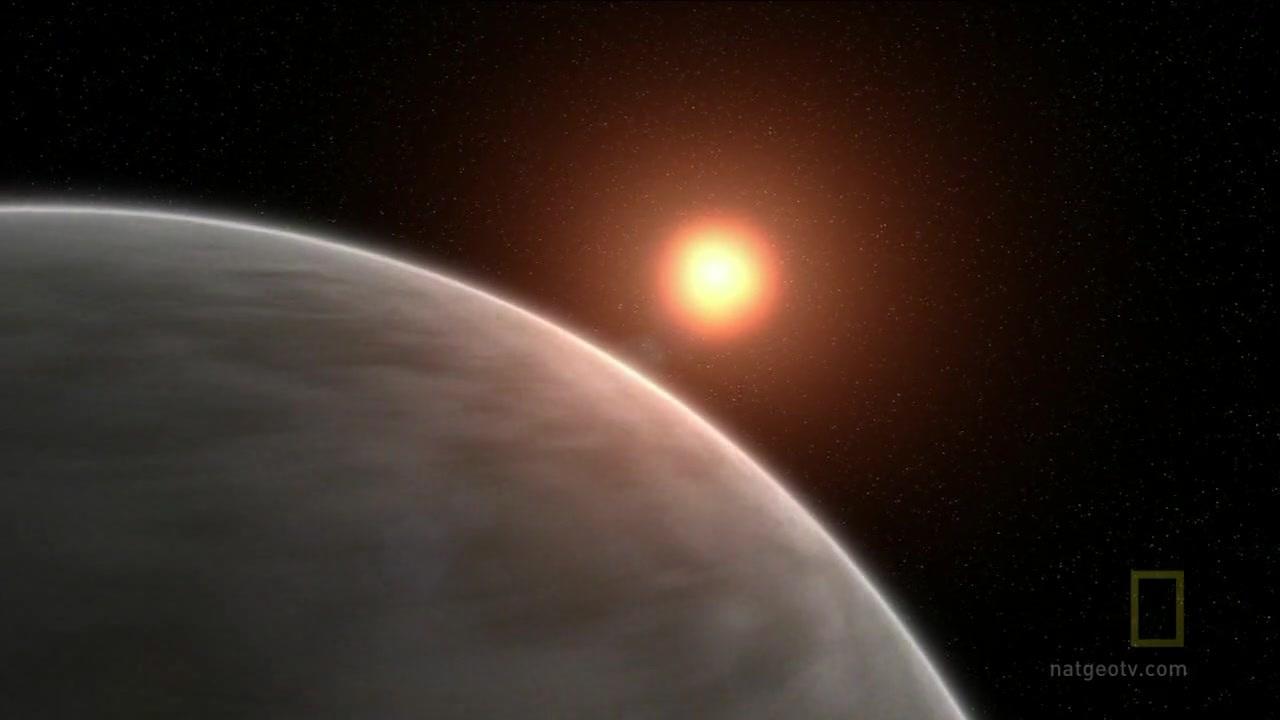
Expedition Whisky
See when new episodes air in your local time.
Source: America/New_York · Your timezone: America/New_York
The episode airs in your local time New York - United States at:
Add or correct the official timezone, weekly air day, and air time only when you know the real source schedule. EpisodeTime uses this to convert episodes into every visitor’s local time.
Add release timeSee how viewers feel about this show before you start watching.
Scores are based on audience votes, watchlist activity, episode progress, and viewer behavior on EpisodeTime.
Browse episodes by season.
--
--
--
A look at how the outer skin of the planet preserves and enriches life on Earth; new insights into Earth's largely unknown interior.
--
The incredible skills, resources, and ingenuity required of the earliest seafaring societies in Southeast Asia, the Viking explorers of Europe, and the Polynesians trying to become the first humans to cross the open ocean are examined in this episode. (This episode is also referred to as "First Mariners" on some unofficial sources.)
--
--
--
--
--
The 1991 eruption of Japan's Mount Unzen, which killed 43 people, including three volcanologists, is recalled. Included: archival footage; survivor testimonies.
Go on an action packed, hi-tech fishing expedition with the Sea Strikers. When the ocean's top predators strike, their prey doesn't even know what hit them! NGC dives into the attack strategies that sea hunters employ to deliver killer blows. Biologists use an high-speed underwater camera to capture the hunting techniques of the goliath grouper, barracuda, bonito and bull shark, and provides also never-before-seen footage of the feeding habits of the ocean's other top predators — mackerel, mahi mahi, wahoo, tuna and billfish. Biologists Steve Huskey and Nicolai Konow, and underwater cameraman Andy Casagrande embark on a high-tech fishing expedition to capture the hunting techniques of some of the oceans top predators using a slow motion camera that produces breathtaking images.
Bryan Fry has always been intrigued with things that can kill you. Since surviving a near fatal rattlesnake bite this scientist, turned venom hunter, has made it his mission to seek out the worlds deadliest creatures. Each venom he collects may hold the secret to creating life-saving medicines. Now Bryan targets North America and three of its most toxic species.
Parallel universes, strange hidden worlds, where an alternative reality exists have haunted science fiction for decades. Parallel universes sound like a myth, but a surprising number of leading scientists believe they are real. National Geographic delves into the mysterious science of other universes and discovers that many of physics most cherished theories actually predict that there are other universes beside our own. But what are they like? Could we ever visit them? And if we did, who or what would we meet? The reality is weirder than any science fiction.
At this very moment, you could be breathing the same oxygen molecule that Genghis Khan and George Washington did! NGC is putting a unique twist on history by retracing the extraordinary journey of a single molecule of oxygen an adventure that takes place over millions of years. The story begins with the birth of oxygen, moves on to photosynthesis, then travels through the age of the dinosaurs and follows the first steps of early man.
The centuries-old Voynich manuscript has remained an enigma. Filled with bizarre drawings and written in a language that even the best cryptographers cannot decipher, the tome has remained a puzzling mystery. The efforts to decode the book and determine its unknown author continue.
Over a century ago, sponge divers recovered an extremely complex mechanical device from a shipwreck. It was decades before they determined it's purpose, to accurately track the movement of the stars in the night sky. Dubbed the Antikythera mechanism (for the location of the shipwreck from which it came), the device is considered the world's first computer, developed by the Greeks around the 1st century B.C. Scientists continue to marvel at its intricate system of gears which rival that of the most complex Swiss watch.
Engineers wondered if a plane that operated solely on solar power could be built. Their efforts over a decade result in the Solar Impulse HB-SIA, the plane that triumphantly takes to the air. Making a 26-hour nonstop day-night-day flight climaxes the success of the Solar Impulse.
--
Secret World of Fireworks explores the closely held secrets, recipes, and techniques from the world of pyrotechnic showmen. National Geographic takes a behind the scenes look into this exclusive world with unique access from Zambelli Internationale of New Castle, Pennsylvania - Americas First Family of Fireworks - along with rocket scientists and chemists from Los Alamos, New Mexico.
On February 5th 2008 Super Tuesday 57 people lost their lives as 87 tornadoes devastated 5 states. It was Americas deadliest tornado outbreak in nearly a quarter of a century. Tornados are one of the most destructive forces of the planets with winds at 300 mile an hour. They can destroy buildings and hurl cars hundreds of feet through the air. Every year tornadoes decimate communities around the world killing hundreds of people. Planet Science deconstructs a tornado to learn how they form and how the develop such ferocious winds.
An insider's look at NASA's Constellation program which hopes to establish a human outpost on the moon by 2020.
Imagine a world frozen solid. Imagine that vast sheets of ice hundreds of feet thick encased the entire planet--a giant snowball floating through space. This is not some exotic new world deep in space. It may be our world, the Earth. Some top-ranking scientists believe that in the past the Earth froze over completely for millions of years... then warmed up rapidly over 600 million years ago. Struggling against skepticism and disbelief for years, they have gathered a growing body of evidence that explains many mysteries, and others in the scientific community are slowly coming around to the extraordinary idea not just of the dramatic freeze, but of an equally dramatic thaw. Naked Science explores what may have been the most extreme period of Earths climatic history, Meeting all the major players of this controversial theory that is Snowball Earth.
Does evolution really explain how life on Earth began? For decades, critics have attacked Darwin's theory and supported the case for a designer behind our existence. Could Darwin have been wrong?
Scientists study fragments of a meteorite, hoping to gain insight into the origins of life on Earth. Also: a controversial space rock from Mars is examined at NASA's Johnson Space Center in Houston.
Recently, paleontologists unearthed the fossilized remains of a 35-foot, 240 million-year-old ichthyosaur in Nevada's Augusta Mountains and instantly knew this creature would have been the ocean's top predator. Join the investigation as scientists attempt to understand where this unique creature fits in the evolutionary history of the first sea reptiles. Both in the lab and in the field, paleontologists search for clues to explain how a species that originally came from land transformed over millions of years into a purely aquatic creature.
With most of the planet covered by oceans and overcrowding an issue on land, the time may be right to turn the science fiction idea of living beneath the sea into a reality. This episode examines what it would take to construct and operate an undersea colony of 100 families. The technology that could make it happen is already being developed.
Some believe that man's insatiable desire to alter his environment is actually causing natural disasters. Urban sprawl perhaps strengthened a tornado in Atlanta; massive amounts of coal and water removal may have triggered Australia's strongest-ever earthquake; natural gas drilling causing a mud volcano in Java; these specific examples examined.
Have you ever seen lightning strike from the ground to the sky or float in midair? Spectacular and exotic forms of this natural phenomenon are slowed down on film to reveal minute detail. Luminous spheres that linger in airplanes are recreated. We will show you how rockets launched into storm clouds coax lightning down to earth. Naked Science: Lightning Chasers illuminates secrets of nature's most striking
As the sun continues to age, it becomes increasingly hot and begins to expand, eventually swallowing up Earth. The temperatures on our planet will rise, turning the third rock from the sun into a scorched and uninhabitable wasteland. The changes our planet will undergo are depicted.
This program looks at the remarkable occurrence of the total solar eclipse over Easter Island on July 11, 2010. The program looks at the science of the sun as it is revealed via the eclipse phenomenon and then takes us "near live" to the actual event as the film will be aired domestically only a few hours after it takes place there.
Cameras offer a rare look inside the Navy's latest weapon in the fight against terrorism: the USS Florida, a guided missile submarine. In a Joint Operations mission, the sub smuggles Navy SEALS ashore to identify a terrorist location and the use shipboard guided missiles to destroy the target. The technology on the sub allows it to operate quieter and stay underwater longer than previous ships.
Dead Tired uncovers research exploring whether tiredness may lead to heart attack, diabetes, obesity, and depression. In a unique TV experiment, witness what happens to a healthy 25-year old when he cuts back his sleep from eight to three hours a night for one week. The results are shocking! He loses lucidity, dreams whilst awake and drives a car while fast asleep!
Iceland's Eyjafjallajokull volcano erupted April 14, 2010, spewing aircraft-harming ash over most of Europe. It could cause Katla, its neighboring, larger volcano to erupt. NGC looks at Eyjafjallajokull before, during and after, explaining the science behind the chaos and the biggest disruption of air traffic since 9/11.
The famous explosion that took place in Siberia early in the 20th century, known as the Tunguska Event, obliterated everything within thousands of square miles. It was so intense that the skies of Europe were lit for several nights. The debate continues over its cause: meteor, comet, or volcanic gasses?
Scientists reveal evidence of the existence of alien life. Detailed imaging of an underground ocean on a planetary moon and newly discovered extrasolar planets reveal what contacting alien life will be like. This is a serious scientific look at how will we meet ET.
Until recently, there was nothing that could be done about natural disasters like super-volcanic eruptions, meteors striking Earth, and severe hurricanes. Now, both science and government are looking at possible game-changing options that include giant space mirrors, hurricane-draining pumps and lasers to save people and the planet.
From Hawaii's volcanoes to Greenland's glaciers to meteorites in Australia, teams of international scientists race to solve the mystery of how life first formed on Earth.
Each year, the moon moves an inch and one half farther away from Earth and is gaining momentum. The gravity it exerts on our planet acts as a stabilization mechinism, allowing for a consistent range of temperatures, seasons and days. If the moon moves just ten percent farther, it will cause unbelievable disaster for our planet, as Earth tips up to 90 degrees on its axis.
Travel back in time to look at three of the largest mass extinctions that have decimated life on the planet. What caused these wipeouts?
--
This episode examines the effects of a hypothetical radiological attack from a car bomb on a major U.S. city. The purpose is to give useful information in the event that such an event should occur. The stories of several characters are told to dramatize the effects on various types of people: those responding in the "hot zone", a person near to the blast whose symptoms develop over time, a pregnant woman who must evacuate, and investigators who comb through debris to determine who set the blast.
Astronomers continue to study black holes to understand what role they play in the universe. Scientists understand that their incredible pull can swallow nearby stars and entire galaxies and that they warp time and space. Investigators use the equations of Einstein and theories of Hawking to figure out what the inside of a black hole looks like and what time, place, or dimension lies on the other side. AKA Monster of the Milky Way AKA Cosmic Monsters
The hardest known substance on Earth is known for its value and beauty. Scientists believe diamonds could also hold incredible possibilities for the future. Their incredible durability and their unique properties could revolutionize everything from computer chips to space explorations. All diamonds, however, contain minor flaws. What science must do is create a perfect "super diamond".
--
In the farthest reaches of space, a volatile battle is taking place between two forces so great, they may eventually destroy the very universe itself. Known as Dark Matter and Dark Energy, these opposing forces have the capacity to rip apart the universe atom-by-atom. While scientists have previously theorised about a “Big Crunch” where the universe retracts back to its original size, the discovery of Dark Matter and Dark Energy has placed that hypothesis on the backburner. Some astronomers now believe that if Dark Matter offsets Dark Energy then as the universe slowly expands, stars will gradually fade, running out of fuel and leading to a dark, cold and lifeless universe. While the universe’s end may be 50 billion years away, great leaps in science will continue to alter how we believe the universe was formed – and how it will end.
Stephen Hawking is one of the worlds most famous scientists. But ALS, also known as Lou Gehrigs Disease, has left him almost totally paralysedand it is progressing. Unable to walk, talk, or write, his only way of communicating is through a computer program that turns a small movement of a finger or the blink of an eye, into words from a vocal synthesizer. But Hawking remains determined to discover a theory of everything, a complete set of rules for the Universe. Where did the Universe come from and where is it going? What is the nature of time? Will it ever come to an end? This programme will explore Hawkings major contributions to the understanding of our Universe - from his revolutionary proof that our Universe originated in a Big Bang; to his ground breaking discovery that Black Holes are not completely black, but rather emit radiation and eventually evaporate and disappear, to his insights on string theory. Will he unlock the secret of creation before his time runs out?
Secret World of Fireworks explores the closely held secrets, recipes, and techniques from the world of pyrotechnic showmen. National Geographic takes a behind the scenes look into this exclusive world with unique access from Zambelli Internationale of New Castle, Pennsylvania - Americas First Family of Fireworks - along with rocket scientists and chemists from Los Alamos, New Mexico.
Millions of years ago, Venus and Earth cut similar figures. Roughly the same size and about the same distance from the sun, their respective evolutions could have followed similar paths. But today, Venus is a seething vision of Hell, its battery-acid atmosphere and incessant, hurricane-force winds masking a blistering volcanic surface. Some scientists wonder if it is a harbinger of whats in store for Earth. Thanks to the European Space Agency, Venus Express the most sophisticated satellite ever to visit the planet is orbiting Earths estranged twin, gathering the data we need to figure out why Venus went bad. Could our home planet be hurtling towards a similar fate? And could the hostile Venusian environment, now seemingly devoid of biologys most fundamental ingredient water yet harbour life?
13.7 Billion years ago, there was absolutely nothing. No space, no time, and no matter. Then there was the Big Bang. Naked Science follows the first second of creation, when a minute speck of light appeared from nothing, expanded at unimaginable speed, and created everything we see in the Universe today.
Time travel theorists ask, what if we could send scientific and medical information through time--perhaps a cure for AIDS?
Three million miles from earth lies a planet so small that even the most advanced telescopes. A dedicated core of scientists offer educated guesses as to the makeup and condition of Pluto, as well as discuss its qualifications to be counted as a planet. Meahwhile, the New Horizons space probe continues its nine year trek to the planet to finally reveal the secrets of the "planet".
How did life begin? its one of the most fundamental and difficult questions that has challenged us for ages. Our planet is teaming with life, from the highest mountain to the deepest ocean; life is everywhere. But what was the firing pistol that started the evolutionary race? How did material go from non-living to alive?
Mysteries surrounding the Rocky Mountains are discussed. Included: recent theories on their formation and how the rate of growth of the American Rockies compares to that of their Canadian counterpart.
--
Thanks to new developments in the technology of astronomy, scientists have been able to collect new information, giving them clues to how our solar system was formed.
With advanced technology in their hands, astronomers and scientists may now be capable of detecting extraterrestrial life in the universe. In fact, some think the proof may be found in as little as a decade. Astronomers involved in the effort, including those at SETI (Search for Extraterrestrial Intelligence), discuss the possibilities and the likely spots for finding life outside of Earth.
Since the death of 1,700 people near a lake in Africa, scientists have uncovered a terrifying series of hazards in lakes across the world.
Great distances and dangerous environments make robotic spacecraft the best way for scientists to explore our solar system. Acting as our eyes and ears, these probes have revealed secrets about the distant planets and their moons, their surfaces, weather and environments.
--
Our planet Earth is teeming with life. To some, it's a miracle - but can science explain how it came into existence? Critics have attacked the theory of evolution for 150 years. They claim it is full of holes, and the gaps reveal the hand of an Intelligent Designer. Who's right? Naked Science investigates the most explosive science of them all and asks, was Darwin wrong?
The history and a projection of the future of the Earth's land masses caused by continental drift is explain by the theory of plate tectonics.
In the space of 500 years, eighteen of these huge monuments were built. Focusing more on the "who" than the "how" of their construction, forensic anthropology learns that it wasn't slaves that built the pyramids, as originally thought. The facilities that housed the workers have been unearthed, giving a clearer picture of the mammoth project that was pyramid building.
In over 200 years of study, scientists are still unsure of what stimulates a lightning strike. One current theory suggests that cosmic rays could be the trigger. The odd phenomenon of ball lightning is examined, as well as recently discovered sprites that emanate upward from clouds and into the middle atmosphere.
--
The supposed ability of some individuals to mentally transmit and receive thoughts is examined in this hour. Unsubstantiated claims are not proof, so several experiments are conducted to put the phenomenon to the test. This includes exploring the telepathic connection that some twins claim to experience through a series of tests on one twin and recording the other twin's reaction, and a Ganzfeld test where a person in one room attempts to transmit mental pictures to another person in a different room.
For 400 million years, sharks have dominated the Earth's oceans. They have survived 5 planetary mass extinctions to become the top predators of the sea, honed to an evolutionary perfection. But what shark species is the most deadly? And where in the world is it least safe to venture in to the water? Naked Science travelled across the world from Australia to California to find out.
--
A mysterious crash in Roswell, NM during the 1940s convinced many that our planet is being visited by space aliens. Crop circles in Britain have only added fuel to the fire. Few scientists doubt that life indeed exists elsewhere, but some believe we're more likely to make contact via radio waves.
National Geographic Naked Science presents "Super Volcano", the inside documentary of what might happen if the Yellowstone Caldera were to erupt one day. This documentary includes a Yellowstone timeline of past eruptions, how Yellowstone would affect the world, and what impact will it be for the U.S.
--
On a single day on a single street, with the DNA of just a couple of hundred random people, National Geographic Channel sets out to trace the ancestral footsteps of all humanity. Narrated by Kevin Bacon, The Human Family Tree travels to one of the most diverse corners of the world -- Queens, N.Y. -- to demonstrate how we all share common ancestors who embarked on very different journeys. Regardless of race, nationality or religion, all of us can trace our ancient origin back to the cradle of humanity, East Africa. What did our collective journey look like, and where did it take your specific ancestors? At what point in our past did we first cross paths with the supposed strangers living in our neighborhood? Now, in The Human Family Tree, the people of this quintessential American melting pot find out that their connections go much deeper than a common ZIP code.
Examining Earth's complex atmosphere. Included: how it is necessary for life on the surface; a man who braved its dangerous upper reaches and survived.
Main cast members.
Community picks and smart matches based on genre, network, country, and language.
 Year Million
Matched by details
Year Million
Matched by details
 Monument Mythos
Matched by details
Monument Mythos
Matched by details
 Linnea Quigley's Paranormal Truth
Matched by details
Linnea Quigley's Paranormal Truth
Matched by details
 Galactic Messages
Matched by details
Our Fascinating Planet
Matched by details
Galactic Messages
Matched by details
Our Fascinating Planet
Matched by details
 Allah and the Cosmos
Matched by details
Allah and the Cosmos
Matched by details
 LIFE BEYOND
Matched by details
LIFE BEYOND
Matched by details
 Bigfoot Took Her
Matched by details
Bigfoot Took Her
Matched by details
 Random Acts of Flyness
Matched by details
Random Acts of Flyness
Matched by details
 Paranormal Emergency
Matched by details
Paranormal Emergency
Matched by details
 The Proof Is Out There
Matched by details
The Proof Is Out There
Matched by details
 Cosmic Disclosure
Matched by details
Cosmic Disclosure
Matched by details
Audience score, review cards, votes, comments, and watch activity.