Summary
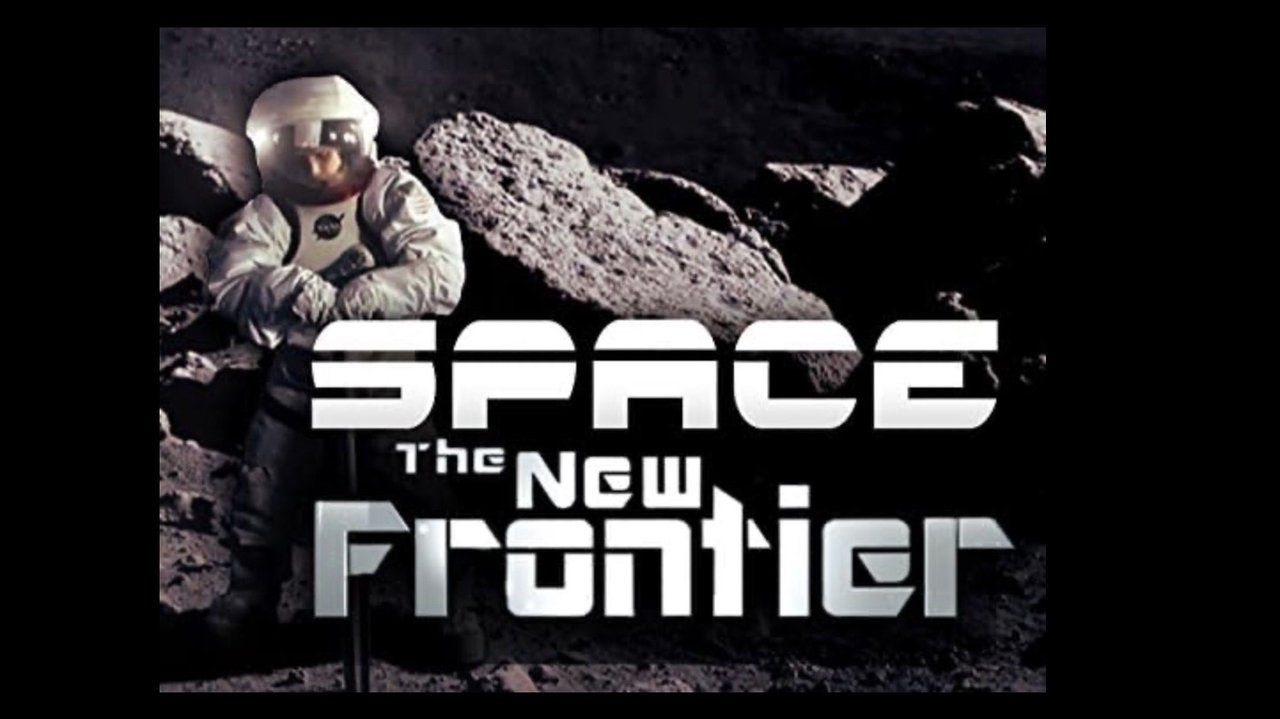
SunRISE, SPHEREx, NEOS, and more projects aim to expand knowledge of Earth, space, and galaxies. New telescopes and tech will explore new worlds and extend our reach into space.
See when new episodes air in your local time.
Source: UTC · Your timezone: America/New_York
The local release time is not available yet because this show has no schedule time.
Add or correct the official timezone, weekly air day, and air time only when you know the real source schedule. EpisodeTime uses this to convert episodes into every visitor’s local time.
Add release timeSee how viewers feel about this show before you start watching.
Scores are based on audience votes, watchlist activity, episode progress, and viewer behavior on EpisodeTime.
Browse episodes by season.
--
SunRISE, SPHEREx, NEOS, and more projects aim to expand knowledge of Earth, space, and galaxies. New telescopes and tech will explore new worlds and extend our reach into space.
With the IXPE high-energy telescope, we'll explore dramatic and violent cosmic events like colliding black holes and neutron stars, unveiling their hidden secrets.
The James Webb Space Telescope, a $10 billion spacecraft, is operational, set to explore the furthest galaxies, study exoplanet atmospheres, and pose new questions.
Juice and Europa Clipper, two missions to study Jupiter's atmosphere and moons, especially Europa, Callisto, and Ganymede, for signs of potential life.
Psyche spacecraft set to explore a metallic asteroid, Lucy heads to Jupiter's trojan asteroids, and DART tests technology to deflect dark asteroids.
ISS, the international space workhorse, faces replacement with new stations focusing on pure science and adding commercial interests like tourism and manufacturing.
Probes set to explore Venus, Earth's twin, seeking clues to its mysterious transformation from a hospitable planet to a hot, toxic environment.
New Earth observation satellites monitor rising temperatures, ocean levels, and alarming glacier melting rates.
International effort accelerates lunar return for resource extraction from regolith and Martian soil.
Sun science missions advance understanding of stars, solar winds, and planet effects, providing insights into other stars.
--
We're looking hard, but the numbers aren't stacking up. Is life on other planets really that hard to find? Does it even exist? We have not discovered so much as a signal, so maybe we really are alone in our neck of the galaxy!
The evidence to prove some of Einstein's theories had long been elusive, beyond the capabilities of technology, until now. It appears that Einstein is once again triumphant as we discover the latest in deep space observations.
Cubesats are miniature satellites that have been used exclusively in low Earth orbit for 15 years. Now, these tiny satellites are growing in mainstream popularity and are being used for interplanetary missions as well. They have even been sent to Mars with the Insight Mission, in hopes of better understanding the red planet, our solar system, and beyond.
This is the latest in Martian exploration, not just from orbit but also from rovers on the ground. New sources of water and planetary dust storms are a few of the stories unfolding on the Red Planet.
Two new space telescopes, Gaia and TESS, are in orbit with their primary missions coming to a close. They will be joined by the James Webb Telescope, and together they will open up a whole new vista into time and space.
The Japanese Asteroid Sample Return Mission has reached its target and is surveying the space rock, ready to dip down to acquire its sample. The return of asteroid material to Earth will aid scientists in the development in planetary defense systems.
The ESA-JAXA Bepi-Colombo Mission is about to launch, aiming to explore the long-neglected Mercury and unveil new insights into its mysterious light and dark features.
The commercial space flight companies are edging closer and closer to flight readiness. Paying customers will soon be launching into space; tourist revenue is projected to be a major stepping stone toward space exploration and colonization.
NASA's Parker Solar Probe Mission is on its way and will be shortly followed by Europe's Solar probe Mission. No spacecraft have traveled so fast or so close to a star before. The hope is to reveal the source of the solar winds that affect us here on Earth.
Satellites track climate change, revealing accelerated shifts in Earth's oceans and ice caps. Data supports urgent concerns.
--
--
--
The night sky is a time machine. The further we look out into the universe, the further back in time we reach. What we see in the night sky is only a small percentage of the contents of the Universe, most is dark matter and dark energy. We know it exists; however, its nature eludes us for the moment.
As scientists and astronomers peer closer at nearby stars with ever more fidelity they are discovering planets; exo planets, worlds outside our own solar system. With technological advances and improved techniques scientists are discovering more and more worlds every day. With confidence, scientists now calculated there could be as many as 40 billion Earth like planets in our Milky Way galaxy alone.
It powers the machinery of nature; our weather, encourages and sustains life on land and at sea. When it sets in the West it reveals to us its many billions of sibling stars populating the night sky. We study our Sun closely, and like a Rosetta stone it can reveal the secrets of all the other stars above.
These are the Moons of the gas giants. Each a unique and mysterious world of its own. Some have oceans of water, geysers of Sulphur or atmospheres of plastic. Some are just now being seen at the outer rim of our solar system, all are worthy of much more scrutiny.
Beyond the asteroid belt lay the gas giants, some can be seen with the naked eye, others only glimpsed once by a passing probe. We are again sending cameras to the edge of the solar system, giving us new insights into the evolution of our worlds.
Scientists and engineers have managed to land on a comet, knowledge of these celestial marauders may drive our industrial expansion into deep space.
The enigmatic planet Mars, now under robotic scrutiny with our sights set on a manned mission soon.
Mercury and Venus: two planets that generate more questions than answers as we delve deeper into their workings.
The study of our most influential partner, learning more about our closest neighbour and a planned return to the Moon.
Series introduction and the study of Earth from orbit. The current and planned series of satellites and observations to better know our own planet.
Main cast members.
Community picks and smart matches based on genre, network, country, and language.
The Test
Matched by details
Luxe Listings Sydney
Matched by details
The Fatal Conflict: Judea and Rome
Matched by details
Shiny Happy People
Matched by details
Choose Earth
Matched by details
Balance: A Perimenopause Journey
Matched by details
Chasing a Killer: Gary Allen
Matched by details
The CEO Club
Matched by details
Murder 101
Matched by details
Regular Heroes
Matched by details
35 Serial Killers the World Wants to Forget

Matched by details
Gloves Off
Matched by details
Audience score, review cards, votes, comments, and watch activity.