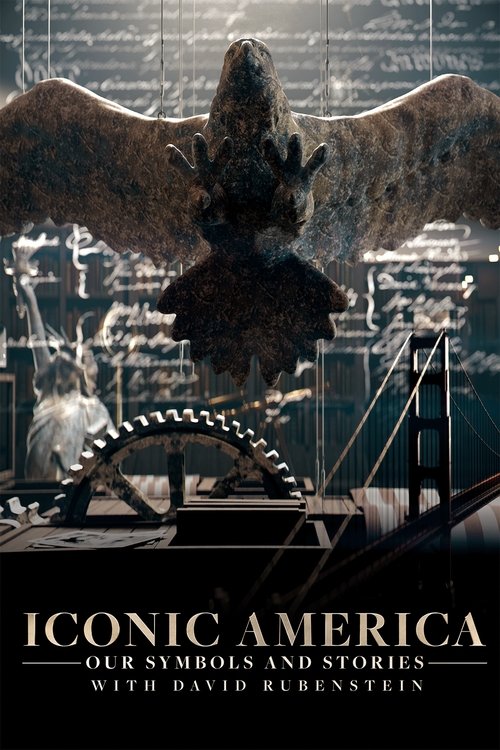

American Experience

American Experience

Continuing First aired 04/Oct/1988 United States English 39 season(s) 432 episode(s)
TV's most-watched history series brings to life the compelling stories from our past that inform our understanding of the world today.

Episode Time in Your Timezone

See when new episodes air in your local time.

Improve air time

Air Time

Source: America/New_York · Your timezone: America/New_York

When does the episode air in United States?

The episode airs in your local time New York - United States at:

9:00 PM on Tuesday

Notice: This scheduled time is based on: /9:00 PM/America/New_York/Tuesday.
Improve release time Schedule day · Air time · Original timezone

Add or correct the official timezone, weekly air day, and air time only when you know the real source schedule. EpisodeTime uses this to convert episodes into every visitor’s local time.

Add release time

Show Insights

See how viewers feel about this show before you start watching.

TimeScore 33% Skip It
Binge Meter 48% Slow Burn
Episode Pulse Quiet 40% activity score
Drop Rate 0% Very Low

Scores are based on audience votes, watchlist activity, episode progress, and viewer behavior on EpisodeTime.

Seasons & Episodes

Browse episodes by season.

Season 38 · Season 38
1 episode(s) · Air date: 06/Jan/2026
Improve Season
Season Overview

--

S38E1
Bombshell
Air date: 06/Jan/2026 · Time: 21:00 · Runtime: 60 min
Summary

On August 6, 1945, a revolutionary new weapon destroyed Hiroshima, a Japanese city of 300,000 inhabitants. Three days later, a second atomic bomb was dropped on Nagasaki. America's secret super-weapon was lauded for bringing about victory in the Pacific and ending World War II. President Truman's official announcement included half-truths that  shaped the government's official narrative: "Sixteen hours ago, an American airplane dropped one bomb on Hiroshima, an important Japanese army base." In fact, the bomb was aimed at Hiroshima's city center for maximum psychological effect; the army base on its outskirts escaped much damage.Eighty years after the devastating atomic bombings that ushered in the nuclear age, Bombshell explores how the U.S. government manipulated the narrative about the impact of the atomic bombings of the Japanese cities Hiroshima and Nagasaki. Through propaganda, censorship, and the co-opting of the press, the government presented a benevolent picture of atomic power, minimizing the horrific human toll. Bombshell sheds light on the efforts of a group of intrepid reporters to let the world know the truth.


Summary

On August 6, 1945, a revolutionary new weapon destroyed Hiroshima, a Japanese city of 300,000 inhabitants. Three days later, a second atomic bomb was dropped on Nagasaki. America's secret super-weapon was lauded for bringing about victory in the Pacific and ending World War II. President Truman's official announcement included half-truths that  shaped the government's official narrative: "Sixteen hours ago, an American airplane dropped one bomb on Hiroshima, an important Japanese army base." In fact, the bomb was aimed at Hiroshima's city center for maximum psychological effect; the army base on its outskirts escaped much damage.Eighty years after the devastating atomic bombings that ushered in the nuclear age, Bombshell explores how the U.S. government manipulated the narrative about the impact of the atomic bombings of the Japanese cities Hiroshima and Nagasaki. Through propaganda, censorship, and the co-opting of the press, the government presented a benevolent picture of atomic power, minimizing the horrific human toll. Bombshell sheds light on the efforts of a group of intrepid reporters to let the world know the truth.
Season 37 · Season 37
8 episode(s) · Air date: 21/Feb/2025
Improve Season
Season Overview

--

S37E8
Bombshell
Air date: 06/Jan/2026 · Time: 21:00 · Runtime: 83 min
Summary

The efforts of a group of intrepid reporters to let the world know the truth about the bombings of Japanese cities Hiroshima and Nagasaki during World War II.

Summary

The efforts of a group of intrepid reporters to let the world know the truth about the bombings of Japanese cities Hiroshima and Nagasaki during World War II.

S37E7
Kissinger (2): The Opportunist
Air date: 28/Oct/2025 · Time: 21:00 · Runtime: 83 min
Summary

Discover how Henry Kissinger's anti-Communist zeal would shape U.S. foreign policy in Vietnam, China, Chile, and the Soviet Union in the second half of the 20th century, through the voices of historians and colleagues.

Summary

Discover how Henry Kissinger's anti-Communist zeal would shape U.S. foreign policy in Vietnam, China, Chile, and the Soviet Union in the second half of the 20th century, through the voices of historians and colleagues.

S37E6
Kissinger (1): The Necessity of Power
Air date: 27/Oct/2025 · Time: 21:00 · Runtime: 83 min
Summary

The story of Henry Kissinger, the enigmatic powerbroker who served in the topmost echelons of U.S. diplomacy. Celebrated or reviled, his contradictions reflect those central to late 20th century U.S. foreign policy. With interviews from proteges and colleagues, Kissinger endeavors to understand his relentless drive for power, and how his policies shaped today’s world.

Summary

The story of Henry Kissinger, the enigmatic powerbroker who served in the topmost echelons of U.S. diplomacy. Celebrated or reviled, his contradictions reflect those central to late 20th century U.S. foreign policy. With interviews from proteges and colleagues, Kissinger endeavors to understand his relentless drive for power, and how his policies shaped today’s world.

S37E5
Hard Hat Riot
Air date: 30/Sep/2025 · Time: 21:00 · Runtime: 81 min
Summary

Hard Hat Riot tells the story of a struggling metropolis, a flailing president, a divided people, and a bloody juncture when the nation violently diverged ― culminating in a new political and cultural landscape that radically redefined American politics and foreshadowed the future.

Summary

Hard Hat Riot tells the story of a struggling metropolis, a flailing president, a divided people, and a bloody juncture when the nation violently diverged ― culminating in a new political and cultural landscape that radically redefined American politics and foreshadowed the future.

S37E4
Clearing the Air: The War on Smog
Air date: 26/Aug/2025 · Time: 21:00 · Runtime: 53 min
Summary

A chronicle of how Los Angeles' devastating smog problem in the 1940s and 50s led to the creation of the Environmental Protection Agency (EPA) and the Clean Air Act.

Summary

A chronicle of how Los Angeles' devastating smog problem in the 1940s and 50s led to the creation of the Environmental Protection Agency (EPA) and the Clean Air Act.

S37E3
Mr. Polaroid
Air date: 31/Mar/2025 · Time: 21:00 · Runtime: 52 min
Summary

Before the iPhone, the Polaroid camera let people instantly chronicle their lives. Along with instant photo mania, its company culture became the model for Silicon Valley. Mr. Polaroid is the story of Edwin Land, the man behind the camera.

Summary

Before the iPhone, the Polaroid camera let people instantly chronicle their lives. Along with instant photo mania, its company culture became the model for Silicon Valley. Mr. Polaroid is the story of Edwin Land, the man behind the camera.

S37E2
Change, Not Charity: The Americans with Disabilities Act
Air date: 24/Mar/2025 · Time: 21:00 · Runtime: 53 min
Summary

The emotional and dramatic story of the decades-long push for equality and accessibility that culminated in the passage of the Americans with Disabilities Act (ADA) in 1990. A story of courage and perseverance, the film highlights the determined people who literally put their bodies on the line to achieve their goal and change the lives of all Americans.

Summary

The emotional and dramatic story of the decades-long push for equality and accessibility that culminated in the passage of the Americans with Disabilities Act (ADA) in 1990. A story of courage and perseverance, the film highlights the determined people who literally put their bodies on the line to achieve their goal and change the lives of all Americans.

S37E1
Forgotten Hero: Walter White and The NAACP
Air date: 24/Feb/2025 · Time: 21:00 · Runtime: 113 min
Summary

While many consider the birth of the civil rights movement to be 1955, when Rosa Parks refused to give up her seat on an Alabama bus, the stage had been set decades before by activists of the National Association for the Advancement of Colored People. Some of the NAACP leaders are familiar, including W.E.B. Du Bois and Thurgood Marshall, but Walter White, head of the NAACP from 1929 to 1955, has been all but forgotten. With his blond hair and blue eyes, Walter White looked white; he described himself as “an enigma, a Black man occupying a white body.” Like virtually all light-skinned African Americans of his day, White was descended from enslaved Black women and powerful white men. But he was Black — by law, identity, and conviction and spent his entire life fighting for Black civil rights. Forgotten Hero: Walter White and the NAACP traces the life of this neglected civil rights hero and seeks to explain his disappearance from our history.

Summary

While many consider the birth of the civil rights movement to be 1955, when Rosa Parks refused to give up her seat on an Alabama bus, the stage had been set decades before by activists of the National Association for the Advancement of Colored People. Some of the NAACP leaders are familiar, including W.E.B. Du Bois and Thurgood Marshall, but Walter White, head of the NAACP from 1929 to 1955, has been all but forgotten. With his blond hair and blue eyes, Walter White looked white; he described himself as “an enigma, a Black man occupying a white body.” Like virtually all light-skinned African Americans of his day, White was descended from enslaved Black women and powerful white men. But he was Black — by law, identity, and conviction and spent his entire life fighting for Black civil rights. Forgotten Hero: Walter White and the NAACP traces the life of this neglected civil rights hero and seeks to explain his disappearance from our history.

Season 36 · Season 36
7 episode(s) · Air date: 23/Jan/2024
Improve Season
Season Overview

--

S36E7
American Coup: Wilmington 1898
Air date: 12/Nov/2024 · Time: 21:00 · Runtime: 112 min
Summary

American Coup: Wilmington 1898 tells the little-known story of a deadly race massacre and carefully orchestrated insurrection in North Carolina’s largest city — the only successful coup d’état in the history of the US. Stoking fears of “Negro Rule,” self-described white supremacists used intimidation and violence to destroy Black political and economic power and overthrow Wilmington’s democratically-elected, multi-racial government. Many Black residents were murdered, and thousands were banished. The story of what happened in Wilmington was suppressed for decades until descendants and scholars began to investigate. Today, many of those descendants — Black and white — are seeking the truth behind this intentionally buried history.

Summary

American Coup: Wilmington 1898 tells the little-known story of a deadly race massacre and carefully orchestrated insurrection in North Carolina’s largest city — the only successful coup d’état in the history of the US. Stoking fears of “Negro Rule,” self-described white supremacists used intimidation and violence to destroy Black political and economic power and overthrow Wilmington’s democratically-elected, multi-racial government. Many Black residents were murdered, and thousands were banished. The story of what happened in Wilmington was suppressed for decades until descendants and scholars began to investigate. Today, many of those descendants — Black and white — are seeking the truth behind this intentionally buried history.

S36E6
The American Vice President
Air date: 01/Oct/2024 · Time: 20:00 · Runtime: 53 min
Summary

The American Vice President explores the little-known story of the second-highest office in the land, tracing its evolution from a constitutional afterthought to a position of political consequence. Focusing on the fraught period between 1963 and 1974, when a grief-stricken and then scandal-plagued America was forced to clarify the role of the vice president, the film examines the passage and first uses of the 25th Amendment and offers a fresh and surprising perspective on succession in the executive branch.

Summary

The American Vice President explores the little-known story of the second-highest office in the land, tracing its evolution from a constitutional afterthought to a position of political consequence. Focusing on the fraught period between 1963 and 1974, when a grief-stricken and then scandal-plagued America was forced to clarify the role of the vice president, the film examines the passage and first uses of the 25th Amendment and offers a fresh and surprising perspective on succession in the executive branch.

S36E5
The Riot Report
Air date: 21/May/2024 · Time: 21:00 · Runtime: 113 min
Summary

When Black neighborhoods across America erupted in violence during the summer of 1967, President Johnson appointed a commission to determine what happened, why it happened, and what could be done to keep it from happening again. The bi-partisan commission’s final report offered a shockingly unvarnished assessment of American race relations that would doom its finding to political oblivion.

Summary

When Black neighborhoods across America erupted in violence during the summer of 1967, President Johnson appointed a commission to determine what happened, why it happened, and what could be done to keep it from happening again. The bi-partisan commission’s final report offered a shockingly unvarnished assessment of American race relations that would doom its finding to political oblivion.

S36E4
Poisoned Ground: The Tragedy at Love Canal
Air date: 22/Apr/2024 · Time: 21:00 · Runtime: 120 min
Summary

The dramatic and inspiring story of the ordinary women who fought against overwhelming odds for the health and safety of their families. In the late 1970s, residents of Love Canal, a working-class neighborhood in Niagara Falls, New York, discovered that their homes, schools and playgrounds were built on top of a former chemical waste dump, which was now leaking toxic substances and wreaking havoc on their health. Through interviews with many of the extraordinary housewives turned activists, the film shows how they effectively challenged those in power, forced America to reckon with the human cost of unregulated industry, and created a grassroots movement that galvanized the landmark Superfund Bill.

Summary

The dramatic and inspiring story of the ordinary women who fought against overwhelming odds for the health and safety of their families. In the late 1970s, residents of Love Canal, a working-class neighborhood in Niagara Falls, New York, discovered that their homes, schools and playgrounds were built on top of a former chemical waste dump, which was now leaking toxic substances and wreaking havoc on their health. Through interviews with many of the extraordinary housewives turned activists, the film shows how they effectively challenged those in power, forced America to reckon with the human cost of unregulated industry, and created a grassroots movement that galvanized the landmark Superfund Bill.

S36E3
The Cancer Detectives
Air date: 26/Mar/2024 · Time: 21:00 · Runtime: 53 min
Summary

The untold story of the first-ever war on cancer and the coalition of people who fought tirelessly to save women from cervical cancer: a Greek immigrant, Dr. George Papanicolaou; his intrepid wife, Mary; Japanese-born artist Hashime Murayama; Dr. Helen Dickens, an African American OBGYN in Philadelphia; and an entirely new class of female scientists.

Summary

The untold story of the first-ever war on cancer and the coalition of people who fought tirelessly to save women from cervical cancer: a Greek immigrant, Dr. George Papanicolaou; his intrepid wife, Mary; Japanese-born artist Hashime Murayama; Dr. Helen Dickens, an African American OBGYN in Philadelphia; and an entirely new class of female scientists.

S36E2
Fly With Me
Air date: 20/Feb/2024 · Time: 21:00 · Runtime: 113 min
Summary

The story of the pioneering women who changed the world while flying it. Maligned as feminist sellouts, “stewardesses,” as they were called, were on the frontlines of a battle to assert gender equality and transform the workplace.

Summary

The story of the pioneering women who changed the world while flying it. Maligned as feminist sellouts, “stewardesses,” as they were called, were on the frontlines of a battle to assert gender equality and transform the workplace.

S36E1
Nazi Town, USA
Air date: 23/Jan/2024 · Time: 21:00 · Runtime: 53 min
Summary

The story of the German American Bund, a pro-Nazi group which in the 1930s had scores of chapters across the country, representing what many believe was a real threat of fascist subversion in the United States. They held joint rallies with the KKK and ran summer camps for children centered around Nazi ideology and imagery, melding patriotic values with virulent anti-Semitism.

Summary

The story of the German American Bund, a pro-Nazi group which in the 1930s had scores of chapters across the country, representing what many believe was a real threat of fascist subversion in the United States. They held joint rallies with the KKK and ran summer camps for children centered around Nazi ideology and imagery, melding patriotic values with virulent anti-Semitism.

Season 35 · Season 35
11 episode(s) · Air date: 03/Jan/2023
Improve Season
Season Overview

--

S35E11
The War on Disco
Air date: 30/Oct/2023 · Time: 21:00 · Runtime: 60 min
Summary

The War on Disco explores the culture war that erupted over the spectacular rise of disco music. Originating in underground Black and gay clubs, disco had unseated rock as America's most popular music by the late 1970s. But many diehard rock fans viewed disco, with its repetitive beat and culture that emphasized pleasure, as shallow and superficial. A story that's about much more than music, The War on Disco explores how the powerful anti-disco backlash revealed a cultural divide that to some seemed to be driven by racism and homophobia. The hostility came to a head on July 12, 1979, when a riot broke out at "Disco Demolition Night" during a baseball game in Chicago.

Summary

The War on Disco explores the culture war that erupted over the spectacular rise of disco music. Originating in underground Black and gay clubs, disco had unseated rock as America's most popular music by the late 1970s. But many diehard rock fans viewed disco, with its repetitive beat and culture that emphasized pleasure, as shallow and superficial. A story that's about much more than music, The War on Disco explores how the powerful anti-disco backlash revealed a cultural divide that to some seemed to be driven by racism and homophobia. The hostility came to a head on July 12, 1979, when a riot broke out at "Disco Demolition Night" during a baseball game in Chicago.

S35E10
The Harvest: Integrating Mississippi's Schools
Air date: 12/Sep/2023 · Time: 21:00 · Runtime: 120 min
Summary

In The Harvest, Pulitzer Prize-winning author Douglas A. Blackmon looks back at how school integration transformed his hometown of Leland, Mississippi. After the 1954 Supreme Court ruled that racial segregation in public schools was unconstitutional, little more than token efforts were made to desegregate Southern schools. That changed dramatically on October 29, 1969, when the high court ordered Mississippi schools to fully — and immediately — desegregate. As a result, a group of children, including six-year-old Blackmon, became part of the first class of Black and White children who would attend all 12 grades together in Leland.Set against vast historic and demographic changes unfolding across America, The Harvest follows a coalition of Black and white citizens working to create racially integrated public schools in a cotton town in the middle of the Mississippi Delta, the most rigidly segregated area in America. It tells the extraordinary story of how that first class became possible, then traces the lives of Blackmon and his classmates, teachers, and parents from the first day through high school graduation in 1982. It is a riveting portrait of how those children's lives were transformed and how the town — and America — were changed. But as the film follows the lives of those children into the present, it is also a portrait of what our society has lost in its failure to finish the work begun a generation ago.

Summary

In The Harvest, Pulitzer Prize-winning author Douglas A. Blackmon looks back at how school integration transformed his hometown of Leland, Mississippi. After the 1954 Supreme Court ruled that racial segregation in public schools was unconstitutional, little more than token efforts were made to desegregate Southern schools. That changed dramatically on October 29, 1969, when the high court ordered Mississippi schools to fully — and immediately — desegregate. As a result, a group of children, including six-year-old Blackmon, became part of the first class of Black and White children who would attend all 12 grades together in Leland.Set against vast historic and demographic changes unfolding across America, The Harvest follows a coalition of Black and white citizens working to create racially integrated public schools in a cotton town in the middle of the Mississippi Delta, the most rigidly segregated area in America. It tells the extraordinary story of how that first class became possible, then traces the lives of Blackmon and his classmates, teachers, and parents from the first day through high school graduation in 1982. It is a riveting portrait of how those children's lives were transformed and how the town — and America — were changed. But as the film follows the lives of those children into the present, it is also a portrait of what our society has lost in its failure to finish the work begun a generation ago.

S35E9
The War on Disco
Air date: 30/Oct/2023 · Time: 21:00 · Runtime: 51 min
Summary

The War on Disco explores the culture war that erupted over the rise of Disco music. The hostility came to a head on July 12, 1979, when a riot led by rock fans broke out at “Disco Demolition Night” during a baseball game in Chicago

Summary

The War on Disco explores the culture war that erupted over the rise of Disco music. The hostility came to a head on July 12, 1979, when a riot led by rock fans broke out at “Disco Demolition Night” during a baseball game in Chicago

S35E8
The Harvest: Integrating Mississippi's Schools
Air date: 12/Sep/2023 · Time: 21:00 · Runtime: 107 min
Summary

When the Supreme Court issued an order to fully and immediately desegregate schools in October 1969, Leland Mississippi finally met the demand put forth in the 1954 Brown v Board of Education decision. In the fall of 1970, a group of children entered school as part of the first class of Black and white students who would attend all 12 grades together.

Summary

When the Supreme Court issued an order to fully and immediately desegregate schools in October 1969, Leland Mississippi finally met the demand put forth in the 1954 Brown v Board of Education decision. In the fall of 1970, a group of children entered school as part of the first class of Black and white students who would attend all 12 grades together.

S35E7
The Busing Battleground
Air date: 11/Sep/2023 · Time: 21:00 · Runtime: 113 min
Summary

The Busing Battleground viscerally captures the class tensions and racial violence that ensued when Black and white students in Boston were bused for the first time between neighborhoods to comply with a federal desegregation order.

Summary

The Busing Battleground viscerally captures the class tensions and racial violence that ensued when Black and white students in Boston were bused for the first time between neighborhoods to comply with a federal desegregation order.

S35E6
Casa Susanna
Air date: 27/Jun/2023 · Time: 21:00 · Runtime: 97 min
Summary

In the 1950s and ’60s, an underground network of transgender women and cross-dressing men found refuge at a house in the Catskills region of New York. Known as Casa Susanna, the house provided a safe place to express their true selves.

Summary

In the 1950s and ’60s, an underground network of transgender women and cross-dressing men found refuge at a house in the Catskills region of New York. Known as Casa Susanna, the house provided a safe place to express their true selves.

S35E5
The Sun Queen
Air date: 04/Apr/2023 · Time: 21:00 · Runtime: 52 min
Summary

Scientist Mária Telkes dedicated her career to harnessing the power of the sun. Though undercut and thwarted by her male colleagues, she persevered to design the first successfully solar-heated house in 1948 and held more than 20 patents.

Summary

Scientist Mária Telkes dedicated her career to harnessing the power of the sun. Though undercut and thwarted by her male colleagues, she persevered to design the first successfully solar-heated house in 1948 and held more than 20 patents.

S35E4
The Movement and the "Madman"
Air date: 28/Mar/2023 · Time: 21:00 · Runtime: 82 min
Summary

Discover the story of the 1969 showdown between President Nixon and the antiwar movement. Told through firsthand accounts, the film reveals how movement leaders mobilized disparate groups to create two massive protests that changed history.

Summary

Discover the story of the 1969 showdown between President Nixon and the antiwar movement. Told through firsthand accounts, the film reveals how movement leaders mobilized disparate groups to create two massive protests that changed history.

S35E3
Ruthless: Monopoly's Secret History
Air date: 20/Feb/2023 · Time: 21:00 · Runtime: 52 min
Summary

Monopoly is America’s favorite board game, a love letter to unbridled capitalism and our free market society. But behind the myth of the game’s creation is an untold tale of theft, obsession and corporate double-dealing.

Summary

Monopoly is America’s favorite board game, a love letter to unbridled capitalism and our free market society. But behind the myth of the game’s creation is an untold tale of theft, obsession and corporate double-dealing.

S35E2
Zora Neale Hurston: Claiming a Space
Air date: 17/Jan/2023 · Time: 21:00 · Runtime: 112 min
Summary

Meet the influential author and key figure of the Harlem Renaissance. Also a trained anthropologist, Zora Neale Hurston collected folklore throughout the South and Caribbean — reclaiming, honoring and celebrating Black life on its own terms.

Summary

Meet the influential author and key figure of the Harlem Renaissance. Also a trained anthropologist, Zora Neale Hurston collected folklore throughout the South and Caribbean — reclaiming, honoring and celebrating Black life on its own terms.

S35E1
The Lie Detector
Air date: 03/Jan/2023 · Time: 21:00 · Runtime: 53 min
Summary

Discover the story of the polygraph, the controversial device that transformed modern police work, seized headlines and was extolled as an infallible crime-fighting tool. A tale of good intentions, twisted morals and unintended consequences.

Summary

Discover the story of the polygraph, the controversial device that transformed modern police work, seized headlines and was extolled as an infallible crime-fighting tool. A tale of good intentions, twisted morals and unintended consequences.

Season 34 · Season 34
7 episode(s) · Air date: 06/Feb/2022
Improve Season
Season Overview

--

S34E7
Plague at the Golden Gate
Air date: 24/May/2022 · Time: 21:00 · Runtime: 120 min
Summary

Over 100 years before the deadly COVID-19 pandemic set off a nationwide wave of fear and anti-Asian sentiment, an outbreak of bubonic plague in San Francisco's Chinatown unleashed a similar crisis. The death of a Chinese immigrant in 1900 would have likely gone unnoticed if a sharp-eyed medical officer hadn't discovered a swollen black lymph node on his body — evidence of one of the world's most feared diseases, bubonic plague. It was the first time in history that civilization's most feared disease, the infamous Black Death, made it to North America. When others started dying, health officials and business leaders were torn about how to stave off an epidemic without causing panic and derailing the city's booming economy. Two doctors — vastly different in temperament, training, and experience — used different methods to lead the seemingly impossible battle to contain the disease before it could engulf the country. In addition to overwhelming medical challenges, they faced unexpected opposition from business leaders, politicians, and even the President of the United States. Fueling the resistance would be a potent blend of political expediency, ignorance, greed, racism, and deep-rooted distrust of not only federal authority but science itself. Scapegoated as the source of the disease early on, the Chinese-American community fought back against unjust, discriminatory treatment. Based on David K. Randall's Black Death at the Golden Gate, the film features interviews with various medical experts, authors, and Asian-American historians.

Summary

Over 100 years before the deadly COVID-19 pandemic set off a nationwide wave of fear and anti-Asian sentiment, an outbreak of bubonic plague in San Francisco's Chinatown unleashed a similar crisis. The death of a Chinese immigrant in 1900 would have likely gone unnoticed if a sharp-eyed medical officer hadn't discovered a swollen black lymph node on his body — evidence of one of the world's most feared diseases, bubonic plague. It was the first time in history that civilization's most feared disease, the infamous Black Death, made it to North America. When others started dying, health officials and business leaders were torn about how to stave off an epidemic without causing panic and derailing the city's booming economy. Two doctors — vastly different in temperament, training, and experience — used different methods to lead the seemingly impossible battle to contain the disease before it could engulf the country. In addition to overwhelming medical challenges, they faced unexpected opposition from business leaders, politicians, and even the President of the United States. Fueling the resistance would be a potent blend of political expediency, ignorance, greed, racism, and deep-rooted distrust of not only federal authority but science itself. Scapegoated as the source of the disease early on, the Chinese-American community fought back against unjust, discriminatory treatment. Based on David K. Randall's Black Death at the Golden Gate, the film features interviews with various medical experts, authors, and Asian-American historians.

S34E6
Taken Hostage (2)
Air date: 15/Nov/2022 · Time: 21:00 · Runtime: 112 min
Summary

Part 2: Revisit the 1979 Iran hostage crisis, when 52 Americans were held hostage in Tehran, through stories of those whose ordeal riveted the world.

Summary

Part 2: Revisit the 1979 Iran hostage crisis, when 52 Americans were held hostage in Tehran, through stories of those whose ordeal riveted the world.

S34E5
Taken Hostage (1)
Air date: 14/Nov/2022 · Time: 21:00 · Runtime: 112 min
Summary

Part 1: Revisit the 1979 Iran hostage crisis, when 52 Americans were held hostage in Tehran, through stories of those whose ordeal riveted the world.

Summary

Part 1: Revisit the 1979 Iran hostage crisis, when 52 Americans were held hostage in Tehran, through stories of those whose ordeal riveted the world.

S34E4
Plague at the Golden Gate
Air date: 24/May/2022 · Time: 21:00 · Runtime: 113 min
Summary

Discover how an outbreak of bubonic plague in 1900 set off fear and anti-Asian sentiment in San Francisco. This new documentary tells the gripping story of the race against time by health officials to save the city from the deadly disease.

Summary

Discover how an outbreak of bubonic plague in 1900 set off fear and anti-Asian sentiment in San Francisco. This new documentary tells the gripping story of the race against time by health officials to save the city from the deadly disease.

S34E3
Flood in the Desert
Air date: 03/May/2022 · Time: 21:00 · Runtime: 55 min
Summary

Explore the 1928 dam collapse, the second deadliest disaster in California history. A colossal engineering failure, the dam was built by William Mulholland, who had ensured the growth of Los Angeles by bringing water to the city via aqueduct.

Summary

Explore the 1928 dam collapse, the second deadliest disaster in California history. A colossal engineering failure, the dam was built by William Mulholland, who had ensured the growth of Los Angeles by bringing water to the city via aqueduct.

S34E2
The American Diplomat
Air date: 15/Feb/2022 · Time: 21:00 · Runtime: 55 min
Summary

Discover how three Black diplomats broke racial barriers at the US State Department during the Cold War. Asked to represent the best of American ideals abroad while facing discrimination at home, they left a lasting impact on the Foreign Service.

Summary

Discover how three Black diplomats broke racial barriers at the US State Department during the Cold War. Asked to represent the best of American ideals abroad while facing discrimination at home, they left a lasting impact on the Foreign Service.

S34E1
Riveted: The History of Jeans
Air date: 07/Feb/2022 · Time: 21:00 · Runtime: 55 min
Summary

The fascinating and surprising story of the iconic American garment. They’re more than just a pair of pants — America’s tangled past is woven deeply into the indigo fabric. From its roots in slavery to the Wild West, youth culture, hippies, high fashion and hip-hop, jeans are the fabric on which the history of American ideology and politics are writ large.

Summary

The fascinating and surprising story of the iconic American garment. They’re more than just a pair of pants — America’s tangled past is woven deeply into the indigo fabric. From its roots in slavery to the Wild West, youth culture, hippies, high fashion and hip-hop, jeans are the fabric on which the history of American ideology and politics are writ large.

Season 33 · Season 33
8 episode(s) · Air date: 10/Jan/2021
Improve Season
Season Overview

--

S33E8
Citizen Hearst (2)
Air date: 28/Sep/2021 · Time: 21:00 · Runtime: 55 min
Summary

William Randolph Hearst continued his rise to power and expansion into Hollywood. The model for Citizen Kane, he had a decades-long affair with actress Marion Davies, built an enormous castle at San Simeon, and forever transformed modern media.

Summary

William Randolph Hearst continued his rise to power and expansion into Hollywood. The model for Citizen Kane, he had a decades-long affair with actress Marion Davies, built an enormous castle at San Simeon, and forever transformed modern media.

S33E7
Citizen Hearst (1)
Air date: 27/Sep/2021 · Time: 21:00 · Runtime: 55 min
Summary

William Randolph Hearst builds the nation’s largest media empire by the 1930s. Born into one of America’s wealthiest families, he used his outlets to achieve unprecedented political power, then ran for office himself.

Summary

William Randolph Hearst builds the nation’s largest media empire by the 1930s. Born into one of America’s wealthiest families, he used his outlets to achieve unprecedented political power, then ran for office himself.

S33E6
Sandra Day O'Connor: The First
Air date: 13/Sep/2021 · Time: 21:00 · Runtime: 55 min
Summary

Discover the story of the Supreme Court’s first female justice. A pioneer who both reflected and shaped an era, she was the deciding vote in cases on some of the 20th century’s most controversial issues—including race, gender and reproductive rights.

Summary

Discover the story of the Supreme Court’s first female justice. A pioneer who both reflected and shaped an era, she was the deciding vote in cases on some of the 20th century’s most controversial issues—including race, gender and reproductive rights.

S33E5
Billy Graham
Air date: 17/May/2021 · Time: 21:00 · Runtime: 55 min
Summary

Explore the life of one of the best-known and most influential religious leaders of the 20th century. An international celebrity by age 30, he built a media empire, preached to millions worldwide, and had the ear of tycoons, presidents and royalty.

Summary

Explore the life of one of the best-known and most influential religious leaders of the 20th century. An international celebrity by age 30, he built a media empire, preached to millions worldwide, and had the ear of tycoons, presidents and royalty.

S33E4
American Oz
Air date: 19/Apr/2021 · Time: 21:00 · Runtime: 55 min
Summary

The life of author L. Frank Baum, creator of the classic novel "The Wonderful Wizard of Oz," which has inspired films, books and musicals.

Summary

The life of author L. Frank Baum, creator of the classic novel "The Wonderful Wizard of Oz," which has inspired films, books and musicals.

S33E3
The Blinding of Isaac Woodard
Air date: 30/Mar/2021 · Time: 21:00 · Runtime: 55 min
Summary

In 1946, Isaac Woodard, a Black army sergeant on his way home to South Carolina after serving in WWII, was pulled from a bus for arguing with the driver. The local chief of police savagely beat him, leaving him unconscious and permanently blind.

Summary

In 1946, Isaac Woodard, a Black army sergeant on his way home to South Carolina after serving in WWII, was pulled from a bus for arguing with the driver. The local chief of police savagely beat him, leaving him unconscious and permanently blind.

S33E2
Voice of Freedom
Air date: 15/Feb/2021 · Time: 21:00 · Runtime: 55 min
Summary

Explore the fascinating life of celebrated singer Marian Anderson. In 1939, after being barred from performing at Constitution Hall because she was Black, she triumphed at the Lincoln Memorial in what became a landmark moment in American history.

Summary

Explore the fascinating life of celebrated singer Marian Anderson. In 1939, after being barred from performing at Constitution Hall because she was Black, she triumphed at the Lincoln Memorial in what became a landmark moment in American history.

S33E1
The Codebreaker
Air date: 11/Jan/2021 · Time: 21:00 · Runtime: 55 min
Summary

Based on the book The Woman Who Smashed Codes: A True Story of Love, Spies, and the Unlikely Heroine Who Outwitted America's Enemies, The Codebreaker reveals the fascinating story of Elizebeth Smith Friedman, the groundbreaking cryptanalyst whose painstaking work to decode thousands of messages for the U.S. government.

Summary

Based on the book The Woman Who Smashed Codes: A True Story of Love, Spies, and the Unlikely Heroine Who Outwitted America's Enemies, The Codebreaker reveals the fascinating story of Elizebeth Smith Friedman, the groundbreaking cryptanalyst whose painstaking work to decode thousands of messages for the U.S. government.

Season 32 · Season 32
9 episode(s) · Air date: 05/Jan/2020
Improve Season
Season Overview

--

S32E9
The Vote: Part 2
Air date: 07/Jul/2020 · Time: 21:00 · Runtime: 120 min
Summary

Part Two examines the mounting dispute over strategy and tactics, and reveals how the pervasive racism of the time, particularly in the South, impacted women's fight for the vote. Explore the final four years of the long and arduous road to the passage of the 19th Amendment.

Summary

Part Two examines the mounting dispute over strategy and tactics, and reveals how the pervasive racism of the time, particularly in the South, impacted women's fight for the vote. Explore the final four years of the long and arduous road to the passage of the 19th Amendment.

S32E8
The Vote (Part 2)
Air date: 07/Jul/2020 · Time: 21:00 · Runtime: 55 min
Summary

Part Two examines the mounting dispute over strategy and tactics, and reveals how the pervasive racism of the time, particularly in the South, impacted women's fight for the vote.

Summary

Part Two examines the mounting dispute over strategy and tactics, and reveals how the pervasive racism of the time, particularly in the South, impacted women's fight for the vote.

S32E7
The Vote (Part 1)
Air date: 06/Jul/2020 · Time: 20:00 · Runtime: 55 min
Summary

One hundred years after the passage of the 19th Amendment, The Vote tells the dramatic culmination story of the hard-fought campaign waged by American women for the right to vote, a transformative cultural and political movement that resulted in the largest expansion of voting rights in U.S. history.

Summary

One hundred years after the passage of the 19th Amendment, The Vote tells the dramatic culmination story of the hard-fought campaign waged by American women for the right to vote, a transformative cultural and political movement that resulted in the largest expansion of voting rights in U.S. history.

S32E6
Mr. Tornado
Air date: 19/May/2020 · Time: 21:00 · Runtime: 55 min
Summary

Mr. Tornado is the remarkable story of Ted Fujita, whose groundbreaking work in research and applied science saved thousands of lives and helped Americans prepare for and respond to dangerous weather phenomena.

Summary

Mr. Tornado is the remarkable story of Ted Fujita, whose groundbreaking work in research and applied science saved thousands of lives and helped Americans prepare for and respond to dangerous weather phenomena.

S32E5
George W. Bush (Part 2)
Air date: 05/May/2020 · Time: 21:00 · Runtime: 55 min
Summary

George W. Bush, part two continues through Bush’s second term, as the president confronts the devastating impact of Hurricane Katrina and the most serious financial crisis since the Great Depression.

Summary

George W. Bush, part two continues through Bush’s second term, as the president confronts the devastating impact of Hurricane Katrina and the most serious financial crisis since the Great Depression.

S32E4
George W. Bush (Part 1)
Air date: 04/May/2020 · Time: 20:00 · Runtime: 55 min
Summary

The latest in our award-winning series of presidential biographies, this film looks at the life and presidency of George W. Bush, from his unorthodox road to the presidency to the terrorist attacks of 9/11 and the myriad of challenges he faced over his two terms, from the war in Iraq to the 2008 financial crisis.

Summary

The latest in our award-winning series of presidential biographies, this film looks at the life and presidency of George W. Bush, from his unorthodox road to the presidency to the terrorist attacks of 9/11 and the myriad of challenges he faced over his two terms, from the war in Iraq to the 2008 financial crisis.

S32E3
The Man Who Tried to Feed The World
Air date: 21/Apr/2020 · Time: 21:00 · Runtime: 55 min
Summary

Explore the life of 1970 Nobel Peace Prize winner Norman Borlaug, who tried to solve world hunger. He rescued India from a severe famine and led the "Green Revolution," estimated to have saved one billion lives. But his work later faced criticism.

Summary

Explore the life of 1970 Nobel Peace Prize winner Norman Borlaug, who tried to solve world hunger. He rescued India from a severe famine and led the "Green Revolution," estimated to have saved one billion lives. But his work later faced criticism.

S32E2
The Poison Squad
Air date: 28/Jan/2020 · Time: 21:00 · Runtime: 55 min
Summary

The story of government chemist Dr. Harvey Wiley who, determined to banish these dangerous substances from dinner tables, took on the powerful food manufacturers and their allies.

Summary

The story of government chemist Dr. Harvey Wiley who, determined to banish these dangerous substances from dinner tables, took on the powerful food manufacturers and their allies.

S32E1
McCarthy
Air date: 06/Jan/2020 · Time: 21:00 · Runtime: 55 min
Summary

McCarthy chronicles the rise and fall of Joseph McCarthy, the Wisconsin senator whose zealous anti-communist crusade would test the limits of American decency and democracy.

Summary

McCarthy chronicles the rise and fall of Joseph McCarthy, the Wisconsin senator whose zealous anti-communist crusade would test the limits of American decency and democracy.

Season 31 · Season 31
7 episode(s) · Air date: 14/Jan/2019
Improve Season
Season Overview

--

S31E7
The Feud
Air date: 10/Sep/2019 · Time: 21:00 · Runtime: 55 min
Summary

Anderson Hatfield and Randolph McCoy, the patriarchs of the legendary feud, were entrepreneurs seeking to climb up from hardship after fierce economic competition and rapid technological change had turned their lives upside down. When members of both families took their grievances to court, their dispute escalated into a war between two families and a struggle between two states. The Feud reveals more than an isolated story of mountain lust and violence between “hillbillies” — the Hatfield - McCoy feud was a microcosm of the tensions inherent in the nation’s rapid industrialization after the Civil War.

Summary

Anderson Hatfield and Randolph McCoy, the patriarchs of the legendary feud, were entrepreneurs seeking to climb up from hardship after fierce economic competition and rapid technological change had turned their lives upside down. When members of both families took their grievances to court, their dispute escalated into a war between two families and a struggle between two states. The Feud reveals more than an isolated story of mountain lust and violence between “hillbillies” — the Hatfield - McCoy feud was a microcosm of the tensions inherent in the nation’s rapid industrialization after the Civil War.

S31E6
Woodstock
Air date: 06/Aug/2019 · Time: 21:00 · Runtime: 55 min
Summary

In August, 1969, half a million people from all walks of life and every corner of the country converged on a small dairy farm in upstate New York. They came to hear the concert of their lives, but most experienced something far more profound: a moment that would change them and the country forever, and define a cultural revolution.

Summary

In August, 1969, half a million people from all walks of life and every corner of the country converged on a small dairy farm in upstate New York. They came to hear the concert of their lives, but most experienced something far more profound: a moment that would change them and the country forever, and define a cultural revolution.

S31E5
Chasing the Moon - Magnificent Desolation
Air date: 10/Jul/2019 · Time: 21:00 · Runtime: 55 min
Summary

After the immediate celebration of 1968’s successful Apollo 8 mission, underlying questions about the space programme emerged with new intensity as politicized young Americans challenged the nation’s priorities. Nasa pushed brashly forward.

Summary

After the immediate celebration of 1968’s successful Apollo 8 mission, underlying questions about the space programme emerged with new intensity as politicized young Americans challenged the nation’s priorities. Nasa pushed brashly forward.

S31E4
Chasing the Moon - Earthrise
Air date: 09/Jul/2019 · Time: 21:00 · Runtime: 55 min
Summary

What exactly was it going to take for America to beat the Soviets to the moon? Cold War tensions persisted, as rumours circulated that the Soviets were preparing to send an unmanned spacecraft to the moon. Nasa quickly developed the Gemini program, sending astronauts into orbit around the Earth to practice critical manoeuvres for the eventual trip to the moon.

Summary

What exactly was it going to take for America to beat the Soviets to the moon? Cold War tensions persisted, as rumours circulated that the Soviets were preparing to send an unmanned spacecraft to the moon. Nasa quickly developed the Gemini program, sending astronauts into orbit around the Earth to practice critical manoeuvres for the eventual trip to the moon.

S31E3
Chasing the Moon - A Place Beyond the Sky
Air date: 08/Jul/2019 · Time: 21:00 · Runtime: 55 min
Summary

On 4 October 1957, Soviet scientists launched Sputnik 1 - a beach ball-sized, radio-transmitting aluminium alloy sphere - into orbit. The satellite caused a sensation. Amid Cold War tensions, the Soviet Union’s accomplishment signalled a dramatic technological advantage and American felt it had little choice but to join the Space Race.

Summary

On 4 October 1957, Soviet scientists launched Sputnik 1 - a beach ball-sized, radio-transmitting aluminium alloy sphere - into orbit. The satellite caused a sensation. Amid Cold War tensions, the Soviet Union’s accomplishment signalled a dramatic technological advantage and American felt it had little choice but to join the Space Race.

S31E2
Sealab
Air date: 12/Feb/2019 · Time: 21:00 · Runtime: 55 min
Summary

In 1969 off the California coast, a US Navy crane carefully lowered a massive tubular structure into the waters. It was an audacious feat of engineering — a pressurized underwater habitat, designed for an elite group of divers to spend days or even months at a stretch living and working on the ocean floor.Sealab tells the little-known story of the daring program that tested the limits of human endurance and revolutionized undersea exploration.

Summary

In 1969 off the California coast, a US Navy crane carefully lowered a massive tubular structure into the waters. It was an audacious feat of engineering — a pressurized underwater habitat, designed for an elite group of divers to spend days or even months at a stretch living and working on the ocean floor.Sealab tells the little-known story of the daring program that tested the limits of human endurance and revolutionized undersea exploration.

S31E1
The Swamp
Air date: 15/Jan/2019 · Time: 21:00 · Runtime: 55 min
Summary

The history of the Everglades is a dramatic yet little known story of humanity’s attempt to conquer nature. The Swamp, told through the lives of a handful of colorful and resolute characters, explores the repeated efforts to reclaim, control and transform what was seen as a vast wasteland into an agricultural and urban paradise, and, ultimately, the drive to preserve America’s greatest wetland.

Summary

The history of the Everglades is a dramatic yet little known story of humanity’s attempt to conquer nature. The Swamp, told through the lives of a handful of colorful and resolute characters, explores the repeated efforts to reclaim, control and transform what was seen as a vast wasteland into an agricultural and urban paradise, and, ultimately, the drive to preserve America’s greatest wetland.

Season 30 · Season 30
9 episode(s) · Air date: 08/Jan/2018
Improve Season
Season Overview

--

S30E9
The Eugenics Crusade
Air date: 16/Oct/2018 · Time: 21:00 · Runtime: 55 min
Summary

The Eugenics Crusade tells the story of the unlikely –– and largely unknown –– campaign to breed a “better” American race, tracing the rise of the movement that turned the fledgling science of heredity into a powerful instrument of social control.

Summary

The Eugenics Crusade tells the story of the unlikely –– and largely unknown –– campaign to breed a “better” American race, tracing the rise of the movement that turned the fledgling science of heredity into a powerful instrument of social control.

S30E8
The Circus (2)
Air date: 09/Oct/2018 · Time: 21:00 · Runtime: 55 min
Summary

Revisit the heyday of this distinctly American form of entertainment when former rivals Barnum, Bailey and the Ringling Brothers joined forces to present the “greatest show on earth” in big cities and small towns across the country.

Summary

Revisit the heyday of this distinctly American form of entertainment when former rivals Barnum, Bailey and the Ringling Brothers joined forces to present the “greatest show on earth” in big cities and small towns across the country.

S30E7
The Circus (1)
Air date: 08/Oct/2018 · Time: 21:00 · Runtime: 55 min
Summary

Explore the early days of this popular, influential and distinctly American form of entertainment during an era when master showmen P.T. Barnum, James Bailey and the Ringling Brothers transformed the nation’s popular culture.

Summary

Explore the early days of this popular, influential and distinctly American form of entertainment during an era when master showmen P.T. Barnum, James Bailey and the Ringling Brothers transformed the nation’s popular culture.

S30E6
The Chinese Exclusion Act
Air date: 29/May/2018 · Time: 21:00 · Runtime: 55 min
Summary

The origin, history and impact of the 1882 law that made it illegal for Chinese workers to come to America and for Chinese nationals already there to become U.S. citizens.

Summary

The origin, history and impact of the 1882 law that made it illegal for Chinese workers to come to America and for Chinese nationals already there to become U.S. citizens.

S30E5
The Island Murder
Air date: 17/Apr/2018 · Time: 20:00 · Runtime: 55 min
Summary

In the summer 1931, Honolulu's tropical tranquility was shattered when a young Navy wife made a drastic allegation of rape against five nonwhite islanders. What unfolded in the following days and weeks was a racially-charged murder case that would make headlines across the nation, enrage Hawai'i's native population, and galvanize the island's law enforcers and the nation's social elite.

Summary

In the summer 1931, Honolulu's tropical tranquility was shattered when a young Navy wife made a drastic allegation of rape against five nonwhite islanders. What unfolded in the following days and weeks was a racially-charged murder case that would make headlines across the nation, enrage Hawai'i's native population, and galvanize the island's law enforcers and the nation's social elite.

S30E4
The Bombing of Wall Street
Air date: 13/Feb/2018 · Time: 21:00 · Runtime: 55 min
Summary

Explore the story behind the first terrorist attack in the U.S., a mostly-forgotten 1920 bombing in the nation’s financial center that left 38 dead – a crime that remains unsolved today.

Summary

Explore the story behind the first terrorist attack in the U.S., a mostly-forgotten 1920 bombing in the nation’s financial center that left 38 dead – a crime that remains unsolved today.

S30E3
The Gilded Age
Air date: 06/Feb/2018 · Time: 21:00 · Runtime: 113 min
Summary

Meet the titans and barons of the glittering late 19th century, whose materialistic extravagance contrasted harshly with the poverty of the struggling workers who challenged them. The vast disparities between them sparked debates still raging today.

Summary

Meet the titans and barons of the glittering late 19th century, whose materialistic extravagance contrasted harshly with the poverty of the struggling workers who challenged them. The vast disparities between them sparked debates still raging today.

S30E2
The Secret of Tuxedo Park
Air date: 16/Jan/2018 · Time: 21:00 · Runtime: 55 min
Summary

In the fall of 1940, British Prime Minister Winston Churchill delivered his country’s most valuable military secret — a revolutionary radar component — to a Wall Street tycoon, Alfred Lee Loomis. Using his connections, his money, and his brilliant scientific mind, Loomis and his team of scientists developed radar technology that played a more decisive role than any other weapon in World War II.

Summary

In the fall of 1940, British Prime Minister Winston Churchill delivered his country’s most valuable military secret — a revolutionary radar component — to a Wall Street tycoon, Alfred Lee Loomis. Using his connections, his money, and his brilliant scientific mind, Loomis and his team of scientists developed radar technology that played a more decisive role than any other weapon in World War II.

S30E1
Into the Amazon
Air date: 09/Jan/2018 · Time: 21:00 · Runtime: 114 min
Summary

The remarkable story of President Theodore Roosevelt’s journey with legendary Brazilian explorer Candido Rondon into the heart of the South American rainforest to chart an unexplored tributary of the Amazon.

Summary

The remarkable story of President Theodore Roosevelt’s journey with legendary Brazilian explorer Candido Rondon into the heart of the South American rainforest to chart an unexplored tributary of the Amazon.

Season 29 · Season 29
8 episode(s) · Air date: 09/Jan/2017
Improve Season
Season Overview

--

S29E8
The Great War: Part 3
Air date: 12/Apr/2017 · Time: 21:00 · Runtime: 55 min
Summary

Part 3 of 3. In the fall of 1918: a major American offensive that could bring a swift end to the war, a lost U.S. battalion surrounded by German forces, a deadly flu epidemic on the homefront.

Summary

Part 3 of 3. In the fall of 1918: a major American offensive that could bring a swift end to the war, a lost U.S. battalion surrounded by German forces, a deadly flu epidemic on the homefront.

S29E7
The Great War: Part 2
Air date: 11/Apr/2017 · Time: 21:00 · Runtime: 55 min
Summary

Part 2 of 3. America's entry into World War I is recalled, including the breathtaking speed of mobilization and the profound transformations required for America to play a central role in the conflict.

Summary

Part 2 of 3. America's entry into World War I is recalled, including the breathtaking speed of mobilization and the profound transformations required for America to play a central role in the conflict.

S29E6
The Great War: Part 1
Air date: 10/Apr/2017 · Time: 21:00 · Runtime: 55 min
Summary

Part 1 of 3. President Woodrow Wilson vowed to keep the U.S. out of World War I after hostilities erupted in Europe in August 1914. It was a promise he kept until 1917, when the Germans resumed "unrestricted submarine warfare"— a policy it had started and then stopped in 1915 — and began sinking U.S. ships. An intercepted telegram also showed Germany trying to convince Japan and Mexico to declare war on America.

Summary

Part 1 of 3. President Woodrow Wilson vowed to keep the U.S. out of World War I after hostilities erupted in Europe in August 1914. It was a promise he kept until 1917, when the Germans resumed "unrestricted submarine warfare"— a policy it had started and then stopped in 1915 — and began sinking U.S. ships. An intercepted telegram also showed Germany trying to convince Japan and Mexico to declare war on America.

S29E4
Oklahoma City
Air date: 07/Feb/2017 · Time: 21:00 · Runtime: 55 min
Summary

On April 19, 1995, Timothy McVeigh, a former soldier deeply influenced by literature and ideas of the radical right, killed 168, and injured 675 others.

Summary

On April 19, 1995, Timothy McVeigh, a former soldier deeply influenced by literature and ideas of the radical right, killed 168, and injured 675 others.

S29E2
Rachel Carson
Air date: 24/Jan/2017 · Time: 20:00 · Runtime: 55 min
Summary

She set out to save a species...us. An intimate portrait of the woman whose groundbreaking books revolutionized our relationship to the natural world.

Summary

She set out to save a species...us. An intimate portrait of the woman whose groundbreaking books revolutionized our relationship to the natural world.

S29E1
Command and Control
Air date: 10/Jan/2017 · Time: 21:30 · Runtime: 55 min
Summary

An account of an incident at a Titan II missile complex in Damascus, Ark., in 1980 that almost caused the explosion of a ballistic missile carrying a nuclear warhead 600 times more powerful than the bomb that destroyed Hiroshima. The near-calamity was kicked off when a socket fell from the wrench of an airman performing maintenance in a Titan II silo and punctured the missile, releasing a stream of highly explosive rocket fuel.

Summary

An account of an incident at a Titan II missile complex in Damascus, Ark., in 1980 that almost caused the explosion of a ballistic missile carrying a nuclear warhead 600 times more powerful than the bomb that destroyed Hiroshima. The near-calamity was kicked off when a socket fell from the wrench of an airman performing maintenance in a Titan II silo and punctured the missile, releasing a stream of highly explosive rocket fuel.

Season 28 · Season 28
8 episode(s) · Air date: 18/Jan/2016
Improve Season
Season Overview

--

S28E8
The Battle of Chosin
Air date: 01/Nov/2016 · Time: 21:00 · Runtime: 55 min
Summary

View the intense battle in intimate detail in this vivid narrative of combat and survival in the first major military clash of the Cold War.

Summary

View the intense battle in intimate detail in this vivid narrative of combat and survival in the first major military clash of the Cold War.

S28E7
Tesla
Air date: 18/Oct/2016 · Time: 21:00 · Runtime: 55 min
Summary

Meet Nikola Tesla, the genius engineer and tireless inventor whose technology revolutionized the electrical age of the 20th century. Although eclipsed in fame by Edison and Marconi, it was Tesla's vision that paved the way for today's wireless world.

Summary

Meet Nikola Tesla, the genius engineer and tireless inventor whose technology revolutionized the electrical age of the 20th century. Although eclipsed in fame by Edison and Marconi, it was Tesla's vision that paved the way for today's wireless world.

S28E6
The Boys of '36
Air date: 02/Aug/2016 · Time: 21:00 · Runtime: 55 min
Summary

The story of nine working-class young men from the University of Washington who took the rowing world and America by storm when they captured the gold medal at the 1936 Olympic Games in Berlin. Their unexpected victory, against not only the Ivy League teams of the East Coast but Adolf Hitler's elite German rowers, gave hope to a nation struggling to emerge from the depths of the Great Depression.

Summary

The story of nine working-class young men from the University of Washington who took the rowing world and America by storm when they captured the gold medal at the 1936 Olympic Games in Berlin. Their unexpected victory, against not only the Ivy League teams of the East Coast but Adolf Hitler's elite German rowers, gave hope to a nation struggling to emerge from the depths of the Great Depression.

S28E5
Space Men
Air date: 01/Mar/2016 · Time: 21:00 · Runtime: 55 min
Summary

In the 1950s and early '60s, a small band of high-altitude pioneers exposed themselves to the extreme forces of the space age long before NASA's acclaimed Mercury 7 would make headlines. Though largely forgotten today, balloonists were the first to venture into the frozen near-vacuum on the edge of our world, exploring the very limits of human physiology and human ingenuity in this lethal realm.

Summary

In the 1950s and early '60s, a small band of high-altitude pioneers exposed themselves to the extreme forces of the space age long before NASA's acclaimed Mercury 7 would make headlines. Though largely forgotten today, balloonists were the first to venture into the frozen near-vacuum on the edge of our world, exploring the very limits of human physiology and human ingenuity in this lethal realm.

S28E4
The Perfect Crime
Air date: 09/Feb/2016 · Time: 21:00 · Runtime: 55 min
Summary

The shocking story of Richard Leopold and Nathan Loeb, two wealthy college students who murdered a 14-year-old boy in 1924 to prove they were smart enough to get away with it.

Summary

The shocking story of Richard Leopold and Nathan Loeb, two wealthy college students who murdered a 14-year-old boy in 1924 to prove they were smart enough to get away with it.

S28E3
Murder of a President
Air date: 02/Feb/2016 · Time: 21:00 · Runtime: 55 min
Summary

The story of James Garfield, one of the most extraordinary men ever elected president, and his assassination by a deluded madman named Charles Guiteau. The story follows Garfield's unprecedented rise to power, his shooting only four months into his presidency, and its bizarre and heartbreaking aftermath.

Summary

The story of James Garfield, one of the most extraordinary men ever elected president, and his assassination by a deluded madman named Charles Guiteau. The story follows Garfield's unprecedented rise to power, his shooting only four months into his presidency, and its bizarre and heartbreaking aftermath.

S28E2
The Mine Wars
Air date: 26/Jan/2016 · Time: 21:00 · Runtime: 55 min
Summary

The story of small people going up against very big forces for a better nation. In the first two decades of the 20th century, coal miners and coal companies in West Virginia clashed in a series of brutal conflicts over labor conditions and unionization.

Summary

The story of small people going up against very big forces for a better nation. In the first two decades of the 20th century, coal miners and coal companies in West Virginia clashed in a series of brutal conflicts over labor conditions and unionization.

S28E1
Bonnie & Clyde
Air date: 19/Jan/2016 · Time: 21:00 · Runtime: 55 min
Summary

Though their exploits were romanticized, the Barrow gang was believed responsible for at least 23 murders, including two policemen, as well as numerous robberies and kidnappings. Discover the true story of the most famous outlaw couple in U.S. history -- Bonnie and Clyde.

Summary

Though their exploits were romanticized, the Barrow gang was believed responsible for at least 23 murders, including two policemen, as well as numerous robberies and kidnappings. Discover the true story of the most famous outlaw couple in U.S. history -- Bonnie and Clyde.

Season 27 · Season 27
11 episode(s) · Air date: 05/Jan/2015
Improve Season
Season Overview

--

S27E11
The Pilgrims
Air date: 24/Nov/2015 · Time: 20:00 · Runtime: 55 min
Summary

The challenges the Pilgrims faced in making new lives for themselves still resonate almost 400 years later: the tensions of faith and freedom in American society, the separation of Church and State, and cultural encounters resulting from immigration. Staring: Roger Rees (1944 - 2015) as William Bradford in his final Television appearance.

Summary

The challenges the Pilgrims faced in making new lives for themselves still resonate almost 400 years later: the tensions of faith and freedom in American society, the separation of Church and State, and cultural encounters resulting from immigration. Staring: Roger Rees (1944 - 2015) as William Bradford in his final Television appearance.

S27E10
American Comandante
Air date: 17/Nov/2015 · Time: 21:00 · Runtime: 55 min
Summary

When William Morgan was executed outside a Havana prison on March 11, 1961, his strange story seemed to vanish from the popular imagination as quickly as it had appeared; it was lost in the classified archives of the Cold War and edited out of Cuban history by Fidel Castro’s retelling of the revolution.

Summary

When William Morgan was executed outside a Havana prison on March 11, 1961, his strange story seemed to vanish from the popular imagination as quickly as it had appeared; it was lost in the classified archives of the Cold War and edited out of Cuban history by Fidel Castro’s retelling of the revolution.

S27E9
Walt Disney (2)
Air date: 15/Sep/2015 · Time: 21:00 · Runtime: 55 min
Summary

In 1966, the year Walt Disney died, 240 million people saw a Disney movie, 100 million tuned in to a Disney television program, 80 million bought Disney merchandise, and close to seven million visited Disneyland. Few creative figures before or since have held such a long-lasting place in American life and popular culture.

Summary

In 1966, the year Walt Disney died, 240 million people saw a Disney movie, 100 million tuned in to a Disney television program, 80 million bought Disney merchandise, and close to seven million visited Disneyland. Few creative figures before or since have held such a long-lasting place in American life and popular culture.

S27E8
Walt Disney (1)
Air date: 14/Sep/2015 · Time: 21:00 · Runtime: 55 min
Summary

In 1966, the year Walt Disney died, 240 million people saw a Disney movie, 100 million tuned in to a Disney television program, 80 million bought Disney merchandise, and close to seven million visited Disneyland. Few creative figures before or since have held such a long-lasting place in American life and popular culture.

Summary

In 1966, the year Walt Disney died, 240 million people saw a Disney movie, 100 million tuned in to a Disney television program, 80 million bought Disney merchandise, and close to seven million visited Disneyland. Few creative figures before or since have held such a long-lasting place in American life and popular culture.

S27E7
Blackout
Air date: 14/Jul/2015 · Time: 20:00 · Runtime: 55 min
Summary

First responders, journalists, shop owners, those inside the pressure-packed control center of Con Edison on West End Avenue, and other New Yorkers tell about what happened when the lights went out on July 13, 1977

Summary

First responders, journalists, shop owners, those inside the pressure-packed control center of Con Edison on West End Avenue, and other New Yorkers tell about what happened when the lights went out on July 13, 1977

S27E6
Last Days In Vietnam
Air date: 28/Apr/2015 · Time: 20:00 · Runtime: 114 min
Summary

The North Vietnamese Army was nearing Saigon and the South Vietnamese resistance was at a low. Nearly 5,000 Americans still needed to remove from South Vietnam, but their South Vietnamese allies, co-workers and friends would be captured by the North Army if they where left behind. Many of these South Vietnamese people were able to escape with the help of a number of memorable Americans, who, unsanctioned, managed to complete operations that saved many of the South Vietnamese.

Summary

The North Vietnamese Army was nearing Saigon and the South Vietnamese resistance was at a low. Nearly 5,000 Americans still needed to remove from South Vietnam, but their South Vietnamese allies, co-workers and friends would be captured by the North Army if they where left behind. Many of these South Vietnamese people were able to escape with the help of a number of memorable Americans, who, unsanctioned, managed to complete operations that saved many of the South Vietnamese.

S27E5
The Forgotten Plague
Air date: 10/Feb/2015 · Time: 20:00 · Runtime: 55 min
Summary

By the dawn of the 19th century, the most deadly killer in human history, tuberculosis, had killed one in seven of all the people who had ever lived. Throughout the 1800s, the disease struck America with a vengeance, ravaging communities and touching the lives of almost every family. The battle against the deadly bacteria had a profound and lasting impact on America. It shaped medical and scientific pursuits, social habits, economic development, western expansion, and government policy. Yet both the disease and its impact are poorly understood; in the words of one writer, tuberculosis is our "forgotten plague."

Summary

By the dawn of the 19th century, the most deadly killer in human history, tuberculosis, had killed one in seven of all the people who had ever lived. Throughout the 1800s, the disease struck America with a vengeance, ravaging communities and touching the lives of almost every family. The battle against the deadly bacteria had a profound and lasting impact on America. It shaped medical and scientific pursuits, social habits, economic development, western expansion, and government policy. Yet both the disease and its impact are poorly understood; in the words of one writer, tuberculosis is our "forgotten plague."

S27E4
The Big Burn
Air date: 03/Feb/2015 · Time: 20:00 · Runtime: 55 min
Summary

In the summer of 1910, hundreds of wildfires raged across the Northern Rockies. By the time it was all over, more than three million acres had burned and at least 78 firefighters were dead. It was the largest fire in American history.

Summary

In the summer of 1910, hundreds of wildfires raged across the Northern Rockies. By the time it was all over, more than three million acres had burned and at least 78 firefighters were dead. It was the largest fire in American history.

S27E3
Edison
Air date: 27/Jan/2015 · Time: 20:00 · Runtime: 55 min
Summary

EDISON explores the complex alchemy that accounts for the enduring celebrity of America's most famous inventor, offering new perspectives on the man and his milieu, and illuminating not only the true nature of invention, but its role in turn-of-the-century America's rush into the future.

Summary

EDISON explores the complex alchemy that accounts for the enduring celebrity of America's most famous inventor, offering new perspectives on the man and his milieu, and illuminating not only the true nature of invention, but its role in turn-of-the-century America's rush into the future.

S27E2
Klansville, USA
Air date: 13/Jan/2015 · Time: 20:00 · Runtime: 55 min
Summary

The rise of the Ku Klux Klan in North Carolina during the 1960s is recalled. In 1963, Bob Jones Sr. started the state's chapter for the racist organization, and grew its membership to more than 10,000 within three years. Included: remarks from sociologist David Cunningham, whose book "Klansville, USA" the documentary is partially based on; historians David Cecelski and Gary Freeze; the Southern Poverty Law Center's Mark Potok; and journalist Patsy Sims, author of "The Klan."

Summary

The rise of the Ku Klux Klan in North Carolina during the 1960s is recalled. In 1963, Bob Jones Sr. started the state's chapter for the racist organization, and grew its membership to more than 10,000 within three years. Included: remarks from sociologist David Cunningham, whose book "Klansville, USA" the documentary is partially based on; historians David Cecelski and Gary Freeze; the Southern Poverty Law Center's Mark Potok; and journalist Patsy Sims, author of "The Klan."

S27E1
Ripley: Believe It or Not
Air date: 06/Jan/2015 · Time: 20:00 · Runtime: 55 min
Summary

Robert Ripley's obsession with the odd and keen eye for the curious made him one of the most successful men in America during the Great Depression. Over three decades, his Believe It or Not! franchise grew into an entertainment empire, expanding from newspapers to radio, film and, ultimately, television. Americans not only loved his bizarre fare, but were fascinated by the man himself, and the eccentric, globetrotting playboy became an unlikely national celebrity. This is the story of the man who popularized the iconic phrase, and proof of why we still can’t resist his challenge to “Believe it — or not!”

Summary

Robert Ripley's obsession with the odd and keen eye for the curious made him one of the most successful men in America during the Great Depression. Over three decades, his Believe It or Not! franchise grew into an entertainment empire, expanding from newspapers to radio, film and, ultimately, television. Americans not only loved his bizarre fare, but were fascinated by the man himself, and the eccentric, globetrotting playboy became an unlikely national celebrity. This is the story of the man who popularized the iconic phrase, and proof of why we still can’t resist his challenge to “Believe it — or not!”

Season 26 · Season 26
7 episode(s) · Air date: 06/Jan/2014
Improve Season
Season Overview

--

S26E7
Cold War Roadshow
Air date: 18/Nov/2014 · Time: 20:00 · Runtime: 55 min
Summary

In 1959, at the very height of the Cold War, with American schoolchildren practicing duck-and-cover drills, Soviet leader Nikita Khrushchev, the man who Americans feared could incinerate them in a rain of hydrogen bombs arrived in Washington, D.C. at the invitation of President Eisenhower. For both men, the visit was an opportunity to halt the escalating threats of the Cold War and chart a new course toward peaceful coexistence

Summary

In 1959, at the very height of the Cold War, with American schoolchildren practicing duck-and-cover drills, Soviet leader Nikita Khrushchev, the man who Americans feared could incinerate them in a rain of hydrogen bombs arrived in Washington, D.C. at the invitation of President Eisenhower. For both men, the visit was an opportunity to halt the escalating threats of the Cold War and chart a new course toward peaceful coexistence

S26E6
Freedom Summer
Air date: 24/Jun/2014 · Time: 20:00 · Runtime: 55 min
Summary

Recalling the summer of 1964 in Mississippi, when student volunteers from around the country joined local activists in an effort to register to vote as many African-Americans as possible. (Due to intimidation and arcane tests, less than seven percent of the state's African-Americans were registered.) Activists also set up schools to teach children about African-American history; and created a rival Democratic Party to challenge the all-white delegation to the 1964 Democratic National Convention.

Summary

Recalling the summer of 1964 in Mississippi, when student volunteers from around the country joined local activists in an effort to register to vote as many African-Americans as possible. (Due to intimidation and arcane tests, less than seven percent of the state's African-Americans were registered.) Activists also set up schools to teach children about African-American history; and created a rival Democratic Party to challenge the all-white delegation to the 1964 Democratic National Convention.

S26E5
The Rise and Fall of Penn Station
Air date: 18/Feb/2014 · Time: 20:00 · Runtime: 55 min
Summary

The story of New York's Pennsylvania Station, which opened to the public in 1910. One of the greatest architectural and engineering achievements of its time, it covered nearly eight acres and required the construction of 16 miles of underground tunnels. It closed its doors some 50 years later, giving way to Madison Square Garden, a high-rise office building and sports complex.

Summary

The story of New York's Pennsylvania Station, which opened to the public in 1910. One of the greatest architectural and engineering achievements of its time, it covered nearly eight acres and required the construction of 16 miles of underground tunnels. It closed its doors some 50 years later, giving way to Madison Square Garden, a high-rise office building and sports complex.

S26E4
Butch Cassidy & the Sundance Kid
Air date: 11/Feb/2014 · Time: 20:00 · Runtime: 55 min
Summary

The story of outlaws Butch Cassidy and the Sundance Kid, whose turn-of-the-century exploits made headlines, led them to be pursued by Pinkerton detectives and inspired the popular 1969 film starring Paul Newman and Robert Redford.

Summary

The story of outlaws Butch Cassidy and the Sundance Kid, whose turn-of-the-century exploits made headlines, led them to be pursued by Pinkerton detectives and inspired the popular 1969 film starring Paul Newman and Robert Redford.

S26E3
The Amish: Shunned
Air date: 04/Feb/2014 · Time: 20:00 · Runtime: 55 min
Summary

The Amish practice of shunning those who leave their faith is explored through the experiences of individuals who have left their communities. Also: faithful Amish men and women share the heartbreak they feel when a loved one leaves.

Summary

The Amish practice of shunning those who leave their faith is explored through the experiences of individuals who have left their communities. Also: faithful Amish men and women share the heartbreak they feel when a loved one leaves.

S26E2
1964
Air date: 14/Jan/2014 · Time: 20:00 · Runtime: 55 min
Summary

Recalling 1964, a pivotal year in U.S. history. While the Beatles captured the imaginations of the nation's youth, President Lyndon B. Johnson signed the Civil Rights Act, unveiled his vision of a "Great Society" and squared off against Barry Goldwater in the presidential election. Also covered: the murders of three Freedom Summer volunteers; and the influence of Betty Friedan's "The Feminine Mystique." Based in part on Jon Margolis' "The Last Innocent Year: America in 1964."

Summary

Recalling 1964, a pivotal year in U.S. history. While the Beatles captured the imaginations of the nation's youth, President Lyndon B. Johnson signed the Civil Rights Act, unveiled his vision of a "Great Society" and squared off against Barry Goldwater in the presidential election. Also covered: the murders of three Freedom Summer volunteers; and the influence of Betty Friedan's "The Feminine Mystique." Based in part on Jon Margolis' "The Last Innocent Year: America in 1964."

S26E1
The Poisoner's Handbook
Air date: 07/Jan/2014 · Time: 20:00 · Runtime: 55 min
Summary

The story of New York City's first medical examiner, Charles Norris (1867-1935), and his chief toxicologist, Alexander Gettler (1883-1968), who pioneered the use of forensic science to explain violent and suspicious deaths. Included are remarks from renowned medical examiners Marcella Fierro and Michael Baden and author Deborah Blum ("The Poisoner's Handbook"). Oliver Platt narrates.

Summary

The story of New York City's first medical examiner, Charles Norris (1867-1935), and his chief toxicologist, Alexander Gettler (1883-1968), who pioneered the use of forensic science to explain violent and suspicious deaths. Included are remarks from renowned medical examiners Marcella Fierro and Michael Baden and author Deborah Blum ("The Poisoner's Handbook"). Oliver Platt narrates.

Season 25 · Season 25
8 episode(s) · Air date: 07/Jan/2013
Improve Season
Season Overview

--

S25E8
JFK (Part 2)
Air date: 12/Nov/2013 · Time: 20:00 · Runtime: 55 min
Summary

Conclusion. John F. Kennedy's White House years, including the Bay of Pigs fiasco; Cuban Missile Crisis; handling of civil rights; and decision to travel to Dallas on Nov. 22, 1963, to shore up support for the 1964 election. The successes and failures of his tenure in office are also weighed by Kennedy administration officials John Seigenthaler, Thomas Hughes and Harris Wofford; civil-rights leaders Andrew Young and Julian Bond; and journalists Evan Thomas and Richard Reeves.

Summary

Conclusion. John F. Kennedy's White House years, including the Bay of Pigs fiasco; Cuban Missile Crisis; handling of civil rights; and decision to travel to Dallas on Nov. 22, 1963, to shore up support for the 1964 election. The successes and failures of his tenure in office are also weighed by Kennedy administration officials John Seigenthaler, Thomas Hughes and Harris Wofford; civil-rights leaders Andrew Young and Julian Bond; and journalists Evan Thomas and Richard Reeves.

S25E7
JFK (Part 1)
Air date: 11/Nov/2013 · Time: 20:00 · Runtime: 55 min
Summary

A two-part profile of John F. Kennedy begins with his early years, detailing the health challenges he faced; his heroism after his PT boat was hit by an enemy destroyer during World War II; his first run for Congress; and the 1960 presidential race, which featured the first televised presidential debates. Among those sharing insights are his sister Jean Kennedy Smith and niece Kathleen Kennedy Townsend; presidential biographers Robert A. Caro and Robert Dallek; and historian David Nasaw.

Summary

A two-part profile of John F. Kennedy begins with his early years, detailing the health challenges he faced; his heroism after his PT boat was hit by an enemy destroyer during World War II; his first run for Congress; and the 1960 presidential race, which featured the first televised presidential debates. Among those sharing insights are his sister Jean Kennedy Smith and niece Kathleen Kennedy Townsend; presidential biographers Robert A. Caro and Robert Dallek; and historian David Nasaw.

S25E6
War of the Worlds
Air date: 29/Oct/2013 · Time: 20:00 · Runtime: 55 min
Summary

A broadcast that struck fear into an already anxious nation, Orson Welles' War of the Worlds radio broadcast was the most famous alien invasion that never happened.

Summary

A broadcast that struck fear into an already anxious nation, Orson Welles' War of the Worlds radio broadcast was the most famous alien invasion that never happened.

S25E5
Silicon Valley
Air date: 05/Feb/2013 · Time: 20:00 · Runtime: 55 min
Summary

Led by physicist Robert Noyce, Fairchild Semiconductor began as a start-up company whose radical innovations would help make the United States a leader in both space exploration and the personal computer revolution, changing the way the world works, plays, and communicates. Noyce's invention of the microchip ultimately re-shaped the future, launching the world into the Information Age.

Summary

Led by physicist Robert Noyce, Fairchild Semiconductor began as a start-up company whose radical innovations would help make the United States a leader in both space exploration and the personal computer revolution, changing the way the world works, plays, and communicates. Noyce's invention of the microchip ultimately re-shaped the future, launching the world into the Information Age.

S25E4
Henry Ford
Air date: 29/Jan/2013 · Time: 20:00 · Runtime: 55 min
Summary

An absorbing life story of a farm boy who rose from obscurity to become the most influential American innovator of the 20th century, Henry Ford offers an incisive look at the birth of the American auto industry with its long history of struggles between labor and management, and a thought-provoking reminder of how Ford's automobile forever changed the way we work, where we live, and our ideas about individuality, freedom, and possibility.

Summary

An absorbing life story of a farm boy who rose from obscurity to become the most influential American innovator of the 20th century, Henry Ford offers an incisive look at the birth of the American auto industry with its long history of struggles between labor and management, and a thought-provoking reminder of how Ford's automobile forever changed the way we work, where we live, and our ideas about individuality, freedom, and possibility.

S25E1
The Abolitionists: 1820s-1838
Air date: 08/Jan/2013 · Time: 20:00 · Runtime: 55 min
Summary

The story of how abolitionist allies William Lloyd Garrison, Frederick Douglass, Harriet Beecher Stowe, John Brown and Angelina Grimke turned a despised fringe movement against chattel slavery into a force that literally changed the nation.

Summary

The story of how abolitionist allies William Lloyd Garrison, Frederick Douglass, Harriet Beecher Stowe, John Brown and Angelina Grimke turned a despised fringe movement against chattel slavery into a force that literally changed the nation.

Season 24 · Season 24
8 episode(s) · Air date: 09/Jan/2012
Improve Season
Season Overview

--

S24E8
Death and the Civil War
Air date: 18/Sep/2012 · Time: 20:00 · Runtime: 55 min
Summary

With the coming of the Civil War, and the staggering casualties it ushered in, death entered the experience of the American people as it never had before -- permanently altering the character of the republic and the psyche of the American people. Contending with death on an unprecedented scale posed challenges for which there were no ready answers when the war began. Americans worked to improvise new solutions, new institutions, and new ways of coping with death on an unimaginable scale.

Summary

With the coming of the Civil War, and the staggering casualties it ushered in, death entered the experience of the American people as it never had before -- permanently altering the character of the republic and the psyche of the American people. Contending with death on an unprecedented scale posed challenges for which there were no ready answers when the war began. Americans worked to improvise new solutions, new institutions, and new ways of coping with death on an unimaginable scale.

S24E7
Jesse Owens
Air date: 01/May/2012 · Time: 20:00 · Runtime: 55 min
Summary

Despite Jesse Owens' remarkable victories in the face of Nazi racism at the 1936 Berlin Olympics, the athlete struggled to find a place for himself in a United States that was still wrestling to overcome its own deeply entrenched bias.

Summary

Despite Jesse Owens' remarkable victories in the face of Nazi racism at the 1936 Berlin Olympics, the athlete struggled to find a place for himself in a United States that was still wrestling to overcome its own deeply entrenched bias.

S24E6
Grand Coulee Dam
Air date: 03/Apr/2012 · Time: 20:00 · Runtime: 55 min
Summary

Featuring the men and women who lived and worked at Grand Coulee in the wake of the Great Depression and the Native people whose lives were changed alongside historians and engineers, this film explores how the tension between technological achievement and environmental impact hangs over the project's legacy.

Summary

Featuring the men and women who lived and worked at Grand Coulee in the wake of the Great Depression and the Native people whose lives were changed alongside historians and engineers, this film explores how the tension between technological achievement and environmental impact hangs over the project's legacy.

S24E5
The Amish
Air date: 28/Feb/2012 · Time: 20:00 · Runtime: 55 min
Summary

The first documentary to deeply penetrate and explore this profoundly attention-averse group, The Amish answers many questions Americans have about this insistently insular religious community, whose intense faith and adherence to 500-year-old traditions have by turns captivated and repelled, awed and irritated, inspired and confused for more than a century.

Summary

The first documentary to deeply penetrate and explore this profoundly attention-averse group, The Amish answers many questions Americans have about this insistently insular religious community, whose intense faith and adherence to 500-year-old traditions have by turns captivated and repelled, awed and irritated, inspired and confused for more than a century.

S24E4
Clinton: The Survivor (2)
Air date: 21/Feb/2012 · Time: 20:00 · Runtime: 55 min
Summary

The conclusion of the Bill Clinton biography recalls the Monica Lewinsky scandal, which led to Clinton becoming the second U.S. president to be impeached. It also details his face-off over the federal budget with Newt Gingrich, whose refusal to compromise led to a government shutdown, and successful 1996 reelection campaign. Among those commenting: Whitewater independent counsel Kenneth Starr; Paula Jones' attorney James Fisher; and White House counsel Bernard Nussbaum.

Summary

The conclusion of the Bill Clinton biography recalls the Monica Lewinsky scandal, which led to Clinton becoming the second U.S. president to be impeached. It also details his face-off over the federal budget with Newt Gingrich, whose refusal to compromise led to a government shutdown, and successful 1996 reelection campaign. Among those commenting: Whitewater independent counsel Kenneth Starr; Paula Jones' attorney James Fisher; and White House counsel Bernard Nussbaum.

S24E3
Clinton: The Comeback Kid (1)
Air date: 20/Feb/2012 · Time: 20:00 · Runtime: 55 min
Summary

Part 1 of a two-part profile of former president Bill Clinton charts his path from Hope, Ark., to Washington, D.C., ending midway through his first term when the GOP, led by Newt Gingrich, took control of the House of Representatives and Senate. The documentary details the scandals and setbacks that Clinton weathered to that point; and features remarks from such Clinton associates as Harold Ickes, Dick Morris, Mike McCurry, Dee Dee Myers, Robert Reich and Betsey Wright.

Summary

Part 1 of a two-part profile of former president Bill Clinton charts his path from Hope, Ark., to Washington, D.C., ending midway through his first term when the GOP, led by Newt Gingrich, took control of the House of Representatives and Senate. The documentary details the scandals and setbacks that Clinton weathered to that point; and features remarks from such Clinton associates as Harold Ickes, Dick Morris, Mike McCurry, Dee Dee Myers, Robert Reich and Betsey Wright.

S24E2
Custer's Last Stand
Air date: 17/Jan/2012 · Time: 20:00 · Runtime: 90 min
Summary

A profile of Gen. George Armstrong Custer (1839-76), nicknamed "the boy general" for his Civil War exploits, who died with many other members of the 7th Cavalry while battling the Cheyenne and Lakota along the Little Bighorn River in Montana Territory. The documentary details his time at West Point, where he became infamous for his rebellious nature; his relationship with his wife Libbie; his year-long suspension from the service; and the campaign against the Cheyenne that led to his death.

Summary

A profile of Gen. George Armstrong Custer (1839-76), nicknamed "the boy general" for his Civil War exploits, who died with many other members of the 7th Cavalry while battling the Cheyenne and Lakota along the Little Bighorn River in Montana Territory. The documentary details his time at West Point, where he became infamous for his rebellious nature; his relationship with his wife Libbie; his year-long suspension from the service; and the campaign against the Cheyenne that led to his death.

S24E1
Billy the Kid
Air date: 10/Jan/2012 · Time: 20:00 · Runtime: 55 min
Summary

A fascinating look at the myth and the man behind it, who, in just a few short years transformed himself from a skinny orphan boy to the most feared man in the West and an enduring western icon.

Summary

A fascinating look at the myth and the man behind it, who, in just a few short years transformed himself from a skinny orphan boy to the most feared man in the West and an enduring western icon.

Season 23 · Season 23
15 episode(s) · Air date: 10/Oct/2010
Improve Season
Season Overview

--

S23E15
Freedom Riders
Air date: 16/May/2011 · Time: 20:00 · Runtime: 120 min
Summary

Freedom Riders is the powerful, harrowing, and ultimately inspirational story of six months in 1961 that changed America forever. From May until November 1961, more than 400 black and white Americans risked their lives—and many endured savage beatings and imprisonment—for simply traveling together on buses and trains as they journeyed through the Deep South. Deliberately violating Jim Crow laws in order to test and challenge a segregated interstate travel system, the Freedom Riders met with bitter racism and mob violence along the way, sorely testing their belief in nonviolent activism.From award-winning filmmaker Stanley Nelson (Wounded Knee, Jonestown: The Life and Death of Peoples Temple, The Murder of Emmett Till), Freedom Riders features testimony from a fascinating cast of central characters: the Riders themselves, state and federal government officials, and journalists who witnessed the Rides firsthand. The two-hour documentary is based on Raymond Arsenault's book Freedom Riders: 1961 and the Struggle for Racial Justice.

Summary

Freedom Riders is the powerful, harrowing, and ultimately inspirational story of six months in 1961 that changed America forever. From May until November 1961, more than 400 black and white Americans risked their lives—and many endured savage beatings and imprisonment—for simply traveling together on buses and trains as they journeyed through the Deep South. Deliberately violating Jim Crow laws in order to test and challenge a segregated interstate travel system, the Freedom Riders met with bitter racism and mob violence along the way, sorely testing their belief in nonviolent activism.From award-winning filmmaker Stanley Nelson (Wounded Knee, Jonestown: The Life and Death of Peoples Temple, The Murder of Emmett Till), Freedom Riders features testimony from a fascinating cast of central characters: the Riders themselves, state and federal government officials, and journalists who witnessed the Rides firsthand. The two-hour documentary is based on Raymond Arsenault's book Freedom Riders: 1961 and the Struggle for Racial Justice.

S23E13
Stonewall Uprising
Air date: 25/Apr/2011 · Time: 20:00 · Runtime: 90 min
Summary

When police raided the Stonewall Inn, a popular gay bar in the Greenwich Village section of New York City on June 28, 1969, the street erupted into violent protests that lasted for the next six days. The Stonewall riots, as they came to be known, marked a major turning point in the modern gay civil rights movement in the United States and around the world.

Summary

When police raided the Stonewall Inn, a popular gay bar in the Greenwich Village section of New York City on June 28, 1969, the street erupted into violent protests that lasted for the next six days. The Stonewall riots, as they came to be known, marked a major turning point in the modern gay civil rights movement in the United States and around the world.

S23E12
Freedom Riders
Air date: 16/May/2011 · Time: 20:00 · Runtime: 55 min
Summary

They called themselves the Freedom Riders, and they managed to bring the president and the entire American public face to face with the challenge of correcting civil-rights inequities that plagued the nation. Veteran filmmaker Stanley Nelson’s inspirational documentary is the first feature-length film about this courageous band of civil-rights activists. Gaining impressive access to influential figures on both sides of the issue, Nelson chronicles a chapter of American history that stands as an astonishing testament to the accomplishment of youth and what can result from the incredible combination of personal conviction and the courage to organize against all odds.

Summary

They called themselves the Freedom Riders, and they managed to bring the president and the entire American public face to face with the challenge of correcting civil-rights inequities that plagued the nation. Veteran filmmaker Stanley Nelson’s inspirational documentary is the first feature-length film about this courageous band of civil-rights activists. Gaining impressive access to influential figures on both sides of the issue, Nelson chronicles a chapter of American history that stands as an astonishing testament to the accomplishment of youth and what can result from the incredible combination of personal conviction and the courage to organize against all odds.

S23E11
Soundtrack for a Revolution
Air date: 09/May/2011 · Time: 20:00 · Runtime: 55 min
Summary

The story of the American civil rights movement told through the freedom songs protesters sang on picket lines, in mass meetings, in paddy wagons and in jail cells as they fought for justice and equality. The music enabled African-Americans to sing words they could not say and helped protesters face brutal aggression with dignity. With heart-wrenching interviews, dramatic images and contemporary performances by top artists, including John Legend, Joss Stone, Wyclef Jean and The Roots.

Summary

The story of the American civil rights movement told through the freedom songs protesters sang on picket lines, in mass meetings, in paddy wagons and in jail cells as they fought for justice and equality. The music enabled African-Americans to sing words they could not say and helped protesters face brutal aggression with dignity. With heart-wrenching interviews, dramatic images and contemporary performances by top artists, including John Legend, Joss Stone, Wyclef Jean and The Roots.

S23E10
Stonewall Uprising
Air date: 25/Apr/2011 · Time: 20:00 · Runtime: 55 min
Summary

In 1969, homosexuality was illegal in almost every state... but that was about to change. The Stonewall riots marked a major turning point in the modern gay civil rights movement. When police raided the Stonewall Inn, a popular gay bar in the Greenwich Village section of New York City on June 28, 1969, the street erupted into violent protests that lasted for the next six days. The Stonewall riots, as they came to be known, marked a major turning point in the modern gay civil rights movement in the United States and around the world.

Summary

In 1969, homosexuality was illegal in almost every state... but that was about to change. The Stonewall riots marked a major turning point in the modern gay civil rights movement. When police raided the Stonewall Inn, a popular gay bar in the Greenwich Village section of New York City on June 28, 1969, the street erupted into violent protests that lasted for the next six days. The Stonewall riots, as they came to be known, marked a major turning point in the modern gay civil rights movement in the United States and around the world.

S23E9
The Great Famine
Air date: 11/Apr/2011 · Time: 20:00 · Runtime: 55 min
Summary

The little-known story of the American effort to relieve starvation in the new Soviet Russia in 1921, The Great Famine is a documentary about the worst natural disaster in Europe since the Black Plague in the Middle Ages. Five million Soviet citizens died. Half a world away, Americans responded with a massive two-year relief campaign, championed by Herbert Hoover, director of the American Relief Administration.

Summary

The little-known story of the American effort to relieve starvation in the new Soviet Russia in 1921, The Great Famine is a documentary about the worst natural disaster in Europe since the Black Plague in the Middle Ages. Five million Soviet citizens died. Half a world away, Americans responded with a massive two-year relief campaign, championed by Herbert Hoover, director of the American Relief Administration.

S23E8
Triangle Fire
Air date: 28/Feb/2011 · Time: 20:00 · Runtime: 55 min
Summary

It was the deadliest workplace accident in New York City’s history. A dropped match on the 8th floor of the Triangle Shirtwaist Factory sparked a fire that killed over a hundred innocent people trapped inside. The private industry of the American factory would never be the same.

Summary

It was the deadliest workplace accident in New York City’s history. A dropped match on the 8th floor of the Triangle Shirtwaist Factory sparked a fire that killed over a hundred innocent people trapped inside. The private industry of the American factory would never be the same.

S23E7
The Greely Expedition
Air date: 31/Jan/2011 · Time: 20:00 · Runtime: 55 min
Summary

In 1881, 25 men led by Adolphus Greely set sail from Newfoundland to Lady Franklin Bay in the high Arctic, where they planned to collect a wealth of scientific data from a vast area of the world’s surface that had been described as a "sheer blank." Three years later, only six survivors returned, with a daunting story of shipwreck, starvation, mutiny and cannibalism. The film reveals how poor planning, personality clashes, questionable decisions and pure bad luck conspired to turn a noble scientific mission into a human tragedy.

Summary

In 1881, 25 men led by Adolphus Greely set sail from Newfoundland to Lady Franklin Bay in the high Arctic, where they planned to collect a wealth of scientific data from a vast area of the world’s surface that had been described as a "sheer blank." Three years later, only six survivors returned, with a daunting story of shipwreck, starvation, mutiny and cannibalism. The film reveals how poor planning, personality clashes, questionable decisions and pure bad luck conspired to turn a noble scientific mission into a human tragedy.

S23E6
Panama Canal
Air date: 24/Jan/2011 · Time: 21:00 · Runtime: 55 min
Summary

In 1914, the Panama Canal connected the world’s two largest oceans. American ingenuity and innovation had succeeded where the French had failed disastrously, but the U.S. paid a price for victory.

Summary

In 1914, the Panama Canal connected the world’s two largest oceans. American ingenuity and innovation had succeeded where the French had failed disastrously, but the U.S. paid a price for victory.

S23E5
Dinosaur Wars
Air date: 17/Jan/2011 · Time: 20:00 · Runtime: 55 min
Summary

From PBS and American Experience - In the summer of 1868, paleontologist Othniel Charles Marsh boarded a Union Pacific train for a sightseeing excursion through the heart of the newly opened American West. While most passengers simply saw magnificent landscapes, Marsh soon realized he was traveling through the greatest dinosaur burial ground of all time.

Summary

From PBS and American Experience - In the summer of 1868, paleontologist Othniel Charles Marsh boarded a Union Pacific train for a sightseeing excursion through the heart of the newly opened American West. While most passengers simply saw magnificent landscapes, Marsh soon realized he was traveling through the greatest dinosaur burial ground of all time.

S23E4
Robert E. Lee
Air date: 03/Jan/2011 · Time: 21:00 · Runtime: 55 min
Summary

Robert E. Lee, the leading Confederate general of the American Civil War, remains a source of fascination and, for some, veneration. Few public figures have ever held a such a firm grip on the American popular imagination. Grant was a man whose rise from obscurity made him a hero to millions who could see themselves in him. An ordinary man who faced and met extraordinary challenges, his successes and failures seemed to encapsulate the national character. He was so popular with the American public that, despite his two scandal-ridden terms as president, he was nearly nominated to run for a third term.

Summary

Robert E. Lee, the leading Confederate general of the American Civil War, remains a source of fascination and, for some, veneration. Few public figures have ever held a such a firm grip on the American popular imagination. Grant was a man whose rise from obscurity made him a hero to millions who could see themselves in him. An ordinary man who faced and met extraordinary challenges, his successes and failures seemed to encapsulate the national character. He was so popular with the American public that, despite his two scandal-ridden terms as president, he was nearly nominated to run for a third term.

S23E3
God in America (Parts 5-6)
Air date: 13/Oct/2010 · Time: 20:00 · Runtime: 55 min
Summary

Hour five explores the post-World War II era, when rising evangelist Billy Graham tried to inspire a religious revival that fused faith with patriotism in a Cold War battle with Godless Communism.

Summary

Hour five explores the post-World War II era, when rising evangelist Billy Graham tried to inspire a religious revival that fused faith with patriotism in a Cold War battle with Godless Communism.

S23E2
God in America (Parts 3-4)
Air date: 12/Oct/2010 · Time: 21:00 · Runtime: 55 min
Summary

During the 19th century, the forces of modernity challenged traditional faith and drove a wedge between liberal and conservative believers.

Summary

During the 19th century, the forces of modernity challenged traditional faith and drove a wedge between liberal and conservative believers.

S23E1
God in America (Parts 1–2)
Air date: 11/Oct/2010 · Time: 20:00 · Runtime: 55 min
Summary

A New Adam explores the origins of Christian religion in America and examines how the New World changed the faiths that the settlers brought with them. A New Eden explores how an unlikely alliance between evangelical Baptists and enlightenment figures like Thomas Jefferson served as the foundation of American religious liberty.

Summary

A New Adam explores the origins of Christian religion in America and examines how the New World changed the faiths that the settlers brought with them. A New Eden explores how an unlikely alliance between evangelical Baptists and enlightenment figures like Thomas Jefferson served as the foundation of American religious liberty.

Season 22 · Season 22
8 episode(s) · Air date: 01/Nov/2009
Improve Season
Season Overview

--

S22E8
Into the Deep: America, Whaling and the World
Air date: 10/May/2010 · Time: 20:00 · Runtime: 55 min
Summary

The 300-year saga of the American whaling industry, from its origins off the coast of New England, through the age of deep ocean whaling, and on to its demise in the decades following the Civil War.

Summary

The 300-year saga of the American whaling industry, from its origins off the coast of New England, through the age of deep ocean whaling, and on to its demise in the decades following the Civil War.

S22E7
Roads to Memphis
Air date: 03/May/2010 · Time: 20:00 · Runtime: 55 min
Summary

On April 4, 1968, James Earl Ray shot and killed Dr. Martin Luther King. This is the fateful narrative of the killer and his prey, set against the seething, turbulent forces in American society. Roads to Memphis is told through eyewitness testimony from King's inner circle and the officials involved in Ray’s capture and prosecution following an intense two-month international manhunt.

Summary

On April 4, 1968, James Earl Ray shot and killed Dr. Martin Luther King. This is the fateful narrative of the killer and his prey, set against the seething, turbulent forces in American society. Roads to Memphis is told through eyewitness testimony from King's inner circle and the officials involved in Ray’s capture and prosecution following an intense two-month international manhunt.

S22E6
My Lai
Air date: 26/Apr/2010 · Time: 20:00 · Runtime: 55 min
Summary

What drove a company of American soldiers — ordinary young men from around the country — to commit the worst atrocity in American military history? American Experience focuses on the 1968 My Lai massacre, its subsequent cover-up, and the heroic efforts of the soldiers who broke ranks to try to halt the atrocities and then bring them to light.

Summary

What drove a company of American soldiers — ordinary young men from around the country — to commit the worst atrocity in American military history? American Experience focuses on the 1968 My Lai massacre, its subsequent cover-up, and the heroic efforts of the soldiers who broke ranks to try to halt the atrocities and then bring them to light.

S22E5
Earth Days
Air date: 19/Apr/2010 · Time: 20:00 · Runtime: 55 min
Summary

Earth Days looks at the road to April 22, 1970, to the dawn and development of the modern environmental movement through the extraordinary stories of the era’s pioneers — among them Former Secretary of the Interior Stewart Udall, biologist/Population Bomb author Paul Ehrlich, Whole Earth Catalog founder Stewart Brand, Apollo Nine astronaut Rusty Schweickart, and renewable energy pioneer Hunter Lovins. Earth Days is a meditation on man’s complex relationship with nature and an engaging history of the revolutionary achievements and missed opportunities of groundbreaking eco-activism.

Summary

Earth Days looks at the road to April 22, 1970, to the dawn and development of the modern environmental movement through the extraordinary stories of the era’s pioneers — among them Former Secretary of the Interior Stewart Udall, biologist/Population Bomb author Paul Ehrlich, Whole Earth Catalog founder Stewart Brand, Apollo Nine astronaut Rusty Schweickart, and renewable energy pioneer Hunter Lovins. Earth Days is a meditation on man’s complex relationship with nature and an engaging history of the revolutionary achievements and missed opportunities of groundbreaking eco-activism.

S22E4
Dolley Madison
Air date: 01/Mar/2010 · Time: 20:00 · Runtime: 55 min
Summary

Dolley Madison lived through the two wars that established the U.S., was friends with the first 12 Presidents, and watched America evolve from a struggling young republic to the first modern democracy in the world. She was nicknamed “Queen Dolley,” and when she died in 1849 at the age of 81 — one of the last remaining members of the founding generation - Washington City honored her with the largest state funeral the capital had ever seen for a woman. Dolley Madison features Tony Award-nominee Eve Best (Nurse Jackie) as Dolley Madison and Tony Award-winner Jefferson Mays as James Madison (I Am My Own Wife).

Summary

Dolley Madison lived through the two wars that established the U.S., was friends with the first 12 Presidents, and watched America evolve from a struggling young republic to the first modern democracy in the world. She was nicknamed “Queen Dolley,” and when she died in 1849 at the age of 81 — one of the last remaining members of the founding generation - Washington City honored her with the largest state funeral the capital had ever seen for a woman. Dolley Madison features Tony Award-nominee Eve Best (Nurse Jackie) as Dolley Madison and Tony Award-winner Jefferson Mays as James Madison (I Am My Own Wife).

S22E3
The Bombing of Germany
Air date: 08/Feb/2010 · Time: 20:00 · Runtime: 55 min
Summary

From International Emmy Award and Peabody Award-winning producer Zvi Dor-Ner (Israel’s Next War, House of Saud) comes The Bombing of Germany, a one-hour film that examines the defining moments of the U.S. bombing campaign. Weaving together veteran and historian interviews with archival footage of the bombing and its aftermath, The Bombing of Germany is a haunting reminder of the moral dilemma imposed by war’s strategic imperatives.

Summary

From International Emmy Award and Peabody Award-winning producer Zvi Dor-Ner (Israel’s Next War, House of Saud) comes The Bombing of Germany, a one-hour film that examines the defining moments of the U.S. bombing campaign. Weaving together veteran and historian interviews with archival footage of the bombing and its aftermath, The Bombing of Germany is a haunting reminder of the moral dilemma imposed by war’s strategic imperatives.

S22E2
Wyatt Earp
Air date: 25/Jan/2010 · Time: 20:00 · Runtime: 55 min
Summary

Wyatt Earp has been portrayed in countless movies and television shows by some of Hollywood's greatest actors, including Henry Fonda, Jimmy Stewart, and more recently, Kevin Costner, but these popular fictions often belie the complexities and flaws of a man whose life is a lens on politics, justice and economic opportunity in the American frontier.

Summary

Wyatt Earp has been portrayed in countless movies and television shows by some of Hollywood's greatest actors, including Henry Fonda, Jimmy Stewart, and more recently, Kevin Costner, but these popular fictions often belie the complexities and flaws of a man whose life is a lens on politics, justice and economic opportunity in the American frontier.

S22E1
The Civilian Conservation Corps
Air date: 02/Nov/2009 · Time: 21:00 · Runtime: 55 min
Summary

One of the most popular New Deal programs, the Civilian Conservation Corps put three million young men to work in the nation's forests and parks at the height of the Great Depression.

Summary

One of the most popular New Deal programs, the Civilian Conservation Corps put three million young men to work in the nation's forests and parks at the height of the Great Depression.

Season 21 · Season 21
9 episode(s) · Air date: 25/Jan/2009
Improve Season
Season Overview

--

S21E9
We Shall Remain (5): Wounded Knee
Air date: 11/May/2009 · Time: 20:00 · Runtime: 55 min
Summary

On the night of February 27, 1973, fifty-four cars rolled, horns blaring, into a small hamlet on the Pine Ridge Indian Reservation. Within hours, some 200 Oglala Lakota and American Indian Movement (AIM) activists had seized the few major buildings in town and police had cordoned off the area. The occupation of Wounded Knee had begun. Demanding redress for grievances—some going back more than 100 years—the protesters captured the world's attention for 71 gripping days.

Summary

On the night of February 27, 1973, fifty-four cars rolled, horns blaring, into a small hamlet on the Pine Ridge Indian Reservation. Within hours, some 200 Oglala Lakota and American Indian Movement (AIM) activists had seized the few major buildings in town and police had cordoned off the area. The occupation of Wounded Knee had begun. Demanding redress for grievances—some going back more than 100 years—the protesters captured the world's attention for 71 gripping days.

S21E8
We Shall Remain (4): Geronimo
Air date: 04/May/2009 · Time: 20:00 · Runtime: 55 min
Summary

In February of 1909, the indomitable Chiricahua Apache medicine man Geronimo lay on his deathbed. He summoned his nephew to his side, whispering, “I should never have surrendered. I should have fought until I was the last man alive.” It was an admission of regret from a man whose insistent pursuit of military resistance in the face of overwhelming odds confounded not only his Mexican and American enemies, but many of his fellow Apaches as well.

Summary

In February of 1909, the indomitable Chiricahua Apache medicine man Geronimo lay on his deathbed. He summoned his nephew to his side, whispering, “I should never have surrendered. I should have fought until I was the last man alive.” It was an admission of regret from a man whose insistent pursuit of military resistance in the face of overwhelming odds confounded not only his Mexican and American enemies, but many of his fellow Apaches as well.

S21E7
We Shall Remain (3): Trail of Tears
Air date: 27/Apr/2009 · Time: 20:00 · Runtime: 55 min
Summary

The Cherokee would call it Nu-No-Du-Na-Tlo-Hi-Lu, “The Trail Where They Cried.” On May 26, 1838, federal troops forced thousands of Cherokee from their homes in the Southeastern United States, driving them toward Indian Territory in Eastern Oklahoma. More than 4,000 died of disease and starvation along the way.

Summary

The Cherokee would call it Nu-No-Du-Na-Tlo-Hi-Lu, “The Trail Where They Cried.” On May 26, 1838, federal troops forced thousands of Cherokee from their homes in the Southeastern United States, driving them toward Indian Territory in Eastern Oklahoma. More than 4,000 died of disease and starvation along the way.

S21E6
We Shall Remain (2): Tecumseh's Vision
Air date: 20/Apr/2009 · Time: 20:00 · Runtime: 55 min
Summary

In the spring of 1805, Tenskwatawa (actor Billy Merasty, Cree First Nation), a Shawnee, fell into a trance so deep that those around him believed he had died. When he finally stirred, the young prophet claimed to have met the Master of Life. He told those who crowded around to listen that the Indians were in dire straits because they had adopted white culture and rejected traditional spiritual ways.

Summary

In the spring of 1805, Tenskwatawa (actor Billy Merasty, Cree First Nation), a Shawnee, fell into a trance so deep that those around him believed he had died. When he finally stirred, the young prophet claimed to have met the Master of Life. He told those who crowded around to listen that the Indians were in dire straits because they had adopted white culture and rejected traditional spiritual ways.

S21E5
We Shall Remain (1): After the Mayflower
Air date: 13/Apr/2009 · Time: 20:00 · Runtime: 55 min
Summary

In March of 1621, in what is now southeastern Massachusetts, Massasoit, the leading sachem of the Wampanoag, sat down to negotiate with a ragged group of English colonists. Hungry, dirty, and sick, the pale-skinned foreigners were struggling to stay alive; they were in desperate need of Native help.

Summary

In March of 1621, in what is now southeastern Massachusetts, Massasoit, the leading sachem of the Wampanoag, sat down to negotiate with a ragged group of English colonists. Hungry, dirty, and sick, the pale-skinned foreigners were struggling to stay alive; they were in desperate need of Native help.

S21E4
A Class Apart
Air date: 23/Feb/2009 · Time: 20:00 · Runtime: 55 min
Summary

From a small-town Texas murder emerged a landmark civil rights case. The little-known story of the Mexican American lawyers who took Hernandez v. Texas to the Supreme Court, challenging Jim Crow-style discrimination.

Summary

From a small-town Texas murder emerged a landmark civil rights case. The little-known story of the Mexican American lawyers who took Hernandez v. Texas to the Supreme Court, challenging Jim Crow-style discrimination.

S21E3
The Assassination of Abraham Lincoln
Air date: 09/Feb/2009 · Time: 20:00 · Runtime: 55 min
Summary

On April 14, 1865, Abraham Lincoln was assassinated at Ford’s Theatre in Washington, D.C. Over the next twelve days, as a fractured nation mourned, the largest manhunt ever attempted closed in on his assassin, the renowned 26-year-old actor John Wilkes Booth. The Assassination of Abraham Lincoln recounts this great American drama: two tumultuous months when the joy of peace was shattered by the heartache of Lincoln’s death. Featuring Will Patton (Numb3rs, A Mighty Heart) as the voice of the assassin and narrated by Academy Award-winning actor Chris Cooper (Seabiscuit, Adaptation), the film includes interviews with the nation’s foremost Lincoln scholars, who recount a great American drama: two tumultuous months when the joy of peace was shattered by the heartache of Lincoln’s death.

Summary

On April 14, 1865, Abraham Lincoln was assassinated at Ford’s Theatre in Washington, D.C. Over the next twelve days, as a fractured nation mourned, the largest manhunt ever attempted closed in on his assassin, the renowned 26-year-old actor John Wilkes Booth. The Assassination of Abraham Lincoln recounts this great American drama: two tumultuous months when the joy of peace was shattered by the heartache of Lincoln’s death. Featuring Will Patton (Numb3rs, A Mighty Heart) as the voice of the assassin and narrated by Academy Award-winning actor Chris Cooper (Seabiscuit, Adaptation), the film includes interviews with the nation’s foremost Lincoln scholars, who recount a great American drama: two tumultuous months when the joy of peace was shattered by the heartache of Lincoln’s death.

S21E2
The Polio Crusade
Air date: 02/Feb/2009 · Time: 20:00 · Runtime: 55 min
Summary

The story of the polio crusade pays tribute to a time when Americans banded together to conquer a terrible disease. The medical breakthrough saved countless lives and had a pervasive impact on American philanthropy that continues to be felt today.

Summary

The story of the polio crusade pays tribute to a time when Americans banded together to conquer a terrible disease. The medical breakthrough saved countless lives and had a pervasive impact on American philanthropy that continues to be felt today.

S21E1
The Trials of J. Robert Oppenheimer
Air date: 26/Jan/2009 · Time: 20:00 · Runtime: 55 min
Summary

A brilliant scientist, Oppenheimer was tasked with the development of the atomic bomb in the top-secret Manhattan Project at Los Alamos, New Mexico during World War II.

Summary

A brilliant scientist, Oppenheimer was tasked with the development of the atomic bomb in the top-secret Manhattan Project at Los Alamos, New Mexico during World War II.

Season 20 · Season 20
18 episode(s) · Air date: 13/Jan/2008
Improve Season
Season Overview

--

S20E18
George H.W. Bush: CAVU
Air date: 06/May/2008 · Time: 20:00 · Runtime: 90 min
Summary

When George. H.W. Bush left the Oval Office in 1992, rejected after one tumultuous presidential term, his 30-year career in public service came to an abrupt and unexpected end. Despite soaring approval ratings following military victory in the Persian Gulf, his years as president after the war were marked by almost unrelieved decline. A sluggish economy and an earlier decision to raise taxes, despite an explicit campaign oath, led to his defeat. By the end of his term, many observers dismissed him as an artifact of an irrelevant Cold War past.George H.W. Bush presents the first in-depth assessment of the 41st president of the United States, drawing upon unparalleled access to figures in Bush's private and public life, to reveal Bush as a pivotal player during a critical moment in American and world history and in a powerful political dynasty. Bush's personal letters, and interviews with his closest advisors and prominent critics inform the film, including First Lady Barbara Bush, Condoleezza Rice, Colin Powell, Mikhail Gorbachev, and more. Part 2 of 2.

Summary

When George. H.W. Bush left the Oval Office in 1992, rejected after one tumultuous presidential term, his 30-year career in public service came to an abrupt and unexpected end. Despite soaring approval ratings following military victory in the Persian Gulf, his years as president after the war were marked by almost unrelieved decline. A sluggish economy and an earlier decision to raise taxes, despite an explicit campaign oath, led to his defeat. By the end of his term, many observers dismissed him as an artifact of an irrelevant Cold War past.George H.W. Bush presents the first in-depth assessment of the 41st president of the United States, drawing upon unparalleled access to figures in Bush's private and public life, to reveal Bush as a pivotal player during a critical moment in American and world history and in a powerful political dynasty. Bush's personal letters, and interviews with his closest advisors and prominent critics inform the film, including First Lady Barbara Bush, Condoleezza Rice, Colin Powell, Mikhail Gorbachev, and more. Part 2 of 2.

S20E17
George H.W. Bush: Echoes of the Wise Men
Air date: 05/May/2008 · Time: 20:00 · Runtime: 120 min
Summary

When George. H.W. Bush left the Oval Office in 1992, rejected after one tumultuous presidential term, his 30-year career in public service came to an abrupt and unexpected end. Despite soaring approval ratings following military victory in the Persian Gulf, his years as president after the war were marked by almost unrelieved decline. A sluggish economy and an earlier decision to raise taxes, despite an explicit campaign oath, led to his defeat. By the end of his term, many observers dismissed him as an artifact of an irrelevant Cold War past.George H.W. Bush presents the first in-depth assessment of the 41st president of the United States, drawing upon unparalleled access to figures in Bush's private and public life, to reveal Bush as a pivotal player during a critical moment in American and world history and in a powerful political dynasty. Bush's personal letters, and interviews with his closest advisors and prominent critics inform the film, including First Lady Barbara Bush, Condoleezza Rice, Colin Powell, Mikhail Gorbachev, and more. Part 1 of 2.

Summary

When George. H.W. Bush left the Oval Office in 1992, rejected after one tumultuous presidential term, his 30-year career in public service came to an abrupt and unexpected end. Despite soaring approval ratings following military victory in the Persian Gulf, his years as president after the war were marked by almost unrelieved decline. A sluggish economy and an earlier decision to raise taxes, despite an explicit campaign oath, led to his defeat. By the end of his term, many observers dismissed him as an artifact of an irrelevant Cold War past.George H.W. Bush presents the first in-depth assessment of the 41st president of the United States, drawing upon unparalleled access to figures in Bush's private and public life, to reveal Bush as a pivotal player during a critical moment in American and world history and in a powerful political dynasty. Bush's personal letters, and interviews with his closest advisors and prominent critics inform the film, including First Lady Barbara Bush, Condoleezza Rice, Colin Powell, Mikhail Gorbachev, and more. Part 1 of 2.

S20E16
Roberto Clemente
Air date: 21/Apr/2008 · Time: 20:00 · Runtime: 60 min
Summary

On December 31, 1972, Roberto Clemente, a thirty-eight-year-old baseball player for the Pittsburgh Pirates, boarded a DC-7 aircraft loaded with relief supplies for survivors of a catastrophic earthquake in Managua, Nicaragua. Concerned over reports that the Nicaraguan dictatorship was misusing aid shipments, Clemente, a native of nearby Puerto Rico, hoped his involvement would persuade the government to distribute relief packages to the more than 300,000 people affected by the disaster. Shortly after takeoff, the overloaded aircraft plunged into the Atlantic Ocean, just one mile from the Puerto Rican coast. Roberto Clemente's body was never recovered.Roberto Clemente is an in-depth look at an exceptional baseball player and committed humanitarian who challenged racial discrimination to become baseball's first Latino superstar. Featuring interviews with Pulitzer Prize-winning authors David Maraniss and George F. Will, Clemente's wife Vera, Baseball Hall of Famer Orlando Cepeda, and former teammates, the documentary presents an intimate and revealing portrait of a man whose passion and grace made him a legend.

Summary

On December 31, 1972, Roberto Clemente, a thirty-eight-year-old baseball player for the Pittsburgh Pirates, boarded a DC-7 aircraft loaded with relief supplies for survivors of a catastrophic earthquake in Managua, Nicaragua. Concerned over reports that the Nicaraguan dictatorship was misusing aid shipments, Clemente, a native of nearby Puerto Rico, hoped his involvement would persuade the government to distribute relief packages to the more than 300,000 people affected by the disaster. Shortly after takeoff, the overloaded aircraft plunged into the Atlantic Ocean, just one mile from the Puerto Rican coast. Roberto Clemente's body was never recovered.Roberto Clemente is an in-depth look at an exceptional baseball player and committed humanitarian who challenged racial discrimination to become baseball's first Latino superstar. Featuring interviews with Pulitzer Prize-winning authors David Maraniss and George F. Will, Clemente's wife Vera, Baseball Hall of Famer Orlando Cepeda, and former teammates, the documentary presents an intimate and revealing portrait of a man whose passion and grace made him a legend.

S20E14
George H.W. Bush (2)
Air date: 06/May/2008 · Time: 20:00 · Runtime: 55 min
Summary

George H.W. Bush presents the first in-depth assessment of the 41st president of the United States, drawing upon unparalleled access to figures in Bush's private and public life, to reveal Bush as a pivotal player during a critical moment in American and world history and in a powerful political dynasty. Bush's personal letters, and interviews with his closest advisors and prominent critics inform the film, including First Lady Barbara Bush, Condoleezza Rice, Colin Powell, Mikhail Gorbachev, and more.

Summary

George H.W. Bush presents the first in-depth assessment of the 41st president of the United States, drawing upon unparalleled access to figures in Bush's private and public life, to reveal Bush as a pivotal player during a critical moment in American and world history and in a powerful political dynasty. Bush's personal letters, and interviews with his closest advisors and prominent critics inform the film, including First Lady Barbara Bush, Condoleezza Rice, Colin Powell, Mikhail Gorbachev, and more.

S20E13
George H.W. Bush (1)
Air date: 05/May/2008 · Time: 20:00 · Runtime: 55 min
Summary

When George. H.W. Bush left the Oval Office in 1992, rejected after one tumultuous presidential term, his 30-year career in public service came to an abrupt and unexpected end. Despite soaring approval ratings following military victory in the Persian Gulf, his years as president after the war were marked by almost unrelieved decline. A sluggish economy and an earlier decision to raise taxes, despite an explicit campaign oath, led to his defeat. By the end of his term many observers dismissed him as an artifact of an irrelevant Cold War past.

Summary

When George. H.W. Bush left the Oval Office in 1992, rejected after one tumultuous presidential term, his 30-year career in public service came to an abrupt and unexpected end. Despite soaring approval ratings following military victory in the Persian Gulf, his years as president after the war were marked by almost unrelieved decline. A sluggish economy and an earlier decision to raise taxes, despite an explicit campaign oath, led to his defeat. By the end of his term many observers dismissed him as an artifact of an irrelevant Cold War past.

S20E12
Roberto Clemente
Air date: 21/Apr/2008 · Time: 21:00 · Runtime: 55 min
Summary

Roberto Clemente is an in-depth look at an exceptional baseball player and committed humanitarian who challenged racial discrimination to become baseball’s first Latino superstar. Featuring interviews with Pulitzer Prize-winning authors David Maraniss and George F. Will, Clemente’s wife Vera, Baseball Hall of Famer Orlando Cepeda, and former teammates, the documentary presents an intimate and revealing portrait of a man whose passion and grace made him a legend.

Summary

Roberto Clemente is an in-depth look at an exceptional baseball player and committed humanitarian who challenged racial discrimination to become baseball’s first Latino superstar. Featuring interviews with Pulitzer Prize-winning authors David Maraniss and George F. Will, Clemente’s wife Vera, Baseball Hall of Famer Orlando Cepeda, and former teammates, the documentary presents an intimate and revealing portrait of a man whose passion and grace made him a legend.

S20E11
Walt Whitman
Air date: 14/Apr/2008 · Time: 20:00 · Runtime: 55 min
Summary

This American Experience tells Whitman's life story, from his working class childhood in Long Island, to his years as a newspaper reporter in Brooklyn when he struggled to support his impoverished family, then to his reckless pursuit of the attention and affection he craved for his work, to his death in 1892.

Summary

This American Experience tells Whitman's life story, from his working class childhood in Long Island, to his years as a newspaper reporter in Brooklyn when he struggled to support his impoverished family, then to his reckless pursuit of the attention and affection he craved for his work, to his death in 1892.

S20E10
Minik: The Lost Eskimo
Air date: 31/Mar/2009 · Time: 20:00 · Runtime: 55 min
Summary

In 1897, renowned Arctic explorer Robert Peary returned to New York from his latest Greenland expedition. At the request of anthropologist Franz Boas, he brought with him five polar Inuits for study at the American Museum of Natural History. Within months, four of them had fallen sick and died, leaving a seven-year-old boy named Minik to fend for himself in a foreign land.

Summary

In 1897, renowned Arctic explorer Robert Peary returned to New York from his latest Greenland expedition. At the request of anthropologist Franz Boas, he brought with him five polar Inuits for study at the American Museum of Natural History. Within months, four of them had fallen sick and died, leaving a seven-year-old boy named Minik to fend for himself in a foreign land.

S20E9
Buffalo Bill
Air date: 25/Feb/2008 · Time: 21:00 · Runtime: 55 min
Summary

In 1886, Buffalo Bill's Wild West Show played to over one million people in New York City. It was one of the most elaborate shows on earth. There were cowboys and Indians, sharp shooters, hundreds of horses, buffalo, elk and donkeys, with more than 200 cast members, all moving about in a sweeping western landscape of mountains and plains. It would go on to dazzle crowds in London, Paris, Rome and Barcelona, cementing the legend of the Wild West in the minds of people around the globe. Behind the extravaganza was one man -- a meager plainsman turned international celebrity and frontier hero, whose meteoric rise to fame was made possible only by his genius, and his hucksterism. His name was William Cody, better known to the world as Buffalo Bill.

Summary

In 1886, Buffalo Bill's Wild West Show played to over one million people in New York City. It was one of the most elaborate shows on earth. There were cowboys and Indians, sharp shooters, hundreds of horses, buffalo, elk and donkeys, with more than 200 cast members, all moving about in a sweeping western landscape of mountains and plains. It would go on to dazzle crowds in London, Paris, Rome and Barcelona, cementing the legend of the Wild West in the minds of people around the globe. Behind the extravaganza was one man -- a meager plainsman turned international celebrity and frontier hero, whose meteoric rise to fame was made possible only by his genius, and his hucksterism. His name was William Cody, better known to the world as Buffalo Bill.

S20E8
Kit Carson
Air date: 18/Feb/2008 · Time: 20:00 · Runtime: 55 min
Summary

An illiterate mountain man, Kit Carson was fluent in Spanish and five Indian languages; he twice married Native American women, yet led a brutal war against the Navajo. When the West was a mystery to most Americans, Carson mastered it, and his expertise made him not only famous, but also sought after. Eventually, by helping to spur a migration that would change the West forever, he unwittingly became an agent in the destruction of the life he loved.

Summary

An illiterate mountain man, Kit Carson was fluent in Spanish and five Indian languages; he twice married Native American women, yet led a brutal war against the Navajo. When the West was a mystery to most Americans, Carson mastered it, and his expertise made him not only famous, but also sought after. Eventually, by helping to spur a migration that would change the West forever, he unwittingly became an agent in the destruction of the life he loved.

S20E7
Eyes on the Prize (13 & 14): The Keys to the Kingdom/Back to the Movement
Air date: 24/Feb/2008 · Time: 21:00 · Runtime: 55 min
Summary

In the 1970s, antidiscrimination legal rights gained in past decades by the civil rights movement are put to the test. In Boston, some whites violently resist a federal court school desegregation order. Atlanta's first black mayor, Maynard Jackson, proves that affirmative action can work, but the Bakke Supreme Court case challenges that policy.

Summary

In the 1970s, antidiscrimination legal rights gained in past decades by the civil rights movement are put to the test. In Boston, some whites violently resist a federal court school desegregation order. Atlanta's first black mayor, Maynard Jackson, proves that affirmative action can work, but the Bakke Supreme Court case challenges that policy.

S20E6
Eyes on the Prize (11 & 12): Ain't Gonna' Shuffle No More/A Nation of Law?
Air date: 17/Feb/2008 · Time: 20:00 · Runtime: 55 min
Summary

A call to pride and a renewed push for unity galvanize black America. World heavyweight champion Cassius Clay challenges America to accept him as Muhammad Ali, a minister of Islam who refuses to fight in Vietnam. Students at Howard University in Washington, D.C., fight to bring the growing black consciousness movement and their African heritage inside the walls of this prominent black institution. Black elected officials and community activists organize the National Black Political Convention in Gary, Indiana, in an attempt to create a unified black response to growing repression against the movement.

Summary

A call to pride and a renewed push for unity galvanize black America. World heavyweight champion Cassius Clay challenges America to accept him as Muhammad Ali, a minister of Islam who refuses to fight in Vietnam. Students at Howard University in Washington, D.C., fight to bring the growing black consciousness movement and their African heritage inside the walls of this prominent black institution. Black elected officials and community activists organize the National Black Political Convention in Gary, Indiana, in an attempt to create a unified black response to growing repression against the movement.

S20E5
Eyes on the Prize (9 & 10): Power!/The Promised Land
Air date: 10/Feb/2008 · Time: 20:00 · Runtime: 55 min
Summary

The call for Black Power takes various forms across communities in black America. In Cleveland, Carl Stokes wins election as the first black mayor of a major American city. The Black Panther Party, armed with law books, breakfast programs, and guns, is born in Oakland. Substandard teaching practices prompt parents to gain educational control of a Brooklyn school district but then lead them to a showdown with New York City's teachers' union.

Summary

The call for Black Power takes various forms across communities in black America. In Cleveland, Carl Stokes wins election as the first black mayor of a major American city. The Black Panther Party, armed with law books, breakfast programs, and guns, is born in Oakland. Substandard teaching practices prompt parents to gain educational control of a Brooklyn school district but then lead them to a showdown with New York City's teachers' union.

S20E4
Grand Central
Air date: 04/Feb/2008 · Time: 21:00 · Runtime: 55 min
Summary

A marvel of engineering, architecture, and vision, the story of the Beaux Arts structure on 42nd Street that forever changed midtown Manhattan.

Summary

A marvel of engineering, architecture, and vision, the story of the Beaux Arts structure on 42nd Street that forever changed midtown Manhattan.

S20E3
Eyes on the Prize (7 & 8): The Time Has Come/Two Societies
Air date: 03/Feb/2008 · Time: 20:00 · Runtime: 55 min
Summary

After a decade-long cry for justice, a new sound is heard in the civil rights movement: the insistent call for power. Malcolm X takes an eloquent nationalism to urban streets as a younger generation of black leaders listens. In the South, Stokely Carmichael and the Student Nonviolent Coordinating Committee (SNCC) move from "Freedom Now!" to "Black Power!" as the fabric of the traditional movement changes.

Summary

After a decade-long cry for justice, a new sound is heard in the civil rights movement: the insistent call for power. Malcolm X takes an eloquent nationalism to urban streets as a younger generation of black leaders listens. In the South, Stokely Carmichael and the Student Nonviolent Coordinating Committee (SNCC) move from "Freedom Now!" to "Black Power!" as the fabric of the traditional movement changes.

S20E2
The Lobotomist
Air date: 21/Jan/2008 · Time: 20:00 · Runtime: 55 min
Summary

In the 1940s Dr. Walter Freeman gained fame for perfecting the lobotomy, then hailed as a miracle cure for the severely mentally ill. But within a few years, lobotomy was labeled one of the most barbaric mistakes of modern medicine.

Summary

In the 1940s Dr. Walter Freeman gained fame for perfecting the lobotomy, then hailed as a miracle cure for the severely mentally ill. But within a few years, lobotomy was labeled one of the most barbaric mistakes of modern medicine.

S20E1
Oswald's Ghost
Air date: 14/Jan/2008 · Time: 20:00 · Runtime: 55 min
Summary

Few Americans then or now accept that a lone, inconsequential gunman could bring down a president and alter history. In that breach, a culture of conspiracy has arisen that points to sinister forces at work in the shadows. Drawing upon rarely seen archival footage and interviews with key participants, Oswald's Ghost takes a fresh look at Kennedy's assassination, the public's reaction to the tragedy, and the government investigations that instead of calming fears lead to a widespread loss of trust in the institutions that govern our society.

Summary

Few Americans then or now accept that a lone, inconsequential gunman could bring down a president and alter history. In that breach, a culture of conspiracy has arisen that points to sinister forces at work in the shadows. Drawing upon rarely seen archival footage and interviews with key participants, Oswald's Ghost takes a fresh look at Kennedy's assassination, the public's reaction to the tragedy, and the government investigations that instead of calming fears lead to a widespread loss of trust in the institutions that govern our society.

Season 19 · Season 19
18 episode(s) · Air date: 01/Oct/2006
Improve Season
Season Overview

--

S19E15
Alexander Hamilton
Air date: 14/May/2007 · Time: 20:00 · Runtime: 55 min
Summary

A profile of Alexander Hamilton, the nation's first treasury secretary and a leading force in the post-Revolutionary War push for a Constitution and strong central government. Included: his role in writing the influential "Federalist Papers," establishing the first national bank and a national currency; and his death in the infamous duel with Vice President Aaron Burr. Also, insights from Hamilton biographer Ron Chernow; and historian Karl-Friedrich Walling.

Summary

A profile of Alexander Hamilton, the nation's first treasury secretary and a leading force in the post-Revolutionary War push for a Constitution and strong central government. Included: his role in writing the influential "Federalist Papers," establishing the first national bank and a national currency; and his death in the infamous duel with Vice President Aaron Burr. Also, insights from Hamilton biographer Ron Chernow; and historian Karl-Friedrich Walling.

S19E14
The Mormons (2): Church and State
Air date: 01/May/2007 · Time: 20:00 · Runtime: 55 min
Summary

An examination of the modern-day LDS Church, including its missionary program; how its followers have entered into the American mainstream; Mormon theology and rituals; and how members who either challenge church doctrine or don't follow it may be excommunicated. Included: the church's views on homosexuality; and its stance against the Equal Rights Amendment.

Summary

An examination of the modern-day LDS Church, including its missionary program; how its followers have entered into the American mainstream; Mormon theology and rituals; and how members who either challenge church doctrine or don't follow it may be excommunicated. Included: the church's views on homosexuality; and its stance against the Equal Rights Amendment.

S19E13
The Mormons (1): History
Air date: 30/Apr/2007 · Time: 20:00 · Runtime: 55 min
Summary

Historian Sarah Barringer Gordon says of the LDS Church "that from the moment of its birth, Mormons were under a kleig light." This insightful documentary explores the religion's roots, from prophet Joseph Smith's 1827 discovery of the golden plates that formed the Book of Mormon to the cycle of persecution and exodus that followed the religion's adherents for much of the 19th century. Included: a look at the practice of plural marriage; comments from church elders and scholars.

Summary

Historian Sarah Barringer Gordon says of the LDS Church "that from the moment of its birth, Mormons were under a kleig light." This insightful documentary explores the religion's roots, from prophet Joseph Smith's 1827 discovery of the golden plates that formed the Book of Mormon to the cycle of persecution and exodus that followed the religion's adherents for much of the 19th century. Included: a look at the practice of plural marriage; comments from church elders and scholars.

S19E12
Summer of Love
Air date: 23/Apr/2007 · Time: 21:00 · Runtime: 55 min
Summary

In 1967, San Francisco's Haight-Ashbury district became a mecca for young people seeking free music, free love and cosmic oneness, but quickly became home to rampant drug abuse, food shortages and STDs. Included: the cultural and social forces that spurred people to migrate to the Haight; and comments from music critic Joel Selvin, actor Peter Coyote and former mayor Willie Brown.

Summary

In 1967, San Francisco's Haight-Ashbury district became a mecca for young people seeking free music, free love and cosmic oneness, but quickly became home to rampant drug abuse, food shortages and STDs. Included: the cultural and social forces that spurred people to migrate to the Haight; and comments from music critic Joel Selvin, actor Peter Coyote and former mayor Willie Brown.

S19E11
Jonestown: The Life and Death of Peoples Temple
Air date: 09/Apr/2007 · Time: 20:00 · Runtime: 55 min
Summary

Examines the story behind the November 1978 mass murder-suicide in Jonestown, Guyana, where more than 900 people were led to their deaths by cult leader Jim Jones. Included: comments from Jones' son, Jim Jr.; survivor Stanley Clayton; and Hue Fortson, whose wife and child died in the incident.

Summary

Examines the story behind the November 1978 mass murder-suicide in Jonestown, Guyana, where more than 900 people were led to their deaths by cult leader Jim Jones. Included: comments from Jones' son, Jim Jr.; survivor Stanley Clayton; and Hue Fortson, whose wife and child died in the incident.

S19E10
Sister Aimee
Air date: 02/Apr/2007 · Time: 20:00 · Runtime: 55 min
Summary

A profile of Sister Aimee Semple McPherson (1890-1944), a popular Pentecostal evangelist during the 1920s and '30s. Included: comments from biographer Matthew Avery Sutton, author Daniel Mark Epstein, and Boston University religion professor Stephen Prothero.

Summary

A profile of Sister Aimee Semple McPherson (1890-1944), a popular Pentecostal evangelist during the 1920s and '30s. Included: comments from biographer Matthew Avery Sutton, author Daniel Mark Epstein, and Boston University religion professor Stephen Prothero.

S19E9
New Orleans (1 & 2)
Air date: 12/Feb/2007 · Time: 20:00 · Runtime: 55 min
Summary

A history of New Orleans, from its origins as a French settlement to its post-Katrina present. Included: archival photos and film footage; and comments from New Orleans historians, residents and scholars on subjects like the birth of jazz, the city's struggles with integration and segregation, the white flight to the suburbs in the 1950s and the return of Katrina survivors.

Summary

A history of New Orleans, from its origins as a French settlement to its post-Katrina present. Included: archival photos and film footage; and comments from New Orleans historians, residents and scholars on subjects like the birth of jazz, the city's struggles with integration and segregation, the white flight to the suburbs in the 1950s and the return of Katrina survivors.

S19E8
The Living Weapon
Air date: 05/Feb/2007 · Time: 20:00 · Runtime: 55 min
Summary

"The Living Weapon" explores the history of America's biological-weapons program, which began in 1942 with a group that worked parallel to the Manhattan Project, and continued to 1969, when President Nixon terminated it. Included: comments from Bill Patrick, the program's chief of product development; bioweapons historian Norman Covert; biowarfare expert Martin Furmanski; historian Brian Balmer; Jeanne Guillemin, senior adviser to MIT's Security Studies Program.

Summary

"The Living Weapon" explores the history of America's biological-weapons program, which began in 1942 with a group that worked parallel to the Manhattan Project, and continued to 1969, when President Nixon terminated it. Included: comments from Bill Patrick, the program's chief of product development; bioweapons historian Norman Covert; biowarfare expert Martin Furmanski; historian Brian Balmer; Jeanne Guillemin, senior adviser to MIT's Security Studies Program.

S19E7
The Berlin Airlift
Air date: 29/Jan/2007 · Time: 20:00 · Runtime: 55 min
Summary

One of the first skirmishes of the Cold War, the 1948-49 Soviet blockade of rail and road traffic to and from West Berlin, is recalled. The U.S. and its allies responded with an airlift of food and supplies to residents. Included: archival footage; and comments from mission pilots and some of the civilians who received aid.

Summary

One of the first skirmishes of the Cold War, the 1948-49 Soviet blockade of rail and road traffic to and from West Berlin, is recalled. The U.S. and its allies responded with an airlift of food and supplies to residents. Included: archival footage; and comments from mission pilots and some of the civilians who received aid.

S19E6
The Gold Rush
Air date: 06/Nov/2006 · Time: 21:00 · Runtime: 55 min
Summary

A vibrant retelling of the mania that followed the discovery of gold in San Francisco in 1848. "Next to the Civil War in the 19th century," says historian J.S. Holliday, "no other event had a greater impact." The focus is on five real-life adventurers, including a down-on-his-luck Chilean aristocrat; a New York blacksmith who leaves his family in hopes of striking it rich; and a determined Missouri woman.

Summary

A vibrant retelling of the mania that followed the discovery of gold in San Francisco in 1848. "Next to the Civil War in the 19th century," says historian J.S. Holliday, "no other event had a greater impact." The focus is on five real-life adventurers, including a down-on-his-luck Chilean aristocrat; a New York blacksmith who leaves his family in hopes of striking it rich; and a determined Missouri woman.

S19E5
The Great Fever
Air date: 30/Oct/2006 · Time: 20:00 · Runtime: 55 min
Summary

The history of yellow fever, and how it was determined that the disease was transmitted by mosquitoes. Included: the work of Carlos Finlay, the Cuban physician who found the link to the insects; how Finlay's theory influenced Jesse Lazear and James Carroll, scientists who were part of Walter Reed's team after Reed was sent by the U.S. to Havana to find the cause of the disease when American troops were sent to Cuba following the Spanish-American War.

Summary

The history of yellow fever, and how it was determined that the disease was transmitted by mosquitoes. Included: the work of Carlos Finlay, the Cuban physician who found the link to the insects; how Finlay's theory influenced Jesse Lazear and James Carroll, scientists who were part of Walter Reed's team after Reed was sent by the U.S. to Havana to find the cause of the disease when American troops were sent to Cuba following the Spanish-American War.

S19E4
Test Tube Babies
Air date: 23/Oct/2006 · Time: 21:00 · Runtime: 55 min
Summary

History of in vitro fertilization, traces IVF from an early success with rabbits to the present. Included: controversy and setbacks; the 1978 birth of Louise Joy Brown, the first IVF-born baby; the birth of America's first test-tube baby, Elizabeth Jordan Carr, in 1981. Also: comments from scientists, a couple involved in a lawsuit against a hospital.

Summary

History of in vitro fertilization, traces IVF from an early success with rabbits to the present. Included: controversy and setbacks; the 1978 birth of Louise Joy Brown, the first IVF-born baby; the birth of America's first test-tube baby, Elizabeth Jordan Carr, in 1981. Also: comments from scientists, a couple involved in a lawsuit against a hospital.

S19E3
Eyes on the Prize (5 & 6): Is This America? 1963-1964 / Bridge to Freedom 1965
Air date: 16/Oct/2006 · Time: 20:00 · Runtime: 55 min
Summary

Conclusion of the 1987 documentary “Eyes on the Prize.” Included: events of 1963 and '64, when Mississippi became a battleground in the civil-rights movement; the 1963 assassination of Medgar Evers; the 1964 black voter-registration drive; the march for voting rights from Selma to Montgomery.

Summary

Conclusion of the 1987 documentary “Eyes on the Prize.” Included: events of 1963 and '64, when Mississippi became a battleground in the civil-rights movement; the 1963 assassination of Medgar Evers; the 1964 black voter-registration drive; the march for voting rights from Selma to Montgomery.

S19E2
Eyes on the Prize (3 & 4): Ain't Scared of Your Jails 1960-1961/No Easy Walk 1961-1963
Air date: 09/Oct/2006 · Time: 21:00 · Runtime: 55 min
Summary

Part 2 of the 1987 documentary "Eyes on the Prize." Included: the 1960 Greensboro, N.C., lunch-counter sit-in; the Student Nonviolent Coordinating Committee; the rise of mass demonstrations in the civil-rights movement; Martin Luther King Jr.'s I Have a Dream speech; children's marches in Birmingham, Ala.

Summary

Part 2 of the 1987 documentary "Eyes on the Prize." Included: the 1960 Greensboro, N.C., lunch-counter sit-in; the Student Nonviolent Coordinating Committee; the rise of mass demonstrations in the civil-rights movement; Martin Luther King Jr.'s I Have a Dream speech; children's marches in Birmingham, Ala.

S19E1
Eyes on the Prize (1 & 2): Awakenings 1954-1956 / Fighting Back 1957-1962
Air date: 02/Oct/2006 · Time: 20:00 · Runtime: 55 min
Summary

Part 1 of 3 of the award-winning 1987 documentary "Eyes on the Prize." Included: profiles of Mose Wright and Rosa Parks; conflicts sparked by the Supreme Court's 1955 ruling that schools should be integrated; James Meredith's efforts to enroll at the University of Mississippi in 1962; and newsreel comments by former Mississippi senator James Eastland.

Summary

Part 1 of 3 of the award-winning 1987 documentary "Eyes on the Prize." Included: profiles of Mose Wright and Rosa Parks; conflicts sparked by the Supreme Court's 1955 ruling that schools should be integrated; James Meredith's efforts to enroll at the University of Mississippi in 1962; and newsreel comments by former Mississippi senator James Eastland.

Season 18 · Season 18
13 episode(s) · Air date: 16/Oct/2005
Improve Season
Season Overview

--

S18E13
The Man Behind Hitler
Air date: 22/May/2006 · Time: 20:00 · Runtime: 55 min
Summary

A profile of Joseph Goebbels (1897-45), who helped launch Hitler's rise to power. Kenneth Branagh provides voice-over readings of Goebbels' personal diaries. Included: footage from German archives tracing Goebbels' life; how Goebbels continually stage-managed his life and reinvented himself from his early days as a radical “popular socialist” to his death.

Summary

A profile of Joseph Goebbels (1897-45), who helped launch Hitler's rise to power. Kenneth Branagh provides voice-over readings of Goebbels' personal diaries. Included: footage from German archives tracing Goebbels' life; how Goebbels continually stage-managed his life and reinvented himself from his early days as a radical “popular socialist” to his death.

S18E12
Annie Oakley
Air date: 08/May/2006 · Time: 20:00 · Runtime: 55 min
Summary

An on-target profile of the sharpshooter (1860-1926) who was “the first American woman ever to become a superstar.” Included: Oakley, at 15, winning a shooting match with future husband Frank Butler; achieving stardom with Buffalo Bill's Wild West Show; filing libel suits against a number of newspapers for reporting that she was a drug addict; teaching thousands of women to shoot, while opposing women's suffrage.

Summary

An on-target profile of the sharpshooter (1860-1926) who was “the first American woman ever to become a superstar.” Included: Oakley, at 15, winning a shooting match with future husband Frank Butler; achieving stardom with Buffalo Bill's Wild West Show; filing libel suits against a number of newspapers for reporting that she was a drug addict; teaching thousands of women to shoot, while opposing women's suffrage.

S18E11
The Alaska Pipeline
Air date: 24/Apr/2006 · Time: 20:00 · Runtime: 55 min
Summary

The history of the Alaska Pipeline, which was built in the 1970s to transport oil across 800 miles of pristine wilderness, from Prudhoe Bay to Valdez. Included: the 1968 discovery of the largest oil field in North America at Prudhoe Bay; the battle between Native Americans and the government over the land the pipeline would cross; environmental concerns; and construction of the pipeline itself, which employed 78,000 people and cost more than $8 billion.

Summary

The history of the Alaska Pipeline, which was built in the 1970s to transport oil across 800 miles of pristine wilderness, from Prudhoe Bay to Valdez. Included: the 1968 discovery of the largest oil field in North America at Prudhoe Bay; the battle between Native Americans and the government over the land the pipeline would cross; environmental concerns; and construction of the pipeline itself, which employed 78,000 people and cost more than $8 billion.

S18E10
The Boy in the Bubble
Air date: 10/Apr/2006 · Time: 20:00 · Runtime: 55 min
Summary

The absorbing story of David Vetter (1971-84), who had severe combined immunodeficiency and lived inside a sterile plastic chamber for 12 years. Included: comments from his mother, Carol Ann Vetter Demaret; and from doctors, who discuss their feelings about the use of the plastic chamber. Also: examinations of the boy's birth and his death, which occurred following a bone-marrow transplant from his sister.

Summary

The absorbing story of David Vetter (1971-84), who had severe combined immunodeficiency and lived inside a sterile plastic chamber for 12 years. Included: comments from his mother, Carol Ann Vetter Demaret; and from doctors, who discuss their feelings about the use of the plastic chamber. Also: examinations of the boy's birth and his death, which occurred following a bone-marrow transplant from his sister.

S18E9
Eugene O'Neill
Air date: 21/Mar/2006 · Time: 20:00 · Runtime: 55 min
Summary

An absorbing profile of the esteemed playwright (1888-1953). Included: excerpts from his plays are performed by Al Pacino, Zoe Caldwell, Christopher Plummer, Vanessa Redgrave, Liam Neeson and Natasha Richardson. Also: comments from Tony Kushner, John Guare, Sidney Lumet and Jason Robards. Plays include “The Iceman Cometh” and “Long Day's Journey into Night.”

Summary

An absorbing profile of the esteemed playwright (1888-1953). Included: excerpts from his plays are performed by Al Pacino, Zoe Caldwell, Christopher Plummer, Vanessa Redgrave, Liam Neeson and Natasha Richardson. Also: comments from Tony Kushner, John Guare, Sidney Lumet and Jason Robards. Plays include “The Iceman Cometh” and “Long Day's Journey into Night.”

S18E8
Hijacked
Air date: 25/Feb/2006 · Time: 20:00 · Runtime: 55 min
Summary

A look at the coordinated hijacking of four jetliners in 1970 by the Popular Front for the Liberation of Palestine, which blew up the evacuated planes in Jordan. Included: the militants' use of civilians to further their goals.

Summary

A look at the coordinated hijacking of four jetliners in 1970 by the Popular Front for the Liberation of Palestine, which blew up the evacuated planes in Jordan. Included: the militants' use of civilians to further their goals.

S18E7
Jesse James
Air date: 06/Feb/2006 · Time: 20:00 · Runtime: 55 min
Summary

A striking profile of the outlaw (1847-82) is told through reenactments, comments from historians and archival photographs. The hour traces James' life from age 16 to his death at 34 (he was shot in the back), and includes his years as a Southern guerrilla fighter, bandit and killer.

Summary

A striking profile of the outlaw (1847-82) is told through reenactments, comments from historians and archival photographs. The hour traces James' life from age 16 to his death at 34 (he was shot in the back), and includes his years as a Southern guerrilla fighter, bandit and killer.

S18E6
The Nuremberg Trials
Air date: 30/Jan/2006 · Time: 20:00 · Runtime: 55 min
Summary

A gripping study of the groundbreaking prosecution, which began Nov. 20, 1945, as Nazi Germany's leaders were held accountable for war crimes, infamously blamed on "following orders." Profiled are Hermann Goering, the lead defendant, and Robert Jackson, the U.S. prosecutor. Also: comments from Walter Cronkite, who covered the proceedings; events leading to the trial, which had 21 defendants and eight judges; footage of concentration camps.

Summary

A gripping study of the groundbreaking prosecution, which began Nov. 20, 1945, as Nazi Germany's leaders were held accountable for war crimes, infamously blamed on "following orders." Profiled are Hermann Goering, the lead defendant, and Robert Jackson, the U.S. prosecutor. Also: comments from Walter Cronkite, who covered the proceedings; events leading to the trial, which had 21 defendants and eight judges; footage of concentration camps.

S18E5
John and Abigail Adams
Air date: 23/Jan/2006 · Time: 20:00 · Runtime: 55 min
Summary

An engrossing portrait of the second U.S. president and first lady, costars Simon Russell Beale and Linda Emond. Included: the friendship (and enmity) between John Adams and Thomas Jefferson (James Barbour), who both died on the 50th anniversary of the signing of the Declaration of Independence; the Adamses' “great love story”; their bouts with depression; his troubled presidency. Interspersed are comments from historians.

Summary

An engrossing portrait of the second U.S. president and first lady, costars Simon Russell Beale and Linda Emond. Included: the friendship (and enmity) between John Adams and Thomas Jefferson (James Barbour), who both died on the 50th anniversary of the signing of the Declaration of Independence; the Adamses' “great love story”; their bouts with depression; his troubled presidency. Interspersed are comments from historians.

S18E4
Las Vegas: An Unconventional History (2): American Mecca
Air date: 15/Nov/2005 · Time: 20:00 · Runtime: 55 min
Summary

News clips and reminiscences tell the story of the gambling mecca, from a dusty railroad town to a leading tourist attraction. Part 2 of 2

Summary

News clips and reminiscences tell the story of the gambling mecca, from a dusty railroad town to a leading tourist attraction. Part 2 of 2

S18E2
Race to the Moon
Air date: 31/Oct/2005 · Time: 20:00 · Runtime: 55 min
Summary

"Race to the Moon" chronicles Apollo 8, the first voyage to the moon. "It was an event beyond all other events," says Walter Cronkite of the December 1968 mission, which laid the groundwork for the first lunar landing seven months later. Cronkite and author Andrew Chaikin put the flight into context; astronauts Frank Borman, Jim Lovell and Bill Anders and their wives recall it firsthand. Says Lovell of seeing the lunar landscape, "We were like three kids looking into a candy-store window."

Summary

"Race to the Moon" chronicles Apollo 8, the first voyage to the moon. "It was an event beyond all other events," says Walter Cronkite of the December 1968 mission, which laid the groundwork for the first lunar landing seven months later. Cronkite and author Andrew Chaikin put the flight into context; astronauts Frank Borman, Jim Lovell and Bill Anders and their wives recall it firsthand. Says Lovell of seeing the lunar landscape, "We were like three kids looking into a candy-store window."

S18E1
Two Days in October
Air date: 17/Oct/2005 · Time: 20:00 · Runtime: 55 min
Summary

"Two Days in October" recalls two 1967 events -- a Vietcong ambush and a violent antiwar demonstration at the University of Wisconsin -- that together marked a turning point in America's Vietnam tragedy. The ambush, on Oct. 17, killed 64 of the 142 U.S. troops attacked, and showed, maybe for the first time, that the war might not be winnable. And the protest, a day later against Dow Chemical Co., is believed to be the first antiwar demonstration to turn violent.

Summary

"Two Days in October" recalls two 1967 events -- a Vietcong ambush and a violent antiwar demonstration at the University of Wisconsin -- that together marked a turning point in America's Vietnam tragedy. The ambush, on Oct. 17, killed 64 of the 142 U.S. troops attacked, and showed, maybe for the first time, that the war might not be winnable. And the protest, a day later against Dow Chemical Co., is believed to be the first antiwar demonstration to turn violent.

Season 17 · Season 17
13 episode(s) · Air date: 03/Oct/2004
Improve Season
Season Overview

--

S17E10
The Carter Family: Will the Circle Be Unbroken?
Air date: 09/May/2005 · Time: 20:00 · Runtime: 55 min
Summary

Recalls "the first family of country music" in interviews with Carter relatives, music writers, and singers Gillian Welch, Joan Baez, Marty Stuart and Rodney Crowell. The tough early lives of A.P. Carter, his sister Maybelle and wife Sara were lightened by music, and their 1927 RCA audition proved to be "the big bang of commercial country music." But A.P. and Sara's marriage couldn't survive the turmoil that followed.

Summary

Recalls "the first family of country music" in interviews with Carter relatives, music writers, and singers Gillian Welch, Joan Baez, Marty Stuart and Rodney Crowell. The tough early lives of A.P. Carter, his sister Maybelle and wife Sara were lightened by music, and their 1927 RCA audition proved to be "the big bang of commercial country music." But A.P. and Sara's marriage couldn't survive the turmoil that followed.

S17E8
The Massie Affair
Air date: 18/Apr/2005 · Time: 20:00 · Runtime: 55 min
Summary

"The Massie Affair" chronicles a 1931 Honolulu rape case involving a young white Navy wife that became even more serious when one of the acquitted Hawaiian defendants was later kidnapped and murdered. Although marital discord and social "honor" play into the story, it's mostly about stark racial injustice that touched even the White House. It uncovers "cold, hard truths about America and the people who ruled it."

Summary

"The Massie Affair" chronicles a 1931 Honolulu rape case involving a young white Navy wife that became even more serious when one of the acquitted Hawaiian defendants was later kidnapped and murdered. Although marital discord and social "honor" play into the story, it's mostly about stark racial injustice that touched even the White House. It uncovers "cold, hard truths about America and the people who ruled it."

S17E7
The Great Transatlantic Cable
Air date: 11/Apr/2005 · Time: 20:00 · Runtime: 55 min
Summary

Cyrus Field's struggle to lay telegraph cables across the Atlantic in the 1850s and '60s is chronicled. When Field finally succeeded, in 1866, it marked "the annihilation of space and time," says historian David Czitrom. But the 13-year effort -- recalled here in re-creations and comments from historians and engineers -- included many false starts and one spectacular failure. Still, says Czitrom, "he never let up."

Summary

Cyrus Field's struggle to lay telegraph cables across the Atlantic in the 1850s and '60s is chronicled. When Field finally succeeded, in 1866, it marked "the annihilation of space and time," says historian David Czitrom. But the 13-year effort -- recalled here in re-creations and comments from historians and engineers -- included many false starts and one spectacular failure. Still, says Czitrom, "he never let up."

S17E6
Mary Pickford
Air date: 04/Apr/2005 · Time: 20:00 · Runtime: 55 min
Summary

Profiling Mary Pickford, the silent-screen "sweetheart" who blazed the trail to Hollywood and became "America's first superstar." Pickford (1893-1979) was also an astute businesswoman: She founded United Artists with Charlie Chaplin and her husband-to-be Douglas Fairbanks. But, as filmmaker Sue Williams stresses here, there was no glorious sunset. As Pickford biographer Eileen Whitfield puts it, she was "the first has-been created by film."

Summary

Profiling Mary Pickford, the silent-screen "sweetheart" who blazed the trail to Hollywood and became "America's first superstar." Pickford (1893-1979) was also an astute businesswoman: She founded United Artists with Charlie Chaplin and her husband-to-be Douglas Fairbanks. But, as filmmaker Sue Williams stresses here, there was no glorious sunset. As Pickford biographer Eileen Whitfield puts it, she was "the first has-been created by film."

S17E5
Kinsey
Air date: 14/Feb/2005 · Time: 20:00 · Runtime: 55 min
Summary

Profiling Dr. Alfred Kinsey, the Indiana University zoologist whose "revolutionary picture of American sexuality" rocked the country in the late 1940s and early '50s. Filmmakers Barak Goodman and John Maggio interview Kinsey colleagues and biographers, along with people took part in his studies, to paint a portrait of an "unyielding" proponent of sexual freedom who practiced what he preached. Says sexologist Paul Gebhard, a Kinsey assistant: "He was a rebel."

Summary

Profiling Dr. Alfred Kinsey, the Indiana University zoologist whose "revolutionary picture of American sexuality" rocked the country in the late 1940s and early '50s. Filmmakers Barak Goodman and John Maggio interview Kinsey colleagues and biographers, along with people took part in his studies, to paint a portrait of an "unyielding" proponent of sexual freedom who practiced what he preached. Says sexologist Paul Gebhard, a Kinsey assistant: "He was a rebel."

S17E4
Building the Alaska Highway
Air date: 07/Feb/2005 · Time: 20:00 · Runtime: 55 min
Summary

Recalls the construction of the 1500-mile "shortcut to Tokyo" through Canada in 1942 by 11,000 U.S. troops (4,000 of them black). It wasn't the Army's greatest World War II triumph, but it was one of the first, and it gave Americans, who feared a Japanese buildup in the Aleutians, a needed morale boost. This hour is light on military and engineering detail, and packed with proud GIs recalling mud, cold and toil.

Summary

Recalls the construction of the 1500-mile "shortcut to Tokyo" through Canada in 1942 by 11,000 U.S. troops (4,000 of them black). It wasn't the Army's greatest World War II triumph, but it was one of the first, and it gave Americans, who feared a Japanese buildup in the Aleutians, a needed morale boost. This hour is light on military and engineering detail, and packed with proud GIs recalling mud, cold and toil.

S17E3
Fidel Castro
Air date: 31/Jan/2005 · Time: 20:00 · Runtime: 55 min
Summary

Fidel Castro's march through Cuba and the second half of the 20th century is chronicled by filmmaker Adriana Bosch. Here, Cuban exiles and former Castro confreres, foreign-policy experts, a former Castro brother-in-law and his daughter Alina Fernandez paint a portrait of a dictator, a social reformer -- and a survivor.

Summary

Fidel Castro's march through Cuba and the second half of the 20th century is chronicled by filmmaker Adriana Bosch. Here, Cuban exiles and former Castro confreres, foreign-policy experts, a former Castro brother-in-law and his daughter Alina Fernandez paint a portrait of a dictator, a social reformer -- and a survivor.

S17E2
The Fight
Air date: 24/Jan/2005 · Time: 21:00 · Runtime: 55 min
Summary

"The Fight" recalls the June 1938 heavyweight title bout between Joe Louis and the German Max Schmeling, and assesses its political and social ramifications. "It was going to pit whole nations and whole ideologies against each other," says narrator Courtney B. Vance. Producer-director Barak Goodman also explores Louis's place in America's racial divide as well as the genial Schmeling's ties to Hitler.

Summary

"The Fight" recalls the June 1938 heavyweight title bout between Joe Louis and the German Max Schmeling, and assesses its political and social ramifications. "It was going to pit whole nations and whole ideologies against each other," says narrator Courtney B. Vance. Producer-director Barak Goodman also explores Louis's place in America's racial divide as well as the genial Schmeling's ties to Hitler.

S17E1
RFK (Part 1 & 2)
Air date: 04/Oct/2004 · Time: 20:00 · Runtime: 55 min
Summary

A shy, if driven man, Robert Kennedy "wasn't built for the spotlight, he was built for the wings," says journalist Jack Newfield. While John Kennedy was alive, that's where Bobby stayed -- making certain that JFK remained in the spotlight.

Summary

A shy, if driven man, Robert Kennedy "wasn't built for the spotlight, he was built for the wings," says journalist Jack Newfield. While John Kennedy was alive, that's where Bobby stayed -- making certain that JFK remained in the spotlight.

Season 16 · Season 16
9 episode(s) · Air date: 07/Sep/2003
Improve Season
Season Overview

--

S16E9
Golden Gate Bridge
Air date: 03/May/2004 · Time: 20:00 · Runtime: 55 min
Summary

Recalling the construction of the Golden Gate Bridge, a "graceful leap over an unprecedented space," as narrator David Ogden Stiers calls it. The Golden Gate presented its engineers with a "magnificent" challenge of wind, fog and colliding currents, and they succeeded so magnificently that historian Kevin Starr, the State Librarian of California, likens it to "Hamlet" or a Beethoven symphony. This hour blends technology and poetry smoothly, as does the bridge. It is, sums up Starr, "a fusion of perfections."

Summary

Recalling the construction of the Golden Gate Bridge, a "graceful leap over an unprecedented space," as narrator David Ogden Stiers calls it. The Golden Gate presented its engineers with a "magnificent" challenge of wind, fog and colliding currents, and they succeeded so magnificently that historian Kevin Starr, the State Librarian of California, likens it to "Hamlet" or a Beethoven symphony. This hour blends technology and poetry smoothly, as does the bridge. It is, sums up Starr, "a fusion of perfections."

S16E8
Patriots Day
Air date: 19/Apr/2004 · Time: 20:00 · Runtime: 55 min
Summary

"Patriots Day" follows Revolutionary War re-enactors as they prepare to re-fire those shots heard 'round the world on April 19, 1775, in Lexington and Concord. Filmmaker Marian Marzynski's style is low key and at times whimsical (real redcoats didn't use cell phones), but the "living historians" are serious. Says one: "It is important to understand the passion of what took place here."

Summary

"Patriots Day" follows Revolutionary War re-enactors as they prepare to re-fire those shots heard 'round the world on April 19, 1775, in Lexington and Concord. Filmmaker Marian Marzynski's style is low key and at times whimsical (real redcoats didn't use cell phones), but the "living historians" are serious. Says one: "It is important to understand the passion of what took place here."

S16E7
Emma Goldman
Air date: 12/Apr/2004 · Time: 20:00 · Runtime: 55 min
Summary

Recalling Emma Goldman (1869-1940), the fiery and formidable radical whose life, says narrator Blair Brown, was "dedicated to free speech, free thought and free love." This profile is sympathetic to Goldman, but she doesn't get a free ride. Indeed, historian Kevin Baker calls her anarchism "jaw-droppingly naive," and no one challenges that. No one denies her passion, either. Says playwright Tony Kushner, "She lived a life on fire."

Summary

Recalling Emma Goldman (1869-1940), the fiery and formidable radical whose life, says narrator Blair Brown, was "dedicated to free speech, free thought and free love." This profile is sympathetic to Goldman, but she doesn't get a free ride. Indeed, historian Kevin Baker calls her anarchism "jaw-droppingly naive," and no one challenges that. No one denies her passion, either. Says playwright Tony Kushner, "She lived a life on fire."

S16E6
Tupperware!
Air date: 09/Feb/2004 · Time: 20:00 · Runtime: 55 min
Summary

"Modern dishes for modern living" (and they "burped," no less), sold by women at "home parties." This slice of 1950s Americana is recalled in "Tupperware!" "The era and the product were made for each other," says one of the Tupperware "ladies" who are interviewed throughout the hour. Husbands are interviewed too because Tupperware was oftentimes a family affair, with the men working behind the scenes. The man in charge: Earl Tupper, who invented the sealable plastic containers. But a woman, Brownie Wise, developed Tupperware's phenomenally successful marketing plan. What gives "Tupperware!" its bite is the fact that Tupper and Wise didn't get along.

Summary

"Modern dishes for modern living" (and they "burped," no less), sold by women at "home parties." This slice of 1950s Americana is recalled in "Tupperware!" "The era and the product were made for each other," says one of the Tupperware "ladies" who are interviewed throughout the hour. Husbands are interviewed too because Tupperware was oftentimes a family affair, with the men working behind the scenes. The man in charge: Earl Tupper, who invented the sealable plastic containers. But a woman, Brownie Wise, developed Tupperware's phenomenally successful marketing plan. What gives "Tupperware!" its bite is the fact that Tupper and Wise didn't get along.

S16E5
Remember the Alamo
Air date: 02/Feb/2004 · Time: 20:00 · Runtime: 55 min
Summary

"Remember the Alamo" recalls the contributions of Tejanos (Hispanic Texans) to the struggle for Texan independence. It profiles Tejano leader Jose Antonio Navarro (1795-1871), an ally of Stephen F. Austin in the effort to build up the Texas economy by luring American settlers (cotton planters particularly) in the 1820s. Navarro was also a spearhead of the revolt against Mexican general Antonio Lopez de Santa Anna in 1836.

Summary

"Remember the Alamo" recalls the contributions of Tejanos (Hispanic Texans) to the struggle for Texan independence. It profiles Tejano leader Jose Antonio Navarro (1795-1871), an ally of Stephen F. Austin in the effort to build up the Texas economy by luring American settlers (cotton planters particularly) in the 1820s. Navarro was also a spearhead of the revolt against Mexican general Antonio Lopez de Santa Anna in 1836.

S16E4
Citizen King
Air date: 19/Jan/2004 · Time: 20:00 · Runtime: 55 min
Summary

"Citizen King," a reverential chronicle of the final five years of Rev. Martin Luther King Jr.'s life, employs eyewitnesses to the history King made to recall it. Among them: Coretta Scott King, former representative William Gray, author David Halberstam, civil-rights veterans Joseph Lowery, Roger Wilkins and Taylor Branch, long-time political figure Andrew Young, former senator Harris Wofford, former attorney general Ramsey Clark and theologian James Cone.

Summary

"Citizen King," a reverential chronicle of the final five years of Rev. Martin Luther King Jr.'s life, employs eyewitnesses to the history King made to recall it. Among them: Coretta Scott King, former representative William Gray, author David Halberstam, civil-rights veterans Joseph Lowery, Roger Wilkins and Taylor Branch, long-time political figure Andrew Young, former senator Harris Wofford, former attorney general Ramsey Clark and theologian James Cone.

S16E3
Reconstruction: The Second Civil War (2): Retreat
Air date: 13/Jan/2004 · Time: 20:00 · Runtime: 55 min
Summary

"Reconstruction" concludes by following whites and blacks in Georgia, South Carolina and Louisiana between 1867 and 1877. It begins with the granting of widespread voting rights for blacks in the South, and with whites "preparing for the worst," says narrator Dion Graham. It wouldn't end that way for South Carolina rice planter Frances Butler, who was not at all pleased to "negotiate" with her family's former slaves. Their leader: Tunis Campbell, who would soon be elected to the state Senate. In Georgia, too, blacks were elected to the legislature. And in Louisiana, Vermonter Marshall Twitchell began amassing both cotton lands and political power. Local whites, who resented Twitchell deeply, called him a "carpetbagger."

Summary

"Reconstruction" concludes by following whites and blacks in Georgia, South Carolina and Louisiana between 1867 and 1877. It begins with the granting of widespread voting rights for blacks in the South, and with whites "preparing for the worst," says narrator Dion Graham. It wouldn't end that way for South Carolina rice planter Frances Butler, who was not at all pleased to "negotiate" with her family's former slaves. Their leader: Tunis Campbell, who would soon be elected to the state Senate. In Georgia, too, blacks were elected to the legislature. And in Louisiana, Vermonter Marshall Twitchell began amassing both cotton lands and political power. Local whites, who resented Twitchell deeply, called him a "carpetbagger."

S16E2
Reconstruction: The Second Civil War (1): Revolution
Air date: 12/Jan/2004 · Time: 20:00 · Runtime: 55 min
Summary

"Reconstruction: The Second Civil War," a two-part report, follows political leaders and ordinary Americans alike as it chronicles one of the most contentious periods in American history. "An old social order had been destroyed," says Columbia University historian Eric Foner. "Everything was up for grabs." Part 1 begins with the end of the war, as President Johnson, no friend of the freed slaves, squares off against Republicans in Congress. In 1868 they pass the 14th Amendment, which is "the origin of the concept of civil rights," Foner notes. Johnson vetoed it and, says narrator Dion Graham, "the lines were drawn."

Summary

"Reconstruction: The Second Civil War," a two-part report, follows political leaders and ordinary Americans alike as it chronicles one of the most contentious periods in American history. "An old social order had been destroyed," says Columbia University historian Eric Foner. "Everything was up for grabs." Part 1 begins with the end of the war, as President Johnson, no friend of the freed slaves, squares off against Republicans in Congress. In 1868 they pass the 14th Amendment, which is "the origin of the concept of civil rights," Foner notes. Johnson vetoed it and, says narrator Dion Graham, "the lines were drawn."

S16E1
New York (8): The Center of the World
Air date: 08/Sep/2003 · Time: 20:00 · Runtime: 55 min
Summary

Filmmaker Ric Burns adds a poignant postscript to his series "New York: A Documentary Film" with this chronicle of the World Trade Center's rise and fall. Burns recounts Sept. 11 wrenchingly, but he devotes more than half the film to the Center's rise. This isn't a pretty story: It's one of economic, political, architectural and engineering labyrinths. The result was a critical and commercial flop, though historian Kenneth Jackson says: "It's more important to history now that it's gone."

Summary

Filmmaker Ric Burns adds a poignant postscript to his series "New York: A Documentary Film" with this chronicle of the World Trade Center's rise and fall. Burns recounts Sept. 11 wrenchingly, but he devotes more than half the film to the Center's rise. This isn't a pretty story: It's one of economic, political, architectural and engineering labyrinths. The result was a critical and commercial flop, though historian Kenneth Jackson says: "It's more important to history now that it's gone."

Season 15 · Season 15
13 episode(s) · Air date: 10/Nov/2002
Improve Season
Season Overview

--

S15E13
Murder at Harvard
Air date: 14/Jul/2003 · Time: 20:00 · Runtime: 55 min
Summary

Historian Simon Schama ("A History of Britain") plays sleuth -- searching, he says, "not for literal truth, but for poetic truth" -- as he speculates about whether an innocent man was executed for a 154-year-old "Murder at Harvard." The victim was prominent Boston physician-turned-businessman George Parkman, who disappeared on Nov. 23, 1849. Remains thought to be his were found a week later in the Harvard Medical College's basement, and chemistry professor John Webster, who owed Parkman money, was convicted of the crime on the basis of circumstantial evidence.

Summary

Historian Simon Schama ("A History of Britain") plays sleuth -- searching, he says, "not for literal truth, but for poetic truth" -- as he speculates about whether an innocent man was executed for a 154-year-old "Murder at Harvard." The victim was prominent Boston physician-turned-businessman George Parkman, who disappeared on Nov. 23, 1849. Remains thought to be his were found a week later in the Harvard Medical College's basement, and chemistry professor John Webster, who owed Parkman money, was convicted of the crime on the basis of circumstantial evidence.

S15E12
Bataan Rescue
Air date: 07/Jul/2003 · Time: 20:00 · Runtime: 55 min
Summary

"Bataan Rescue," narrated by Scott Glenn, recalls the daring January 1945 commando raid that freed 513 survivors of the 1942 Bataan Death March who were being held in a Japanese POW camp in the Philippines. Rescuers recall how they did it, and POWs describe what it meant to them. "That's the night I was reborn," says one. "That's my birthday."

Summary

"Bataan Rescue," narrated by Scott Glenn, recalls the daring January 1945 commando raid that freed 513 survivors of the 1942 Bataan Death March who were being held in a Japanese POW camp in the Philippines. Rescuers recall how they did it, and POWs describe what it meant to them. "That's the night I was reborn," says one. "That's my birthday."

S15E11
Seabiscuit
Air date: 21/Apr/2003 · Time: 20:00 · Runtime: 55 min
Summary

"Seabiscuit" recalls the squat and ugly racehorse that riveted the nation in the late 1930s. Interviewees include author Laura Hillenbrand ("Seabiscuit: An American Legend"), who charts the Cinderella story of this "equine catastrophe," as narrator Scott Glenn calls him, and his hard-luck jockey, Red Pollard, who kept getting hurt. But Seabiscuit won, often inspiringly and most notably in the 1940 Santa Anita Derby, in which both the horse and jockey were coming off injuries.

Summary

"Seabiscuit" recalls the squat and ugly racehorse that riveted the nation in the late 1930s. Interviewees include author Laura Hillenbrand ("Seabiscuit: An American Legend"), who charts the Cinderella story of this "equine catastrophe," as narrator Scott Glenn calls him, and his hard-luck jockey, Red Pollard, who kept getting hurt. But Seabiscuit won, often inspiringly and most notably in the 1940 Santa Anita Derby, in which both the horse and jockey were coming off injuries.

S15E10
Daughter from Danang
Air date: 07/Apr/2003 · Time: 20:00 · Runtime: 55 min
Summary

"Daughter from Danang," an Oscar-nominated documentary, chronicles the tearful reunion of an Amerasian refugee with her Vietnamese family 22 years after the war ended. Heidi Bub, who was airlifted out of her homeland as the war was ending, grew up in Tennessee and calls herself "101 percent Americanized." The 1997 reunion is at first joyful, but cultural differences soon emerge, and after a few days she begins to feel "smothered" by her biological mother. Then, when her brother asks for financial support, Heidi turns bitter. It is, says Tran Tuong Nhu, the journalist who accompanied her, "more than she had bargained for."

Summary

"Daughter from Danang," an Oscar-nominated documentary, chronicles the tearful reunion of an Amerasian refugee with her Vietnamese family 22 years after the war ended. Heidi Bub, who was airlifted out of her homeland as the war was ending, grew up in Tennessee and calls herself "101 percent Americanized." The 1997 reunion is at first joyful, but cultural differences soon emerge, and after a few days she begins to feel "smothered" by her biological mother. Then, when her brother asks for financial support, Heidi turns bitter. It is, says Tran Tuong Nhu, the journalist who accompanied her, "more than she had bargained for."

S15E9
The Pill
Air date: 24/Feb/2003 · Time: 20:00 · Runtime: 55 min
Summary

Charting the development of an oral contraceptive during the 1950s and its effect on "the sexual revolution" of the '60s. It was enormous. Says Sylvia Clark, who grew up before the pill was available: "Women began to see themselves for the first time in all of history as economically self-sustaining." The hour examines reasons why, as it profiles the pill's key figures, including biologist Gregory Pincus and gynecologist John Rock; heiress Katharine Dexter McCormick, who financed the research; and Margaret Sanger, the activist who spearheaded it. Among Sanger's motivations: her own mother, who had 18 pregnancies (seven of them miscarriages) and died at 49.

Summary

Charting the development of an oral contraceptive during the 1950s and its effect on "the sexual revolution" of the '60s. It was enormous. Says Sylvia Clark, who grew up before the pill was available: "Women began to see themselves for the first time in all of history as economically self-sustaining." The hour examines reasons why, as it profiles the pill's key figures, including biologist Gregory Pincus and gynecologist John Rock; heiress Katharine Dexter McCormick, who financed the research; and Margaret Sanger, the activist who spearheaded it. Among Sanger's motivations: her own mother, who had 18 pregnancies (seven of them miscarriages) and died at 49.

S15E8
Partners of the Heart
Air date: 10/Feb/2003 · Time: 20:00 · Runtime: 55 min
Summary

Chronicling the unlikely partnership between a white surgeon and a black "technician" that led to a procedure to correct blue-baby syndrome in 1944. The principals: Vivien Thomas, a black man with only a high-school diploma, and Alfred Blalock, the patrician chief of surgery at Johns Hopkins. Blalock pioneered the surgery to correct the congenital heart defect, but it was Thomas who devised to procedures that were used. And they did it at a time, narrator Morgan Freeman says, when the two "could not share the same lunch table in the Hopkins cafeteria."

Summary

Chronicling the unlikely partnership between a white surgeon and a black "technician" that led to a procedure to correct blue-baby syndrome in 1944. The principals: Vivien Thomas, a black man with only a high-school diploma, and Alfred Blalock, the patrician chief of surgery at Johns Hopkins. Blalock pioneered the surgery to correct the congenital heart defect, but it was Thomas who devised to procedures that were used. And they did it at a time, narrator Morgan Freeman says, when the two "could not share the same lunch table in the Hopkins cafeteria."

S15E7
Transcontinental Railroad
Air date: 27/Jan/2003 · Time: 20:00 · Runtime: 55 min
Summary

Charting the race between the Union Pacific and Central Pacific to construct a transcontinental railroad to link the U.S. It ended May 10, 1869, in Promontory Point, Utah. The construction was "the engineering marvel of the 19th century -- and a flat-out swindle,” says narrator Michael Murphy. It was also "the technological manifestation of Manifest Destiny,” says historian Wendell Huffman, one of the program's commentators. And it sealed the fate of the Plains Indians. When the final spike was in place, Murphy says, "America could take its place as the first nation in the world."

Summary

Charting the race between the Union Pacific and Central Pacific to construct a transcontinental railroad to link the U.S. It ended May 10, 1869, in Promontory Point, Utah. The construction was "the engineering marvel of the 19th century -- and a flat-out swindle,” says narrator Michael Murphy. It was also "the technological manifestation of Manifest Destiny,” says historian Wendell Huffman, one of the program's commentators. And it sealed the fate of the Plains Indians. When the final spike was in place, Murphy says, "America could take its place as the first nation in the world."

S15E6
The Murder of Emmett Till
Air date: 20/Jan/2003 · Time: 20:00 · Runtime: 55 min
Summary

Recalling the 1955 murder of a 14-year-old black youth in the Mississippi delta, an incident that could very well have launched the civil-rights movement. "He was a sacrificial lamb," says Mamie Till of her son Emmett, a fun-loving Chicago teen who was slain after whistling at a white woman outside a general store in Tallahatchee County, Miss. Less than a month after Till's mutilated body was found, two white defendants were acquitted (in 67 minutes) by an all-white jury.

Summary

Recalling the 1955 murder of a 14-year-old black youth in the Mississippi delta, an incident that could very well have launched the civil-rights movement. "He was a sacrificial lamb," says Mamie Till of her son Emmett, a fun-loving Chicago teen who was slain after whistling at a white woman outside a general store in Tallahatchee County, Miss. Less than a month after Till's mutilated body was found, two white defendants were acquitted (in 67 minutes) by an all-white jury.

S15E5
Chicago: City of the Century (3): Battle for Chicago
Air date: 15/Jan/2003 · Time: 20:00 · Runtime: 55 min
Summary

A three-part history based on historian Donald L. Miller's book "City of the Century: The Epic of Chicago and the Making of America." Part 3 concludes by exploring the city's ethnic and class tensions during the 1880s and '90s. Ethnic groups banded together in what narrator David Ogden Stiers calls "a defensive communalism," but most immigrants headed first to the city's worst slum, the Near West Side, which was presided over by Alderman Johnny Powers, the "prince of the boodlers," who traded services for votes.

Summary

A three-part history based on historian Donald L. Miller's book "City of the Century: The Epic of Chicago and the Making of America." Part 3 concludes by exploring the city's ethnic and class tensions during the 1880s and '90s. Ethnic groups banded together in what narrator David Ogden Stiers calls "a defensive communalism," but most immigrants headed first to the city's worst slum, the Near West Side, which was presided over by Alderman Johnny Powers, the "prince of the boodlers," who traded services for votes.

S15E4
Chicago: City of the Century (2): The Revolution Has Begun
Air date: 14/Jan/2003 · Time: 20:00 · Runtime: 55 min
Summary

A three-part history based on historian Donald L. Miller's book "City of the Century: The Epic of Chicago and the Making of America." Part 2 covers the 1870s and '80s, when the city's can-do business leaders found themselves increasingly at odds with labor. The episode profiles meatpacker Augustus Swift; sleeping-car magnate George Pullman, who established what he hoped would become a utopian workers community; and merchant prince Marshall Field, who had no such notions. Then there were the anarchists.

Summary

A three-part history based on historian Donald L. Miller's book "City of the Century: The Epic of Chicago and the Making of America." Part 2 covers the 1870s and '80s, when the city's can-do business leaders found themselves increasingly at odds with labor. The episode profiles meatpacker Augustus Swift; sleeping-car magnate George Pullman, who established what he hoped would become a utopian workers community; and merchant prince Marshall Field, who had no such notions. Then there were the anarchists.

S15E3
Chicago: City of the Century (1): Mudhole to Metropolis
Air date: 13/Jan/2003 · Time: 20:00 · Runtime: 55 min
Summary

A three-part history based on historian Donald L. Miller's book "City of the Century: The Epic of Chicago and the Making of America." Part 1 begins with the arrival of French explorers Marquette and Joliet in 1673, and follows the digging of canals, and the arrival of railroads and industry. It ends with the Great Fire of 1871, which interrupted the city's explosive 19th-century growth only momentarily.

Summary

A three-part history based on historian Donald L. Miller's book "City of the Century: The Epic of Chicago and the Making of America." Part 1 begins with the arrival of French explorers Marquette and Joliet in 1673, and follows the digging of canals, and the arrival of railroads and industry. It ends with the Great Fire of 1871, which interrupted the city's explosive 19th-century growth only momentarily.

S15E2
Jimmy Carter (2): Hostage
Air date: 12/Nov/2002 · Time: 20:00 · Runtime: 55 min
Summary

"Hostage," the conclusion of a two-part Jimmy Carter biography, covers his presidency and post-presidency. Human rights were to be "a basic tenet of our foreign policy," Carter declared in 1977, but he was overwhelmed by events in Iran, and economic woes at home led to a "malaise" so severe that the 1978 Camp David accords didn't even give him a boost in the polls. Then came the hostage crisis. But back in Plains, he and Rosalynn regrouped. And now? As former Carter speechwriter Henrdrik Hertzberg puts it: "His values, his devotion to human rights, keep on resonating in a way that his failures and weaknesses don't."

Summary

"Hostage," the conclusion of a two-part Jimmy Carter biography, covers his presidency and post-presidency. Human rights were to be "a basic tenet of our foreign policy," Carter declared in 1977, but he was overwhelmed by events in Iran, and economic woes at home led to a "malaise" so severe that the 1978 Camp David accords didn't even give him a boost in the polls. Then came the hostage crisis. But back in Plains, he and Rosalynn regrouped. And now? As former Carter speechwriter Henrdrik Hertzberg puts it: "His values, his devotion to human rights, keep on resonating in a way that his failures and weaknesses don't."

S15E1
Jimmy Carter (1): Jimmy Who?
Air date: 11/Nov/2002 · Time: 20:00 · Runtime: 55 min
Summary

An evocative two-part profile of Jimmy Carter explores how his career has been shaped by what former speechwriter Hendrik Hertzberg calls his "moral ideology." Produced by Adriana Bosch ("American Experience" biographies of Reagan and Grant), the film features comments by Carter's wife, Rosalynn, and son Chip, as well as historians, former Vice President Walter Mondale and a number of key Carter aides. Part 1 ends just after the 1976 campaign, which put Carter in the White House. He was, says Hertzberg, "exactly what the American people would say they want."

Summary

An evocative two-part profile of Jimmy Carter explores how his career has been shaped by what former speechwriter Hendrik Hertzberg calls his "moral ideology." Produced by Adriana Bosch ("American Experience" biographies of Reagan and Grant), the film features comments by Carter's wife, Rosalynn, and son Chip, as well as historians, former Vice President Walter Mondale and a number of key Carter aides. Part 1 ends just after the 1976 campaign, which put Carter in the White House. He was, says Hertzberg, "exactly what the American people would say they want."

Season 14 · Season 14
14 episode(s) · Air date: 09/Sep/2001
Improve Season
Season Overview

--

S14E14
Ulysses S. Grant (2): The President
Air date: 02/Apr/2002 · Time: 20:00 · Runtime: 55 min
Summary

The conclusion of this biography of Ulysses S. Grant (1822-85) covers the last 20 years of the life of "the most popular man of the 19th century," as historian Donald Miller calls him. Grant's presidency (1869-77) wasn't the reason. "Military uniforms kept the sides straight on the battlefield, but in Grant's new world it was not so easy to tell friends from enemies," says narrator Liev Schreiber, and some of Grant's political "friends" were crooks. Add to that the intense opposition of white southerners to his Reconstruction policies. Then the U.S. economy went south during the panic of 1873.

Summary

The conclusion of this biography of Ulysses S. Grant (1822-85) covers the last 20 years of the life of "the most popular man of the 19th century," as historian Donald Miller calls him. Grant's presidency (1869-77) wasn't the reason. "Military uniforms kept the sides straight on the battlefield, but in Grant's new world it was not so easy to tell friends from enemies," says narrator Liev Schreiber, and some of Grant's political "friends" were crooks. Add to that the intense opposition of white southerners to his Reconstruction policies. Then the U.S. economy went south during the panic of 1873.

S14E13
Ulysses S. Grant (1): The Warrior
Air date: 01/Apr/2002 · Time: 20:00 · Runtime: 55 min
Summary

A moody two-part biography of Ulysses S. Grant (1822-85). Part 1, "Warrior," quickly sketches his largely unsuccessful pre-Civil War life and ends on Good Friday 1865, when his wife told him to turn down a theater invitation because she didn't like the company of Mary Lincoln. During the war, Grant owed his success to his ability to treat his often unruly troops as he did his horses: calmly, firmly, quietly. But if he was a hero at Fort Donelson and Vicksburg, he's also described as being a "butcher" at Shiloh and Cold Harbor.

Summary

A moody two-part biography of Ulysses S. Grant (1822-85). Part 1, "Warrior," quickly sketches his largely unsuccessful pre-Civil War life and ends on Good Friday 1865, when his wife told him to turn down a theater invitation because she didn't like the company of Mary Lincoln. During the war, Grant owed his success to his ability to treat his often unruly troops as he did his horses: calmly, firmly, quietly. But if he was a hero at Fort Donelson and Vicksburg, he's also described as being a "butcher" at Shiloh and Cold Harbor.

S14E12
A Brilliant Madness
Air date: 28/Apr/2002 · Time: 20:00 · Runtime: 55 min
Summary

Mathematics genius John Nash recalls his bout with schizophrenia (the subject dramatized in the Oscar-winning film "A Beautiful Mind"). Nash is joined by his wife, Alicia; son John Stier; colleagues; and author Sylvia Nasar, who wrote the book from which the movie was adapted. They (and narrator Liev Schreiber) recall Nash's prodigious intellect, arrogant demeanor and odd behavior. He developed his "equilibrium point" theory as a student, but then lost his own equilibrium. It would take 30 years, but the theory would come to revolutionize economics and win him the Nobel Prize. And Nash would regain his mind.

Summary

Mathematics genius John Nash recalls his bout with schizophrenia (the subject dramatized in the Oscar-winning film "A Beautiful Mind"). Nash is joined by his wife, Alicia; son John Stier; colleagues; and author Sylvia Nasar, who wrote the book from which the movie was adapted. They (and narrator Liev Schreiber) recall Nash's prodigious intellect, arrogant demeanor and odd behavior. He developed his "equilibrium point" theory as a student, but then lost his own equilibrium. It would take 30 years, but the theory would come to revolutionize economics and win him the Nobel Prize. And Nash would regain his mind.

S14E11
Ansel Adams
Air date: 21/Apr/2002 · Time: 20:00 · Runtime: 55 min
Summary

Ric Burns' profile of the photographer whose connection to Yosemite is such that a mountain near the park is named for him. Adams (1902-84) first visited Yosemite at age 14. "It completely changed his life," says William Turnage, Adams' former business manager. Then his father gave him a Kodak Box Brownie and, as narrator David Ogden Stiers puts it, "he was off." Adams' career is recalled by colleagues, biographers, and his son and daughter.

Summary

Ric Burns' profile of the photographer whose connection to Yosemite is such that a mountain near the park is named for him. Adams (1902-84) first visited Yosemite at age 14. "It completely changed his life," says William Turnage, Adams' former business manager. Then his father gave him a Kodak Box Brownie and, as narrator David Ogden Stiers puts it, "he was off." Adams' career is recalled by colleagues, biographers, and his son and daughter.

S14E10
Public Enemy #1
Air date: 17/Feb/2002 · Time: 20:00 · Runtime: 55 min
Summary

John Dillinger may have been "Public Enemy No. 1" in 1933 and '34, but Americans didn't reflexively hate him, and this hour explores reasons why as it chronicles his 14-month bank-robbing spree. Dillinger "represents a rebellious impulse that many people in the Great Depression had good reason to feel," says Tom Doherty, one of the historians interviewed. Morever, "he was a charming guy," says another, Claire Potter. The hour also features a grandnephew of Dillinger and Alston Purvis, the son of Melvin Purvis, the G-Man who finally caught up with the Public Enemy.

Summary

John Dillinger may have been "Public Enemy No. 1" in 1933 and '34, but Americans didn't reflexively hate him, and this hour explores reasons why as it chronicles his 14-month bank-robbing spree. Dillinger "represents a rebellious impulse that many people in the Great Depression had good reason to feel," says Tom Doherty, one of the historians interviewed. Morever, "he was a charming guy," says another, Claire Potter. The hour also features a grandnephew of Dillinger and Alston Purvis, the son of Melvin Purvis, the G-Man who finally caught up with the Public Enemy.

S14E9
Monkey Trial
Air date: 23/Feb/2002 · Time: 20:00 · Runtime: 55 min
Summary

Recalling the "epic battle" over evolution waged in 1925 by fundamentalist titan William Jennings Bryan and freethinking Clarence Darrow. This chronicle also explores trial oddities. It was held in Dayton, Tenn., because civic boosters wanted to put the town "on the map." Then there's John Scopes, the football coach (teaching science was a side job) who volunteered to be prosecuted. The offending book he used was Tennessee's "official" science text. Moreover, as he wrote in his memoirs, he didn't recall ever actually teaching evolution.

Summary

Recalling the "epic battle" over evolution waged in 1925 by fundamentalist titan William Jennings Bryan and freethinking Clarence Darrow. This chronicle also explores trial oddities. It was held in Dayton, Tenn., because civic boosters wanted to put the town "on the map." Then there's John Scopes, the football coach (teaching science was a side job) who volunteered to be prosecuted. The offending book he used was Tennessee's "official" science text. Moreover, as he wrote in his memoirs, he didn't recall ever actually teaching evolution.

S14E8
Zoot Suit Riots
Air date: 01/Mar/2002 · Time: 20:00 · Runtime: 55 min
Summary

"Zoot Suit Riots" recalls a week of violence that rocked Los Angeles in June 1943, pitting Mexican-Americans against Anglos, many of them servicemen. Hector Elizondo narrates the hour, which uses atmospheric re-creations and interviews with historians and people who lived through it to chart a year of steadily rising tension leading up to the riots. One key event: an August 1942 altercation in which a young Mexican-American man died. The defendants were also Mexican-American, but the circus trial at which they were convicted inflamed prejudices and on June 3, 1943, says Elizondo, "the city exploded."

Summary

"Zoot Suit Riots" recalls a week of violence that rocked Los Angeles in June 1943, pitting Mexican-Americans against Anglos, many of them servicemen. Hector Elizondo narrates the hour, which uses atmospheric re-creations and interviews with historians and people who lived through it to chart a year of steadily rising tension leading up to the riots. One key event: an August 1942 altercation in which a young Mexican-American man died. The defendants were also Mexican-American, but the circus trial at which they were convicted inflamed prejudices and on June 3, 1943, says Elizondo, "the city exploded."

S14E7
Miss America
Air date: 27/Jan/2002 · Time: 20:00 · Runtime: 55 min
Summary

Recalling the 80-year history of the Miss America Pageant and what narrator Cherry Jones calls "a barometer of America's shifting ideas of American womanhood." Included: eight former Miss Americas recall their runway strolls -- and the world beyond Atlantic City during their reigns. Also: comments from historians and social observers, including Gloria Steinem, a beauty-pageant contestant herself as a teen. "It was glamorous," she says, perhaps surprisingly. Also surprising is Miss America 1998 Kate Shindle's view of the swimsuit competition. "It's empowering," she says. "If you can do that, you can do anything."

Summary

Recalling the 80-year history of the Miss America Pageant and what narrator Cherry Jones calls "a barometer of America's shifting ideas of American womanhood." Included: eight former Miss Americas recall their runway strolls -- and the world beyond Atlantic City during their reigns. Also: comments from historians and social observers, including Gloria Steinem, a beauty-pageant contestant herself as a teen. "It was glamorous," she says, perhaps surprisingly. Also surprising is Miss America 1998 Kate Shindle's view of the swimsuit competition. "It's empowering," she says. "If you can do that, you can do anything."

S14E6
Mount Rushmore
Air date: 20/Jan/2002 · Time: 20:00 · Runtime: 55 min
Summary

Chronicling the 16-year struggle (1925-41) to fashion Mount Rushmore in South Dakota's Black Hills, and profiling sculptor Gutzon Borglum, its creator. Borglum was 60 when plans for Rushmore were announced and he died not long after the final busts were completed. In between, money was often scarce and the granite from which the likenesses were hewn was crumbly. But Borglum wouldn't be denied, and he had foresight: He planned for 300,000 years' worth of weather erosion.

Summary

Chronicling the 16-year struggle (1925-41) to fashion Mount Rushmore in South Dakota's Black Hills, and profiling sculptor Gutzon Borglum, its creator. Borglum was 60 when plans for Rushmore were announced and he died not long after the final busts were completed. In between, money was often scarce and the granite from which the likenesses were hewn was crumbly. But Borglum wouldn't be denied, and he had foresight: He planned for 300,000 years' worth of weather erosion.

S14E5
Woodrow Wilson (2): The Redemption of the World
Air date: 13/Jan/2002 · Time: 20:00 · Runtime: 55 min
Summary

Woodrow Wilson reluctantly enters World War I in an effort to "make the world safe for democracy" as this two-part profile concludes. He wins the war but loses the peace, as he's confounded first by the French and British at the Treaty of Versailles in 1919; then by the Republicans in the Senate, who thwart U.S. entry into the League of Nations. Meanwhile, Wilson marries Edith Bolling-Galt (voice of Marion Ross) less than a year after his first wife dies. Edith would emerge as the President's virtual "regent" when Wilson suffers a stroke in 1919. Voice of Wilson: Rene Auberjonois.

Summary

Woodrow Wilson reluctantly enters World War I in an effort to "make the world safe for democracy" as this two-part profile concludes. He wins the war but loses the peace, as he's confounded first by the French and British at the Treaty of Versailles in 1919; then by the Republicans in the Senate, who thwart U.S. entry into the League of Nations. Meanwhile, Wilson marries Edith Bolling-Galt (voice of Marion Ross) less than a year after his first wife dies. Edith would emerge as the President's virtual "regent" when Wilson suffers a stroke in 1919. Voice of Wilson: Rene Auberjonois.

S14E4
Woodrow Wilson (1): A Passionate Man
Air date: 06/Jan/2002 · Time: 20:00 · Runtime: 55 min
Summary

A two-part profile of Woodrow Wilson in which news clips, atmospheric re-creations and readings (Rene Auberjonois and Blair Brown provide the voices of Wilson and his first wife, Ellen) supplement interviews with historians. Part 1 takes Wilson (1856-1924) from his Georgia childhood to the outbreak of World War I -- just as Ellen dies. "He's got to deal with the breakdown in the world," historian John Milton Cooper says. "And he's got to deal with the breakdown in his personal life."

Summary

A two-part profile of Woodrow Wilson in which news clips, atmospheric re-creations and readings (Rene Auberjonois and Blair Brown provide the voices of Wilson and his first wife, Ellen) supplement interviews with historians. Part 1 takes Wilson (1856-1924) from his Georgia childhood to the outbreak of World War I -- just as Ellen dies. "He's got to deal with the breakdown in the world," historian John Milton Cooper says. "And he's got to deal with the breakdown in his personal life."

S14E3
War Letters
Air date: 01/Nov/2001 · Time: 20:00 · Runtime: 55 min
Summary

War letters from the American Revolution to the Gulf War are read by 15 actors (including Joan Allen, Edward Norton, Kevin Spacey and Courtney B. Vance). Accompanied by clips, home movies and re-creations, the letters reflect the horror, boredom, anger and, mostly, fear that war engenders. Many readings are followed by notations that the writers had died, but the hour isn't unrelentingly grim. “Pucker up,” one WWII GI writes to his sweetheart on VJ Day. “Here I come.”

Summary

War letters from the American Revolution to the Gulf War are read by 15 actors (including Joan Allen, Edward Norton, Kevin Spacey and Courtney B. Vance). Accompanied by clips, home movies and re-creations, the letters reflect the horror, boredom, anger and, mostly, fear that war engenders. Many readings are followed by notations that the writers had died, but the hour isn't unrelentingly grim. “Pucker up,” one WWII GI writes to his sweetheart on VJ Day. “Here I come.”

S14E2
New York (7): The City and the World
Air date: 17/Sep/2001 · Time: 20:00 · Runtime: 55 min
Summary

Conclusion. "The City and the World" begins in 1945, with New York "at the pinnacle," says historian David McCullough. By 1975 it was: "Ford to City: Drop Dead," as a Daily News headline put it. The program charts the city's decline as it follows what narrator David Ogden Stiers calls "a maelstrom of destruction in the name of urban renewal." Part and parcel of it were the highways Robert Moses built, many through vibrant neighborhoods. The city rebounded in the '80s.

Summary

Conclusion. "The City and the World" begins in 1945, with New York "at the pinnacle," says historian David McCullough. By 1975 it was: "Ford to City: Drop Dead," as a Daily News headline put it. The program charts the city's decline as it follows what narrator David Ogden Stiers calls "a maelstrom of destruction in the name of urban renewal." Part and parcel of it were the highways Robert Moses built, many through vibrant neighborhoods. The city rebounded in the '80s.

S14E1
New York (6): The City of Tomorrow
Air date: 10/Sep/2001 · Time: 20:00 · Runtime: 55 min
Summary

"City of Tomorrow (1929-45)" focuses on Mayor Fiorello LaGuardia, who used his close ties to FDR to make the city "a gigantic laboratory of civic reconstruction"; and master builder Robert Moses, who "adapted a 19th century city to 20th century circumstances," says historian Kenneth Jackson. The biggest one: the car. Says narrator David Ogden Stiers: "It challenged all previous assumptions about urban life."

Summary

"City of Tomorrow (1929-45)" focuses on Mayor Fiorello LaGuardia, who used his close ties to FDR to make the city "a gigantic laboratory of civic reconstruction"; and master builder Robert Moses, who "adapted a 19th century city to 20th century circumstances," says historian Kenneth Jackson. The biggest one: the car. Says narrator David Ogden Stiers: "It challenged all previous assumptions about urban life."

Season 13 · Season 13
15 episode(s) · Air date: 16/Oct/2000
Improve Season
Season Overview

--

S13E14
Fatal Flood
Air date: 16/Apr/2001 · Time: 20:00 · Runtime: 60 min
Summary

In the spring of 1927, after weeks of incessant rains, the Mississippi River went on a rampage from Cairo, Illinois, to New Orleans, inundating hundreds of towns, killing as many as a thousand people, and leaving a million homeless. In Greenville, Mississippi, efforts to contain the river pitted the majority black population against an aristocratic plantation family, the Percys, and the Percys against themselves. A dramatic story of greed, power, and race during one of America's greatest natural disasters.

Summary

In the spring of 1927, after weeks of incessant rains, the Mississippi River went on a rampage from Cairo, Illinois, to New Orleans, inundating hundreds of towns, killing as many as a thousand people, and leaving a million homeless. In Greenville, Mississippi, efforts to contain the river pitted the majority black population against an aristocratic plantation family, the Percys, and the Percys against themselves. A dramatic story of greed, power, and race during one of America's greatest natural disasters.

S13E12
Stephen Foster
Air date: 23/Apr/2001 · Time: 21:00 · Runtime: 55 min
Summary

A profile of quintessentially American composer Stephen Foster features interviews with historian Fath Ruffins, biographer Ken Emerson, musicologists Josephine Wright and Dale Cockrell, and modern-day musicians influenced by Foster's work.

Summary

A profile of quintessentially American composer Stephen Foster features interviews with historian Fath Ruffins, biographer Ken Emerson, musicologists Josephine Wright and Dale Cockrell, and modern-day musicians influenced by Foster's work.

S13E11
Fatal Flood
Air date: 16/Apr/2001 · Time: 20:00 · Runtime: 55 min
Summary

Recalling the tidal wave of racial conflict that followed in the wake of the surging Mississippi as it inundated the delta town of Greenville, Miss., in April 1927. Greenville's leading planter, LeRoy Percy, was a racial moderate, but he joined other planters in refusing to allow their black workers to be evacuated for fear of losing their labor supply. Those workers were placed "at the end of the line" for Red Cross supplies, as one remembers, and tension grew.

Summary

Recalling the tidal wave of racial conflict that followed in the wake of the surging Mississippi as it inundated the delta town of Greenville, Miss., in April 1927. Greenville's leading planter, LeRoy Percy, was a racial moderate, but he joined other planters in refusing to allow their black workers to be evacuated for fear of losing their labor supply. Those workers were placed "at the end of the line" for Red Cross supplies, as one remembers, and tension grew.

S13E10
Scottsboro: An American Tragedy
Air date: 02/Apr/2001 · Time: 21:00 · Runtime: 55 min
Summary

Following the 17-year struggle to free nine blacks falsely accused of raping two white women in Alabama in 1931. The struggle, which involved communist activists and laid the groundwork for the civil-rights movement, is chronicled involvingly in vintage stills and clips, comments by historians and readings by actors (including Stanley Tucci and Frances McDormand). "In the end, the state of Alabama bowed to reason," says narrator Andre Braugher, "and to exhaustion."

Summary

Following the 17-year struggle to free nine blacks falsely accused of raping two white women in Alabama in 1931. The struggle, which involved communist activists and laid the groundwork for the civil-rights movement, is chronicled involvingly in vintage stills and clips, comments by historians and readings by actors (including Stanley Tucci and Frances McDormand). "In the end, the state of Alabama bowed to reason," says narrator Andre Braugher, "and to exhaustion."

S13E9
Abraham and Mary Lincoln: A House Divided, Part III
Air date: 21/Feb/2001 · Time: 20:00 · Runtime: 55 min
Summary

Parts 5 and 6 of a six-part chronicle. The third part recalls 1863, when opposition to the Civil War spread among Northerners: some see the high level of casualties as unacceptable, while others resent fighting to free black slaves. Abraham Lincoln, understandably, becomes anxious. Mary Todd Lincoln, meanwhile, copes by spending money compulsively, and falls into debt as a result. Conclusion. The final 16 months of the Civil War are charted, including the battle at Gettysburg and Abraham Lincoln's battlefield dedication and, just days after the South's surrender at Appomattox, his assassination. Included: Abraham's dedication to bringing the South into the Union; Mary's private wish for revenge.

Summary

Parts 5 and 6 of a six-part chronicle. The third part recalls 1863, when opposition to the Civil War spread among Northerners: some see the high level of casualties as unacceptable, while others resent fighting to free black slaves. Abraham Lincoln, understandably, becomes anxious. Mary Todd Lincoln, meanwhile, copes by spending money compulsively, and falls into debt as a result. Conclusion. The final 16 months of the Civil War are charted, including the battle at Gettysburg and Abraham Lincoln's battlefield dedication and, just days after the South's surrender at Appomattox, his assassination. Included: Abraham's dedication to bringing the South into the Union; Mary's private wish for revenge.

S13E8
Abraham and Mary Lincoln: A House Divided, Part II
Air date: 20/Feb/2001 · Time: 21:00 · Runtime: 55 min
Summary

Parts 3 and 4 of the six-part series. When the Lincolns arrive in Washington, D.C., in 1861, the president-elect is deemed untested and is mistrusted; Mary, meanwhile, is suspected of being a Confederate sympathizer due to being the daughter of a Southern slave owner. As Abraham deals with the national tragedy of the Civil War, the couple also face a tragedy much closer to home: the 1862 death of their son Willie. The aftermath of son Willie's death finds Mary turning to spiritualists for comfort and, perhaps, slipping from sanity. President Lincoln, however, has another matter larger than his own grief that demands attention---the war. Included: the step he took that changed the nature of the conflict, the Emancipation Proclamation, which he issued on Jan. 1, 1863.

Summary

Parts 3 and 4 of the six-part series. When the Lincolns arrive in Washington, D.C., in 1861, the president-elect is deemed untested and is mistrusted; Mary, meanwhile, is suspected of being a Confederate sympathizer due to being the daughter of a Southern slave owner. As Abraham deals with the national tragedy of the Civil War, the couple also face a tragedy much closer to home: the 1862 death of their son Willie. The aftermath of son Willie's death finds Mary turning to spiritualists for comfort and, perhaps, slipping from sanity. President Lincoln, however, has another matter larger than his own grief that demands attention---the war. Included: the step he took that changed the nature of the conflict, the Emancipation Proclamation, which he issued on Jan. 1, 1863.

S13E7
Abraham and Mary Lincoln: A House Divided, Part I
Air date: 19/Feb/2001 · Time: 20:00 · Runtime: 55 min
Summary

Parts 1 and 2 of a six-part chronicle of the Abraham Lincoln-Mary Todd relationship begins with their childhoods and courtship. He, of course, was born into poverty; she, however, grew up in luxury, the daughter of a Kentucky banker and slave owner. (Several of her brothers would die fighting for the South in the Civil War.) While he was something of a rube when they met, she was the opposite, polished and refined. Yet they shared something in common: a love of politics. The marriage of Abraham and Mary Todd Lincoln proves to be a tempestuous affair accented by her temper, his depression and their political ambitions. Included: his elections to the U.S. House of Representatives and, later, the presidency.

Summary

Parts 1 and 2 of a six-part chronicle of the Abraham Lincoln-Mary Todd relationship begins with their childhoods and courtship. He, of course, was born into poverty; she, however, grew up in luxury, the daughter of a Kentucky banker and slave owner. (Several of her brothers would die fighting for the South in the Civil War.) While he was something of a rube when they met, she was the opposite, polished and refined. Yet they shared something in common: a love of politics. The marriage of Abraham and Mary Todd Lincoln proves to be a tempestuous affair accented by her temper, his depression and their political ambitions. Included: his elections to the U.S. House of Representatives and, later, the presidency.

S13E6
Marcus Garvey: Look for Me in the Whirlwind
Air date: 12/Feb/2001 · Time: 20:00 · Runtime: 55 min
Summary

Recalling racial-pride advocate Marcus Garvey (1887-1940), whose grand (some said grandiose) vision included an Africa run by Africans. Garvey's Harlem-based United Negro Improvement Association was more than just a civil-rights group -- it was a business and publishing empire. But it wasn't a well-run one, and his story doesn't have a happy ending (due, in part, to a young Justice Department lawyer named J. Edgar Hoover). Still, says narrator Carl Lumbly, Garvey "changed forever the way black Americans looked at themselves and the world.

Summary

Recalling racial-pride advocate Marcus Garvey (1887-1940), whose grand (some said grandiose) vision included an Africa run by Africans. Garvey's Harlem-based United Negro Improvement Association was more than just a civil-rights group -- it was a business and publishing empire. But it wasn't a well-run one, and his story doesn't have a happy ending (due, in part, to a young Justice Department lawyer named J. Edgar Hoover). Still, says narrator Carl Lumbly, Garvey "changed forever the way black Americans looked at themselves and the world.

S13E5
Streamliners: America's Last Trains
Air date: 05/Feb/2001 · Time: 20:00 · Runtime: 55 min
Summary

Recalling the stainless steel trains that crisscrossed the country in high style (and at speeds of greater than 100 mph) during the 1930s and '40s. The streamliners -- most notably the Union Pacific's "Little Zip" and the Burlington Railroad's Zephyr -- increased railroad ridership (and profits) dramatically, led to a sleek-is-chic design revolution and even offered a measure of psychological uplift during the Depression.

Summary

Recalling the stainless steel trains that crisscrossed the country in high style (and at speeds of greater than 100 mph) during the 1930s and '40s. The streamliners -- most notably the Union Pacific's "Little Zip" and the Burlington Railroad's Zephyr -- increased railroad ridership (and profits) dramatically, led to a sleek-is-chic design revolution and even offered a measure of psychological uplift during the Depression.

S13E4
Return with Honor
Air date: 13/Nov/2000 · Time: 20:00 · Runtime: 55 min
Summary

Vietnam POWs recall their ordeals -- at times with great poignancy -- in a first-person history that supplements the comments with North Vietnamese war footage. As the veterans describe it here, their mission was simple, but not easy. "We were determined to return to the U.S. with honor," is the way that Air Force major Fred Cherry puts it. "We were not going to collaborate with the enemy. And we were going to look out for each other." Tom Hanks introduces the film.

Summary

Vietnam POWs recall their ordeals -- at times with great poignancy -- in a first-person history that supplements the comments with North Vietnamese war footage. As the veterans describe it here, their mission was simple, but not easy. "We were determined to return to the U.S. with honor," is the way that Air Force major Fred Cherry puts it. "We were not going to collaborate with the enemy. And we were going to look out for each other." Tom Hanks introduces the film.

S13E3
Secrets of a Master Builder
Air date: 30/Oct/2000 · Time: 20:00 · Runtime: 55 min
Summary

Charting the life on the Mississippi of James B. Eads (1820-1887), "one of the greatest engineering geniuses of all time," says narrator David McCullough. Eads designed, built and financed ironclad river gunships in the Civil War (helping the Union win it, some say), the first steel bridge over the Mississippi, and sandbar-busting jetties at the mouth of the Mississippi that helped ensure the economic viability of New Orleans and the river itself.

Summary

Charting the life on the Mississippi of James B. Eads (1820-1887), "one of the greatest engineering geniuses of all time," says narrator David McCullough. Eads designed, built and financed ironclad river gunships in the Civil War (helping the Union win it, some say), the first steel bridge over the Mississippi, and sandbar-busting jetties at the mouth of the Mississippi that helped ensure the economic viability of New Orleans and the river itself.

S13E2
The Rockefellers (2)
Air date: 24/Oct/2000 · Time: 20:00 · Runtime: 55 min
Summary

The conclusion of a profile of the Rockefellers explores how John D. Jr. accomplished "the seemingly impossible task of redeeming the family name," says narrator David Ogden Stiers. "Junior" (1874-1960) did that by giving away $500 million, much of it while his father (1839-1937) enjoyed a vigorous retirement. The show also charts the fortunes of the next generation of Rockefellers, chiefly second son Nelson, the long-time New York governor. Many of their children rebelled. "The real problem," says Steven Rockefeller, "is the integration of power and goodness."

Summary

The conclusion of a profile of the Rockefellers explores how John D. Jr. accomplished "the seemingly impossible task of redeeming the family name," says narrator David Ogden Stiers. "Junior" (1874-1960) did that by giving away $500 million, much of it while his father (1839-1937) enjoyed a vigorous retirement. The show also charts the fortunes of the next generation of Rockefellers, chiefly second son Nelson, the long-time New York governor. Many of their children rebelled. "The real problem," says Steven Rockefeller, "is the integration of power and goodness."

S13E1
The Rockefellers (1)
Air date: 17/Oct/2000 · Time: 20:00 · Runtime: 55 min
Summary

A dramatic two-part profile of the Rockefellers, a family whose name is synonymous with wealth, begins. Part 1 traces how John D. Rockefeller (1839-1937) struck oil (figuratively) in the 1860s and parlayed it into a corporate behemoth that the Supreme Court had to break up in 1911. It also examines how he and his son John D. Jr. (1874-1960) lived with that money -- and the hatred it engendered. The family's strategy: philanthropy. David Ogden Stiers narrates.

Summary

A dramatic two-part profile of the Rockefellers, a family whose name is synonymous with wealth, begins. Part 1 traces how John D. Rockefeller (1839-1937) struck oil (figuratively) in the 1860s and parlayed it into a corporate behemoth that the Supreme Court had to break up in 1911. It also examines how he and his son John D. Jr. (1874-1960) lived with that money -- and the hatred it engendered. The family's strategy: philanthropy. David Ogden Stiers narrates.

Season 12 · Season 12
15 episode(s) · Air date: 13/Nov/1999
Improve Season
Season Overview

--

S12E15
The Wizard of Photography
Air date: 23/May/2000 · Time: 20:00 · Runtime: 55 min
Summary

Profiling George Eastman (1854-1932), whose Kodak and Brownie cameras "forever changed the way people see their world," says narrator Judith Light. The hour uses interviews with historians and, of course, vintage stills and clips to recall the autocratic Eastman, whose business strategy bypassed professional photographers. "You press the button and we do the rest," was Kodak's slogan, and when he introduced the $1 Brownie in 1900, the "you" was everybody.

Summary

Profiling George Eastman (1854-1932), whose Kodak and Brownie cameras "forever changed the way people see their world," says narrator Judith Light. The hour uses interviews with historians and, of course, vintage stills and clips to recall the autocratic Eastman, whose business strategy bypassed professional photographers. "You press the button and we do the rest," was Kodak's slogan, and when he introduced the $1 Brownie in 1900, the "you" was everybody.

S12E14
Joe DiMaggio: The Hero's Life
Air date: 08/May/2000 · Time: 20:00 · Runtime: 55 min
Summary

An atmospheric profile of Joe DiMaggio (1914-99), baseball's "Yankee Clipper," explores how and why he played what narrator (and co-writer) Richard Ben Kramer calls "the hero's game" by projecting -- and zealously guarding -- an image of effortless elegance on and off the field. On the field, the Yankees won nine World Series in the 13 years he played for them. Off the field, former teammate Jerry Coleman describes DiMaggio's short-lived marriage to Marilyn Monroe this way: "She was the greatest woman in the world and he was the greatest man."

Summary

An atmospheric profile of Joe DiMaggio (1914-99), baseball's "Yankee Clipper," explores how and why he played what narrator (and co-writer) Richard Ben Kramer calls "the hero's game" by projecting -- and zealously guarding -- an image of effortless elegance on and off the field. On the field, the Yankees won nine World Series in the 13 years he played for them. Off the field, former teammate Jerry Coleman describes DiMaggio's short-lived marriage to Marilyn Monroe this way: "She was the greatest woman in the world and he was the greatest man."

S12E13
Jubilee Singers: Sacrifice and Glory
Air date: 01/May/2000 · Time: 20:00 · Runtime: 55 min
Summary

Former slaves spread the gospel of African-American music in an inspiring 2000 chronicle of the 1870s Tennessee vocal group Jubilee Singers that introduced such songs as "Swing Low, Sweet Chariot" and "This Little Light of Mine" into popular culture. Dion Graham narrates the hour, which follows the Jubilees as they tour the U.S. and Europe. They had to battle racism and internal strife, and in the process saved their school -- Nashville's Fisk University -- from bankruptcy. More important, they permanently broadened American music.

Summary

Former slaves spread the gospel of African-American music in an inspiring 2000 chronicle of the 1870s Tennessee vocal group Jubilee Singers that introduced such songs as "Swing Low, Sweet Chariot" and "This Little Light of Mine" into popular culture. Dion Graham narrates the hour, which follows the Jubilees as they tour the U.S. and Europe. They had to battle racism and internal strife, and in the process saved their school -- Nashville's Fisk University -- from bankruptcy. More important, they permanently broadened American music.

S12E12
George Wallace: Settin' the Woods on Fire (2)
Air date: 24/Apr/2000 · Time: 20:00 · Runtime: 55 min
Summary

The conclusion of a two-part profile of George Wallace (1919-98) focuses on his Presidential campaigns and the 1972 attempt on his life, which left him paralyzed. "He loved power," says his daughter Peggy, and the shooting didn't stop him from regaining the Alabama statehouse or from running for President in 1976. But it did lead to reflection, and when he ran for governor again, in 1982, he sought black votes. "He's repented," says one black voter. Also interviewed: Wallace's ex-wife, Cornelia; Wallace biographer Dan. T. Carter. Randy Quaid narrates.

Summary

The conclusion of a two-part profile of George Wallace (1919-98) focuses on his Presidential campaigns and the 1972 attempt on his life, which left him paralyzed. "He loved power," says his daughter Peggy, and the shooting didn't stop him from regaining the Alabama statehouse or from running for President in 1976. But it did lead to reflection, and when he ran for governor again, in 1982, he sought black votes. "He's repented," says one black voter. Also interviewed: Wallace's ex-wife, Cornelia; Wallace biographer Dan. T. Carter. Randy Quaid narrates.

S12E11
George Wallace: Settin' the Woods on Fire (1)
Air date: 23/Apr/2000 · Time: 20:00 · Runtime: 55 min
Summary

A haunting two-part profile of George Wallace, who, says narrator Randy Quaid, "divided a nation and launched a conservative movement that transformed the country." Part 1 covers Wallace's career up to the death of his first wife, Lurleen, in 1968, just as he was embarking on his second Presidential bid. But it begins by concentrating on what Quaid calls "the devil's bargain" he made to gain the Alabama governorship. Interviewed: lawyer J.L. Chestnut and Wallace biographer Dan Carter, as well as journalists, Wallace aides and two of his children.

Summary

A haunting two-part profile of George Wallace, who, says narrator Randy Quaid, "divided a nation and launched a conservative movement that transformed the country." Part 1 covers Wallace's career up to the death of his first wife, Lurleen, in 1968, just as he was embarking on his second Presidential bid. But it begins by concentrating on what Quaid calls "the devil's bargain" he made to gain the Alabama governorship. Interviewed: lawyer J.L. Chestnut and Wallace biographer Dan Carter, as well as journalists, Wallace aides and two of his children.

S12E10
John Brown's Holy War
Air date: 28/Feb/2000 · Time: 20:00 · Runtime: 55 min
Summary

John Brown could be seen as a hero or a madman (perhaps both), but either way, there's no doubt he played a role in igniting the Civil War. Actor Joe Morton narrates a chronicle of Brown's life (1800-59), which features archival stills, atmospheric re-creations and the comments of historians. Interviewed: Russell Banks, Bruce Olds, Margaret Washington, Dennis Frye, Edward Renehan, James Horton, James Stewart, Paul Finkelman and Charles Joyner.

Summary

John Brown could be seen as a hero or a madman (perhaps both), but either way, there's no doubt he played a role in igniting the Civil War. Actor Joe Morton narrates a chronicle of Brown's life (1800-59), which features archival stills, atmospheric re-creations and the comments of historians. Interviewed: Russell Banks, Bruce Olds, Margaret Washington, Dennis Frye, Edward Renehan, James Horton, James Stewart, Paul Finkelman and Charles Joyner.

S12E9
The Duel
Air date: 14/Feb/2000 · Time: 20:00 · Runtime: 55 min
Summary

The duel between Alexander Hamilton and Aaron Burr, narrator Linda Hunt says, was an 1804 gunfight between “the founder of American capitalism and the first modern American politician.” Included: profiles of Burr (1756-1836) and Hamilton (1757-1804), and sketches of the political differences between them. In the Nation's early days, the political parties had not yet taken root and, as historian Joanne Freeman puts it, “the political and the personal mixed in.” Voice of Hamilton: Rene Auberjonois. Voice of Burr: Brian Dennehy.

Summary

The duel between Alexander Hamilton and Aaron Burr, narrator Linda Hunt says, was an 1804 gunfight between “the founder of American capitalism and the first modern American politician.” Included: profiles of Burr (1756-1836) and Hamilton (1757-1804), and sketches of the political differences between them. In the Nation's early days, the political parties had not yet taken root and, as historian Joanne Freeman puts it, “the political and the personal mixed in.” Voice of Hamilton: Rene Auberjonois. Voice of Burr: Brian Dennehy.

S12E8
Nixon's China Game
Air date: 31/Jan/2000 · Time: 20:00 · Runtime: 55 min
Summary

Charting the tortuous three-year gambit that led to Richard Nixon's historic February 1972 visit to the People's Republic of China. What it did, says narrator David Ogden Stiers, was “alter the global balance of power.” How he did it is chronicled in vintage footage and interviews with major players, including Henry Kissinger and Alexander Haig, as well as Chinese and Soviet officials, and Nixon himself (in a 1977 TV interview).

Summary

Charting the tortuous three-year gambit that led to Richard Nixon's historic February 1972 visit to the People's Republic of China. What it did, says narrator David Ogden Stiers, was “alter the global balance of power.” How he did it is chronicled in vintage footage and interviews with major players, including Henry Kissinger and Alexander Haig, as well as Chinese and Soviet officials, and Nixon himself (in a 1977 TV interview).

S12E7
Houdini
Air date: 24/Jan/2000 · Time: 20:00 · Runtime: 55 min
Summary

Mandy Patinkin narrates a biography of Harry Houdini (1874-1926) that focuses on his amazing feats (later ones are seen in clips; others are re-created) and the obsessions---notably his mother and death---that shaped his personality. "Escapology" was also high on the list. "He was so insanely devoted to what he did," observes author E.L. Doctorow, "that the ultimate insanity of his life never occurred to him."

Summary

Mandy Patinkin narrates a biography of Harry Houdini (1874-1926) that focuses on his amazing feats (later ones are seen in clips; others are re-created) and the obsessions---notably his mother and death---that shaped his personality. "Escapology" was also high on the list. "He was so insanely devoted to what he did," observes author E.L. Doctorow, "that the ultimate insanity of his life never occurred to him."

S12E6
Eleanor Roosevelt
Air date: 10/Jan/2000 · Time: 20:00 · Runtime: 55 min
Summary

Profiling Eleanor Roosevelt (1884-1962), the wife of one president, the niece of another and, says historian Geoffrey Ward, "one of the best politicians of the 20th century" in her own right. That's a remarkable achievement considering that she was also an implacable social reformer all her life. This biography recalls Roosevelt on the public stage, and delves gently but forthrightly into her complex private life.

Summary

Profiling Eleanor Roosevelt (1884-1962), the wife of one president, the niece of another and, says historian Geoffrey Ward, "one of the best politicians of the 20th century" in her own right. That's a remarkable achievement considering that she was also an implacable social reformer all her life. This biography recalls Roosevelt on the public stage, and delves gently but forthrightly into her complex private life.

S12E5
New York (5): Cosmopolis
Air date: 18/Nov/1999 · Time: 20:00 · Runtime: 55 min
Summary

"Cosmopolis: 1914-1931" recalls the WWI years and the "Roaring '20s" in the city that F. Scott Fitzgerald called "the land of ambition and success." Of course, an egg was laid on Wall Street in 1929, but before that happened the city gave rise, narrator David Ogden Stiers says, "to a new culture, a mass culture" that was broadcast live on radio networks headquartered in New York.

Summary

"Cosmopolis: 1914-1931" recalls the WWI years and the "Roaring '20s" in the city that F. Scott Fitzgerald called "the land of ambition and success." Of course, an egg was laid on Wall Street in 1929, but before that happened the city gave rise, narrator David Ogden Stiers says, "to a new culture, a mass culture" that was broadcast live on radio networks headquartered in New York.

S12E4
New York (4): The Power and the People
Air date: 17/Nov/1999 · Time: 20:00 · Runtime: 55 min
Summary

"The Power and the People: 1898-1914" recalls the era of mass immigration. "The entire world would arrive on the city's doorstep," says narrator David Ogden Stiers (1.2-million in 1907 alone). "There was a message," says writer Pete Hamill. "Come here, everything is possible." The program also follows the political career of "Happy Warrior" Al Smith; and charts the construction of the subways and the rise of skyscrapers in the clogged city.

Summary

"The Power and the People: 1898-1914" recalls the era of mass immigration. "The entire world would arrive on the city's doorstep," says narrator David Ogden Stiers (1.2-million in 1907 alone). "There was a message," says writer Pete Hamill. "Come here, everything is possible." The program also follows the political career of "Happy Warrior" Al Smith; and charts the construction of the subways and the rise of skyscrapers in the clogged city.

S12E3
New York (3): Sunshine and Shadow
Air date: 16/Nov/1999 · Time: 20:00 · Runtime: 55 min
Summary

"Sunshine and Shadow: 1865-1898" During the Gilded Age, New York "was home to the greatest concentration of wealth in human history," says narrator David Ogden Stiers. And, he adds, "the greatest concentration of poverty." This episode surveys that dichotomy, from Fifth Avenue mansions to slums documented by Jacob Riis in "How the Other Half Lives." Also recalled: the fall of William H. "Boss" Tweed ("he took a fall for the system," claims Pete Hamill).

Summary

"Sunshine and Shadow: 1865-1898" During the Gilded Age, New York "was home to the greatest concentration of wealth in human history," says narrator David Ogden Stiers. And, he adds, "the greatest concentration of poverty." This episode surveys that dichotomy, from Fifth Avenue mansions to slums documented by Jacob Riis in "How the Other Half Lives." Also recalled: the fall of William H. "Boss" Tweed ("he took a fall for the system," claims Pete Hamill).

S12E2
New York (2): Order and Disorder
Air date: 15/Nov/1999 · Time: 20:00 · Runtime: 55 min
Summary

"Order and Disorder: 1825-1865" recalls a period of tremendous growth and ferment. Most of the new arrivals were Irish immigrants (100,000 by 1842—and that was before the potato famine), and the subsequent overcrowding led to the construction of Central Park (1857-58). But that didn't quell the ferment, which exploded in 1863 with the racially charged draft riots. "It was the largest incident of civil disorder in U.S. history," notes historian Mike Wallace.

Summary

"Order and Disorder: 1825-1865" recalls a period of tremendous growth and ferment. Most of the new arrivals were Irish immigrants (100,000 by 1842—and that was before the potato famine), and the subsequent overcrowding led to the construction of Central Park (1857-58). But that didn't quell the ferment, which exploded in 1863 with the racially charged draft riots. "It was the largest incident of civil disorder in U.S. history," notes historian Mike Wallace.

S12E1
New York (1): The Country and the City
Air date: 14/Nov/1999 · Time: 20:00 · Runtime: 55 min
Summary

The Country and the City, 1609-1825: New York, notes narrator David Ogden Stiers, "was a business proposition from the very start," when Henry Hudson, exploring for the Dutch East India Company, sailed into its harbor. Part 1 also focuses on New Yorker Alexander Hamilton, the first Treasury Secretary; and Gov. DeWitt Clinton, who built the Erie Canal. "All America," says Stiers, "now met in New York."

Summary

The Country and the City, 1609-1825: New York, notes narrator David Ogden Stiers, "was a business proposition from the very start," when Henry Hudson, exploring for the Dutch East India Company, sailed into its harbor. Part 1 also focuses on New Yorker Alexander Hamilton, the first Treasury Secretary; and Gov. DeWitt Clinton, who built the Erie Canal. "All America," says Stiers, "now met in New York."

Season 11 · Season 11
13 episode(s) · Air date: 17/Nov/1998
Improve Season
Season Overview

--

S11E10
Fly Girls
Air date: 24/May/1999 · Time: 20:00 · Runtime: 55 min
Summary

During WWII, more than a thousand women signed up to fly with the U.S. military. Wives, mothers, actresses and debutantes who joined the Women Airforce Service Pilots (WASPS) test-piloted aircraft, ferried planes and logged 60 million miles in the air. Thirty-eight women died in service. But the opportunity to play a critical role in the war effort was abruptly canceled by politics and resentment, and it would be 30 years before women would again break the sex barrier in the skies.

Summary

During WWII, more than a thousand women signed up to fly with the U.S. military. Wives, mothers, actresses and debutantes who joined the Women Airforce Service Pilots (WASPS) test-piloted aircraft, ferried planes and logged 60 million miles in the air. Thirty-eight women died in service. But the opportunity to play a critical role in the war effort was abruptly canceled by politics and resentment, and it would be 30 years before women would again break the sex barrier in the skies.

S11E9
MacArthur (2): The Politics of War
Air date: 18/May/1999 · Time: 20:00 · Runtime: 55 min
Summary

The conclusion of "MacArthur" focuses on his "return" to the Philippines in 1944, his years as Supreme Allied Commander in Japan after the war and his controversial command in Korea. Interviewed: onetime MacArthur aide Alexander Haig; historian David McCullough

Summary

The conclusion of "MacArthur" focuses on his "return" to the Philippines in 1944, his years as Supreme Allied Commander in Japan after the war and his controversial command in Korea. Interviewed: onetime MacArthur aide Alexander Haig; historian David McCullough

S11E8
MacArthur (1): Destiny
Air date: 17/May/1999 · Time: 20:00 · Runtime: 55 min
Summary

Part 1 of a two-part biography of Douglas MacArthur takes "America's first soldier" from his brilliant WWI service into WWII, when his knack for alienating superiors hindered his "return" to the Philippines. Interviewed: biographer Geoffrey Perret; historian Stephen Ambrose; Gen. Vernon Walters (USA Ret.).

Summary

Part 1 of a two-part biography of Douglas MacArthur takes "America's first soldier" from his brilliant WWI service into WWII, when his knack for alienating superiors hindered his "return" to the Philippines. Interviewed: biographer Geoffrey Perret; historian Stephen Ambrose; Gen. Vernon Walters (USA Ret.).

S11E7
Lost in the Grand Canyon
Air date: 05/Apr/1999 · Time: 20:00 · Runtime: 55 min
Summary

In the summer of 1869, a one-armed Civil War veteran led the first expedition down the Colorado River through the Grand Canyon. John Wesley Powell's epic journey into the unknown established the Grand Canyon as a national landmark, and made him a hero. But when he used his fame to argue against the overdevelopment of the West, Powell was attacked.

Summary

In the summer of 1869, a one-armed Civil War veteran led the first expedition down the Colorado River through the Grand Canyon. John Wesley Powell's epic journey into the unknown established the Grand Canyon as a national landmark, and made him a hero. But when he used his fame to argue against the overdevelopment of the West, Powell was attacked.

S11E6
Meltdown at Three Mile Island
Air date: 22/Feb/1999 · Time: 20:00 · Runtime: 55 min
Summary

At 4:00am on March 28, 1979, a reactor at the Three Mile Island nuclear power facility near Harrisburg, Pennsylvania suddenly overheated, releasing radioactive gasses. During the ensuing tension-packed week, scientists scrambled to prevent the nightmare of a meltdown, officials rushed in to calm public fears, and thousands of residents fled to emergency shelters. Equipment failure, human error, and bad luck would conspire to create America's worst nuclear accident.

Summary

At 4:00am on March 28, 1979, a reactor at the Three Mile Island nuclear power facility near Harrisburg, Pennsylvania suddenly overheated, releasing radioactive gasses. During the ensuing tension-packed week, scientists scrambled to prevent the nightmare of a meltdown, officials rushed in to calm public fears, and thousands of residents fled to emergency shelters. Equipment failure, human error, and bad luck would conspire to create America's worst nuclear accident.

S11E5
Rescue at Sea
Air date: 15/Feb/1999 · Time: 20:00 · Runtime: 55 min
Summary

On January 23, 1909, two ships -- one carrying Italian immigrants to New York City, the other, American tourists to Europe -- collided in dense fog off Nantucket Island. In a moment, more than 1,500 lives became dependent on a new technology, wireless telegraphy, and on Jack Binns, a twenty-six-year-old wireless operator on board one of the ships. A story of courage, luck, and heroism at sea.

Summary

On January 23, 1909, two ships -- one carrying Italian immigrants to New York City, the other, American tourists to Europe -- collided in dense fog off Nantucket Island. In a moment, more than 1,500 lives became dependent on a new technology, wireless telegraphy, and on Jack Binns, a twenty-six-year-old wireless operator on board one of the ships. A story of courage, luck, and heroism at sea.

S11E4
Alone on the Ice
Air date: 08/Feb/1999 · Time: 23:00 · Runtime: 55 min
Summary

In June 1934, Richard Byrd lay alone in a small hut within the polar ice, hovering near death. No one before Byrd had ever experienced winter in the interior of the Antarctic. In an age of heroes, he was one of America's greatest. An explorer, aviation pioneer and scientist, Byrd was also an egotist, a risk-taker, and, his critics claim, a fraud who sometimes took credit for the accomplishments of others.

Summary

In June 1934, Richard Byrd lay alone in a small hut within the polar ice, hovering near death. No one before Byrd had ever experienced winter in the interior of the Antarctic. In an age of heroes, he was one of America's greatest. An explorer, aviation pioneer and scientist, Byrd was also an egotist, a risk-taker, and, his critics claim, a fraud who sometimes took credit for the accomplishments of others.

S11E3
Hoover Dam
Air date: 18/Jan/1999 · Time: 22:00 · Runtime: 55 min
Summary

Rising more than 700 feet above the raging waters of the Colorado River, it was called one of the greatest engineering works in history. Hoover Dam, built during the Great Depression, drew men desperate for work to a remote and rugged canyon near Las Vegas. There they struggled against heat, choking dust and perilous heights to build a colossus of concrete that brought electricity and water to millions and transformed the American Southwest.

Summary

Rising more than 700 feet above the raging waters of the Colorado River, it was called one of the greatest engineering works in history. Hoover Dam, built during the Great Depression, drew men desperate for work to a remote and rugged canyon near Las Vegas. There they struggled against heat, choking dust and perilous heights to build a colossus of concrete that brought electricity and water to millions and transformed the American Southwest.

S11E2
Race for the Superbomb
Air date: 11/Jan/1999 · Time: 21:00 · Runtime: 55 min
Summary

At the dawn of the Cold War, the United States initiated a top secret program in New Mexico to build a weapon even more powerful than the atomic bomb dropped on Japan. A world away, on the frozen steppes of Siberia, the Soviet Union began a similar effort. A web of spies and scientists, intrigue and deception marked the race to develop the hydrogen bomb, a weapon that would change the world.

Summary

At the dawn of the Cold War, the United States initiated a top secret program in New Mexico to build a weapon even more powerful than the atomic bomb dropped on Japan. A world away, on the frozen steppes of Siberia, the Soviet Union began a similar effort. A web of spies and scientists, intrigue and deception marked the race to develop the hydrogen bomb, a weapon that would change the world.

S11E1
America 1900
Air date: 18/Nov/1998 · Time: 20:00 · Runtime: 55 min
Summary

Over one hundred years ago, Americans looked forward to the uncertainty of a new century with a mixture of confidence, optimism and anxiety. Following a range of characters from famous public figures to ordinary citizens, this chronicle of a year in the life of America examines the forces of change that would come to shape the twentieth century.

Summary

Over one hundred years ago, Americans looked forward to the uncertainty of a new century with a mixture of confidence, optimism and anxiety. Following a range of characters from famous public figures to ordinary citizens, this chronicle of a year in the life of America examines the forces of change that would come to shape the twentieth century.

Season 10 · Season 10
10 episode(s) · Air date: 04/Oct/1997
Improve Season
Season Overview

--

S10E9
Riding the Rails
Air date: 13/Apr/1998 · Time: 20:00 · Runtime: 55 min
Summary

During the Depression-era 1930's, tens of thousands of teenagers hopped freight trains in search of a better life elsewhere. What they found was a mixture of adventure, camaraderie, hardship and loneliness. The evocative stories of teen hoboes crisscrossing America during tough times.

Summary

During the Depression-era 1930's, tens of thousands of teenagers hopped freight trains in search of a better life elsewhere. What they found was a mixture of adventure, camaraderie, hardship and loneliness. The evocative stories of teen hoboes crisscrossing America during tough times.

S10E8
Surviving the Dust Bowl
Air date: 02/Mar/1998 · Time: 20:00 · Runtime: 55 min
Summary

Children of 1930s Plains farmers recall the Dust Bowl, the eight-year drought that was made far worse by the 30 years of aggressive farming that preceded it. "A lot of people thought it was the end of the world," one survivor says.

Summary

Children of 1930s Plains farmers recall the Dust Bowl, the eight-year drought that was made far worse by the 30 years of aggressive farming that preceded it. "A lot of people thought it was the end of the world," one survivor says.

S10E7
Reagan (2): An American Crusade
Air date: 24/Feb/1998 · Time: 20:00 · Runtime: 55 min
Summary

The conclusion of a biography of Ronald Reagan focuses on the president's second term and includes his defense-spending policies and the Iran-Contra scandal.

Summary

The conclusion of a biography of Ronald Reagan focuses on the president's second term and includes his defense-spending policies and the Iran-Contra scandal.

S10E6
Reagan (1): Lifeguard
Air date: 23/Feb/1998 · Time: 20:00 · Runtime: 115 min
Summary

The life and legacy of Ronald Reagan are examined in a two-part study, beginning with his impoverished childhood; his start as a radio sportscaster and career as an actor; his two terms as governor of California; and his 1980 election to the Presidency. Among those interviewed: Nancy Reagan and Ron Reagan Jr.

Summary

The life and legacy of Ronald Reagan are examined in a two-part study, beginning with his impoverished childhood; his start as a radio sportscaster and career as an actor; his two terms as governor of California; and his 1980 election to the Presidency. Among those interviewed: Nancy Reagan and Ron Reagan Jr.

S10E5
Influenza 1918
Air date: 09/Feb/1998 · Time: 20:00 · Runtime: 55 min
Summary

Chronicling the epidemic of the Spanish flu in 1918, which claimed “more than 600,000 lives.” Included: futile attempts to develop a vaccine; and how the virus spread to Europe.

Summary

Chronicling the epidemic of the Spanish flu in 1918, which claimed “more than 600,000 lives.” Included: futile attempts to develop a vaccine; and how the virus spread to Europe.

S10E4
Mr. Miami Beach
Air date: 02/Feb/1998 · Time: 20:00 · Runtime: 55 min
Summary

Recalling the life of Carl Fisher, the entrepreneur who “sold the glamour of Florida” and turned a swampland into Miami Beach. Included: how he developed the resort town using topsoil from the Everglades and sand from Biscayne Bay.

Summary

Recalling the life of Carl Fisher, the entrepreneur who “sold the glamour of Florida” and turned a swampland into Miami Beach. Included: how he developed the resort town using topsoil from the Everglades and sand from Biscayne Bay.

S10E3
A Midwife's Tale
Air date: 19/Jan/1998 · Time: 20:00 · Runtime: 55 min
Summary

Chronicling the efforts of historian Laurel Thatcher Ulrich to gather facts about early American life through the diaries of Maine resident and midwife Martha Ballard (1735?-1812). Included: dramatizations of some of the passages; and the use of town documents to supplement some of Ballard's accounts.

Summary

Chronicling the efforts of historian Laurel Thatcher Ulrich to gather facts about early American life through the diaries of Maine resident and midwife Martha Ballard (1735?-1812). Included: dramatizations of some of the passages; and the use of town documents to supplement some of Ballard's accounts.

S10E2
Truman (2): The Moon, the Stars and All the Planets
Air date: 06/Oct/1997 · Time: 20:00 · Runtime: 55 min
Summary

Harry S. Truman recalls his post-WWII economic policies; his 1948 presidential campaign; the Korean War; and his celebrated clash with Gen. Douglas MacArthur.

Summary

Harry S. Truman recalls his post-WWII economic policies; his 1948 presidential campaign; the Korean War; and his celebrated clash with Gen. Douglas MacArthur.

S10E1
Truman (1): An Accident of Democracy
Air date: 05/Oct/1997 · Time: 20:00 · Runtime: 55 min
Summary

A study of Harry S. Truman, the 33rd president. Part 1 covers his service during World War I; his accomplishments as a small-time Kansas City politician; his two terms as a Missouri senator.

Summary

A study of Harry S. Truman, the 33rd president. Part 1 covers his service during World War I; his accomplishments as a small-time Kansas City politician; his two terms as a Missouri senator.

Season 9 · Season 9
25 episode(s) · Air date: 05/Oct/1996
Improve Season
Season Overview

--

S9E31
T.R.: The Story of Theodore Roosevelt (4): Black Care
Air date: 07/Oct/1996 · Time: 21:00 · Runtime: 55 min
Summary

TR opposes his old friend Taft for the 1912 Republican nomination. When Taft wins, TR runs for president with his own Progressive Party. Despite enormous popular support, he loses to Democrat Woodrow Wilson. TR, now 55, retreats to the jungles of Brazil for two years for what becomes the most harrowing expedition of his life. His four sons join the World War I effort; shatters TR. Nearly six months later, he dies in his sleep at Sagamore Hill.

Summary

TR opposes his old friend Taft for the 1912 Republican nomination. When Taft wins, TR runs for president with his own Progressive Party. Despite enormous popular support, he loses to Democrat Woodrow Wilson. TR, now 55, retreats to the jungles of Brazil for two years for what becomes the most harrowing expedition of his life. His four sons join the World War I effort; shatters TR. Nearly six months later, he dies in his sleep at Sagamore Hill.

S9E30
T.R.: The Story of Theodore Roosevelt (3): The Good Fight
Air date: 07/Oct/1996 · Time: 21:00 · Runtime: 55 min
Summary

TR is just 46 years old when he is inaugurated as president. He builds the Panama Canal, wins the Nobel Prize for Peace, and combatively introduces widesweeping social reforms. As his presidency draws to a close, TR names his best friend, Secretary of War William Howard Taft, as his successor. Taft wins the 1908 election.

Summary

TR is just 46 years old when he is inaugurated as president. He builds the Panama Canal, wins the Nobel Prize for Peace, and combatively introduces widesweeping social reforms. As his presidency draws to a close, TR names his best friend, Secretary of War William Howard Taft, as his successor. Taft wins the 1908 election.

S9E20
Vietnam: A Television History (11): The End of the Tunnel
Air date: 28/Jul/1997 · Time: 20:00 · Runtime: 55 min
Summary

"Vietnam: A Television History" concludes with "The End of the Tunnel," which recalls the 1973 Paris accords and the subsequent collapse of South Vietnam. Included: vivid footage of helicopter evacuations in Saigon during the final hours before the Communists took the city on April 30, 1975.

Summary

"Vietnam: A Television History" concludes with "The End of the Tunnel," which recalls the 1973 Paris accords and the subsequent collapse of South Vietnam. Included: vivid footage of helicopter evacuations in Saigon during the final hours before the Communists took the city on April 30, 1975.

S9E19
Vietnam: A Television History (10): Homefront USA
Air date: 21/Jul/1997 · Time: 20:00 · Runtime: 55 min
Summary

"Vietnam: A Television History - Homefront U.S.A.," traces the widening rift between supporters and opponents of the war, from the first demonstrations in the mid-1960s to the May 1970 Kent State shootings.

Summary

"Vietnam: A Television History - Homefront U.S.A.," traces the widening rift between supporters and opponents of the war, from the first demonstrations in the mid-1960s to the May 1970 Kent State shootings.

S9E18
Vietnam: A Television History (9): Peace is at Hand
Air date: 14/Jul/1997 · Time: 20:00 · Runtime: 55 min
Summary

"Vietnam: A Television History": "Peace Is at Hand (1968-73)" recalls the peace negotiations in Paris, including Henry Kissinger's "secret" talks with Le Duc Tho. As the talks dragged on, the U.S. stepped up air attacks.

Summary

"Vietnam: A Television History": "Peace Is at Hand (1968-73)" recalls the peace negotiations in Paris, including Henry Kissinger's "secret" talks with Le Duc Tho. As the talks dragged on, the U.S. stepped up air attacks.

S9E17
Vietnam: A Television History (8): Cambodia and Laos
Air date: 07/Jul/1997 · Time: 20:00 · Runtime: 55 min
Summary

America's involvement in—and secret bombing of—Cambodia and Laos are chronicled as "Vietnam: A Television History" continues. After the bombing halt in August 1973, the Communist Khmer Rouge advanced on the Cambodian capital of Phnom Penh, and finally, in April 1975, the city fell.

Summary

America's involvement in—and secret bombing of—Cambodia and Laos are chronicled as "Vietnam: A Television History" continues. After the bombing halt in August 1973, the Communist Khmer Rouge advanced on the Cambodian capital of Phnom Penh, and finally, in April 1975, the city fell.

S9E16
Vietnam: A Television History (7): Vietnamizing the War
Air date: 30/Jun/1997 · Time: 20:00 · Runtime: 55 min
Summary

"Vietnam: A Television History": The gradual withdrawal of U.S. troops and their replacement by the South Vietnamese are recalled in "Vietnamizing the War (1968-73)." But morale was low among Americans still in the country, and veterans interviewed recall racial divisions and the availability of drugs.

Summary

"Vietnam: A Television History": The gradual withdrawal of U.S. troops and their replacement by the South Vietnamese are recalled in "Vietnamizing the War (1968-73)." But morale was low among Americans still in the country, and veterans interviewed recall racial divisions and the availability of drugs.

S9E15
Vietnam: A Television History (6): Tet 1968
Air date: 23/Jun/1997 · Time: 20:00 · Runtime: 55 min
Summary

Vietnam: A Television History": TV-news footage graphically recalls "Tet 1968," the bold North Vietnamese and Vietcong offensive. The attacks gave the enemy a "brilliant political victory" in the U.S, says former Secretary of State Dean Rusk.

Summary

Vietnam: A Television History": TV-news footage graphically recalls "Tet 1968," the bold North Vietnamese and Vietcong offensive. The attacks gave the enemy a "brilliant political victory" in the U.S, says former Secretary of State Dean Rusk.

S9E14
Vietnam: A Television History (5): America's Enemy
Air date: 16/Jun/1997 · Time: 21:00 · Runtime: 55 min
Summary

As "Vietnam: A Television History" continues, "America's Enemy (1954-67)" examines the escalating war from the point of view of North Vietnamese leaders and their followers, beginning with the country's partition after the French defeat. Interviewed: former Premier Pham Van Dong.

Summary

As "Vietnam: A Television History" continues, "America's Enemy (1954-67)" examines the escalating war from the point of view of North Vietnamese leaders and their followers, beginning with the country's partition after the French defeat. Interviewed: former Premier Pham Van Dong.

S9E13
Vietnam: A Television History (4): America Takes Charge
Air date: 09/Jun/1997 · Time: 20:00 · Runtime: 55 min
Summary

In "America Takes Charge (1965-67)," GIs recall combat experiences during the years of U.S. military escalation. Also: a sequence in which Americans and Vietnamese describe the same operation.

Summary

In "America Takes Charge (1965-67)," GIs recall combat experiences during the years of U.S. military escalation. Also: a sequence in which Americans and Vietnamese describe the same operation.

S9E12
Vietnam: A Television History (3): LBJ Goes to War
Air date: 02/Jun/1997 · Time: 20:00 · Runtime: 55 min
Summary

LBJ Goes to War (1964-65) examines the escalating American involvement following the Tonkin Gulf Resolution. Interviewed: Gen. William Westmoreland (USA Ret.) and former Secretary of State Dean Rusk.

Summary

LBJ Goes to War (1964-65) examines the escalating American involvement following the Tonkin Gulf Resolution. Interviewed: Gen. William Westmoreland (USA Ret.) and former Secretary of State Dean Rusk.

S9E11
Vietnam: A Television History (Part 1 & 2)
Air date: 26/May/1997 · Time: 20:00 · Runtime: 55 min
Summary

"Vietnam: A Television History" begins by tracing the "Roots of a War" to French colonialism. "America's Mandarin" looks at the start of America's involvement in Vietnam during the 1950s and '60s.

Summary

"Vietnam: A Television History" begins by tracing the "Roots of a War" to French colonialism. "America's Mandarin" looks at the start of America's involvement in Vietnam during the 1950s and '60s.

S9E10
Gold Fever
Air date: 12/May/1997 · Time: 20:00 · Runtime: 55 min
Summary

The 1890's in America were desperate times. A depression brought bank and business failures and forced millions of men and women from their jobs. When gold was discovered in a frozen no man's land between Canada and Alaska, 100,000 people made the treacherous journey in search of riches.

Summary

The 1890's in America were desperate times. A depression brought bank and business failures and forced millions of men and women from their jobs. When gold was discovered in a frozen no man's land between Canada and Alaska, 100,000 people made the treacherous journey in search of riches.

S9E9
Around the World in 72 Days
Air date: 28/Apr/1997 · Time: 20:00 · Runtime: 55 min
Summary

At the age of nineteen, Nellie Bly talked her way into an improbable job on a newspaper, then went on to become "the best reporter in America." She was serious and spunky. To expose abuse of the mentally ill, she had herself committed. But when she travelled around the world in just 72 days, beating Jules Verne's fictional escapade, she turned herself into a world celebrity.

Summary

At the age of nineteen, Nellie Bly talked her way into an improbable job on a newspaper, then went on to become "the best reporter in America." She was serious and spunky. To expose abuse of the mentally ill, she had herself committed. But when she travelled around the world in just 72 days, beating Jules Verne's fictional escapade, she turned herself into a world celebrity.

S9E7
New York Underground
Air date: 17/Feb/1997 · Time: 20:00 · Runtime: 55 min
Summary

It began with the blizzard of 1888 -- mountains of snow twenty feet high, horse cars and omnibuses abandoned, the city paralyzed. There was no doubt New York needed a public transportation system. It would be an American epic -- the largest public works project in history, overshadowed only by the Panama Canal.

Summary

It began with the blizzard of 1888 -- mountains of snow twenty feet high, horse cars and omnibuses abandoned, the city paralyzed. There was no doubt New York needed a public transportation system. It would be an American epic -- the largest public works project in history, overshadowed only by the Panama Canal.

S9E6
Big Dream, Small Screen
Air date: 10/Feb/1997 · Time: 20:00 · Runtime: 55 min
Summary

The little known story of Philo T. Farnsworth, a Utah farm boy who first sketched out his idea for electronic television at the age of fourteen. An eccentric genius, Farnsworth spent years battling corporate giants to receive acknowledgment for his invention.

Summary

The little known story of Philo T. Farnsworth, a Utah farm boy who first sketched out his idea for electronic television at the age of fourteen. An eccentric genius, Farnsworth spent years battling corporate giants to receive acknowledgment for his invention.

S9E5
The Telephone
Air date: 03/Feb/1997 · Time: 20:00 · Runtime: 55 min
Summary

At first rented only "to persons of good breeding," seen as an expensive luxury for doctors and businessmen, within a decade the telephone had begun to transform American life. Trees gave way to telephone poles as operators known as "hello girls" began to connect a sprawling continent.

Summary

At first rented only "to persons of good breeding," seen as an expensive luxury for doctors and businessmen, within a decade the telephone had begun to transform American life. Trees gave way to telephone poles as operators known as "hello girls" began to connect a sprawling continent.

S9E4
Hawaii's Last Queen
Air date: 27/Jan/1997 · Time: 21:00 · Runtime: 55 min
Summary

Liliu'okalani moved easily between two worlds -- she had dined at the White House, had been a guest at Buckingham Palace, yet never abandoned her Hawaiian traditions. A writer and composer, she was thrust into a role she was never prepared to play, caught between two opposing forces.

Summary

Liliu'okalani moved easily between two worlds -- she had dined at the White House, had been a guest at Buckingham Palace, yet never abandoned her Hawaiian traditions. A writer and composer, she was thrust into a role she was never prepared to play, caught between two opposing forces.

S9E3
The Richest Man in the World: Andrew Carnegie
Air date: 20/Jan/1997 · Time: 20:00 · Runtime: 55 min
Summary

A look at the poor emigrant boy who built a fortune in railroads and steel, and, unlike any industrialist of his time, began to systematically give it away; a man full of contradictions and inner conflict.

Summary

A look at the poor emigrant boy who built a fortune in railroads and steel, and, unlike any industrialist of his time, began to systematically give it away; a man full of contradictions and inner conflict.

S9E2
T.R.: The Story of Theodore Roosevelt (2): The Bully Pulpit
Air date: 06/Oct/1996 · Time: 21:00 · Runtime: 55 min
Summary

After McKinley's assassination, Roosevelt becomes an "accidental" president. Seeing himself as a crusader, TR uses the presidency to advance his agenda of social reform. He expands the power of the presidential office and comes to dominate American politics. Yet, the night he is elected to a second term, TR announces he will not run again, ultimately weakening his second term.

Summary

After McKinley's assassination, Roosevelt becomes an "accidental" president. Seeing himself as a crusader, TR uses the presidency to advance his agenda of social reform. He expands the power of the presidential office and comes to dominate American politics. Yet, the night he is elected to a second term, TR announces he will not run again, ultimately weakening his second term.

S9E1
T.R.: The Story of Theodore Roosevelt (1): The Long Campaign
Air date: 06/Oct/1996 · Time: 20:00 · Runtime: 55 min
Summary

TR is born into a wealthy New York family that has a strong sense of social justice. He fights his severe asthma through a strenuous exercise program. He becomes New York State assemblyman. Then tragedy strikes with the untimely deaths of his beloved first wife and his mother. To escape his grief, he flees to the Dakota Badlands for the rigors of ranch life. When he returns, his political career flourishes; he eventually becomes William McKinley's Vice President.

Summary

TR is born into a wealthy New York family that has a strong sense of social justice. He fights his severe asthma through a strenuous exercise program. He becomes New York State assemblyman. Then tragedy strikes with the untimely deaths of his beloved first wife and his mother. To escape his grief, he flees to the Dakota Badlands for the rigors of ranch life. When he returns, his political career flourishes; he eventually becomes William McKinley's Vice President.

Season 8 · Season 8
9 episode(s) · Air date: 15/Oct/1995
Improve Season
Season Overview

--

S8E9
Spy in the Sky
Air date: 26/Feb/1996 · Time: 20:00 · Runtime: 55 min
Summary

In the spring of 1960, Francis Gary Powers' U-2 spy plane was shot down over the Soviet Union. Overnight, this top-secret plane became the most famous aircraft in the world. Behind the incident was a team of engineers and pilots who had raced against the clock to design, perfect and deploy a plane which could provide a high-tech peek behind the Iron Curtain.

Summary

In the spring of 1960, Francis Gary Powers' U-2 spy plane was shot down over the Soviet Union. Overnight, this top-secret plane became the most famous aircraft in the world. Behind the incident was a team of engineers and pilots who had raced against the clock to design, perfect and deploy a plane which could provide a high-tech peek behind the Iron Curtain.

S8E8
The Wright Stuff
Air date: 12/Feb/1996 · Time: 20:00 · Runtime: 55 min
Summary

Theirs is a quintessential American story of two midwestern boys who believed they could break the barrier of the air, succeeding where others with government grants and engineering educations had failed. Their remarkable breakthroughs in design and engineering shaped the course of the twentieth century.

Summary

Theirs is a quintessential American story of two midwestern boys who believed they could break the barrier of the air, succeeding where others with government grants and engineering educations had failed. Their remarkable breakthroughs in design and engineering shaped the course of the twentieth century.

S8E7
The Battle Over Citizen Kane
Air date: 29/Jan/1996 · Time: 20:00 · Runtime: 55 min
Summary

A thinly-veiled portrait of the immensely powerful newspaper magnate William Randolph Hearst, the movie created a buzz long before it was released. Most people thought it the work of a genius, but Hearst set out to destroy the director, Orson Welles, and suppress the movie. Just a year earlier Welles had terrorized the east coast with a radio broadcast simulating an alien invasion. But now the 24-year-old boy-genius had taken on one of the most powerful men in America.

Summary

A thinly-veiled portrait of the immensely powerful newspaper magnate William Randolph Hearst, the movie created a buzz long before it was released. Most people thought it the work of a genius, but Hearst set out to destroy the director, Orson Welles, and suppress the movie. Just a year earlier Welles had terrorized the east coast with a radio broadcast simulating an alien invasion. But now the 24-year-old boy-genius had taken on one of the most powerful men in America.

S8E6
Daley: The Last Boss
Air date: 22/Jan/1996 · Time: 20:00 · Runtime: 55 min
Summary

Richard J. Daley was born on a street he would never leave and christened in the small church in which he would be buried. His climb up the political ladder to become Mayor was slow and methodical; in a job he coveted, he built a political machine that changed the nature of urban politics, but he was ill-equipped to cope with two great 20th century challenges: race and the war in Vietnam.

Summary

Richard J. Daley was born on a street he would never leave and christened in the small church in which he would be buried. His climb up the political ladder to become Mayor was slow and methodical; in a job he coveted, he built a political machine that changed the nature of urban politics, but he was ill-equipped to cope with two great 20th century challenges: race and the war in Vietnam.

S8E5
Freedom on My Mind
Air date: 15/Jan/1996 · Time: 20:00 · Runtime: 55 min
Summary

In the summer of 1964, two groups converged in Mississippi: one mostly young, white and well educated from out of state; the other, African Americans who lived in the most violently segregated state. Recruits in a nonviolent army, together they fought the white political establishment to register black voters, create schools and bring national attention to the struggle. It was a summer of rage, pain and enormous danger.

Summary

In the summer of 1964, two groups converged in Mississippi: one mostly young, white and well educated from out of state; the other, African Americans who lived in the most violently segregated state. Recruits in a nonviolent army, together they fought the white political establishment to register black voters, create schools and bring national attention to the struggle. It was a summer of rage, pain and enormous danger.

S8E4
The Orphan Trains
Air date: 27/Nov/1995 · Time: 20:00 · Runtime: 55 min
Summary

In the mid 19th century, thousands of children roamed the streets of New York in search of money, food and shelter. In an ambitious and controversial effort to rescue them, between 1854 and 1929 more than 100,000 of these so-called "street Arabs" were sent by train to the Midwest to begin new lives in foster families. Poignant and powerful are the memories of living "Orphan Train" riders who vividly recount their experiences.

Summary

In the mid 19th century, thousands of children roamed the streets of New York in search of money, food and shelter. In an ambitious and controversial effort to rescue them, between 1854 and 1929 more than 100,000 of these so-called "street Arabs" were sent by train to the Midwest to begin new lives in foster families. Poignant and powerful are the memories of living "Orphan Train" riders who vividly recount their experiences.

S8E3
Chicago 1968
Air date: 13/Nov/1995 · Time: 20:00 · Runtime: 55 min
Summary

While America was reeling from the assassinations of Robert Kennedy and Martin Luther King and public outcry against the Vietnam War, the Democrats held their convention in Chicago. Yippie and anti-war protesters were determined to be heard; Mayor Daley was just as determined to stop them. A clash of political visions would be fought in the back rooms, on the convention floor and in the streets of Chicago.

Summary

While America was reeling from the assassinations of Robert Kennedy and Martin Luther King and public outcry against the Vietnam War, the Democrats held their convention in Chicago. Yippie and anti-war protesters were determined to be heard; Mayor Daley was just as determined to stop them. A clash of political visions would be fought in the back rooms, on the convention floor and in the streets of Chicago.

S8E2
Edison's Miracle of Light
Air date: 23/Oct/1995 · Time: 20:00 · Runtime: 55 min
Summary

In 1878, Thomas Edison announced his intention to harness Niagara Falls and produce a safe, electric light system. He said he could do it in six weeks. Almost three years later, all the components -- bulbs, sockets, switches, wires, junction boxes -- were finally ready. The "Wizard of Menlo Park" may have revolutionized the world, but he was caught in a web of personal, patent and corporate battles, eventually losing control of the industry he founded.

Summary

In 1878, Thomas Edison announced his intention to harness Niagara Falls and produce a safe, electric light system. He said he could do it in six weeks. Almost three years later, all the components -- bulbs, sockets, switches, wires, junction boxes -- were finally ready. The "Wizard of Menlo Park" may have revolutionized the world, but he was caught in a web of personal, patent and corporate battles, eventually losing control of the industry he founded.

S8E1
Murder of the Century
Air date: 16/Oct/1995 · Time: 20:00 · Runtime: 55 min
Summary

In 1906, the murder of Stanford White, New York architect and man-about-town, by Harry K. Thaw, heir to a Pittsburgh railroad fortune, was reported "to the ends of the civilized globe;" much of the focus however was on Evelyn Nesbit, the beautiful showgirl in the center of the love triangle. A sensational murder story that had everything: money, power, class, love, rage, lust and revenge.

Summary

In 1906, the murder of Stanford White, New York architect and man-about-town, by Harry K. Thaw, heir to a Pittsburgh railroad fortune, was reported "to the ends of the civilized globe;" much of the focus however was on Evelyn Nesbit, the beautiful showgirl in the center of the love triangle. A sensational murder story that had everything: money, power, class, love, rage, lust and revenge.

Season 7 · Season 7
14 episode(s) · Air date: 11/Oct/1994
Improve Season
Season Overview

--

S7E14
The Way West (4): Ghost Dance (1877-1893)
Air date: 17/May/1995 · Time: 21:00 · Runtime: 55 min
Summary

A six-hour documentary of how the West was lost and won, from the time of the Gold Rush in 1848 until after the last gasp of the Indian Wars at Wounded Knee in 1893, when the West was settled, subdued, exploited and incorporated into the American empire. Lakotas, Cheyennes, Kiowas, Poncas, Apaches, Nez Perces and Utes fought back, then watched as everything they had was taken from them, their way of life all but destroyed.

Summary

A six-hour documentary of how the West was lost and won, from the time of the Gold Rush in 1848 until after the last gasp of the Indian Wars at Wounded Knee in 1893, when the West was settled, subdued, exploited and incorporated into the American empire. Lakotas, Cheyennes, Kiowas, Poncas, Apaches, Nez Perces and Utes fought back, then watched as everything they had was taken from them, their way of life all but destroyed.

S7E13
The Way West (3): The War for the Black Hills (1870-1876)
Air date: 16/May/1995 · Time: 21:00 · Runtime: 55 min
Summary

A six-hour documentary of how the West was lost and won, from the time of the Gold Rush in 1848 until after the last gasp of the Indian Wars at Wounded Knee in 1893, when the West was settled, subdued, exploited and incorporated into the American empire. Lakotas, Cheyennes, Kiowas, Poncas, Apaches, Nez Perces and Utes fought back, then watched as everything they had was taken from them, their way of life all but destroyed.

Summary

A six-hour documentary of how the West was lost and won, from the time of the Gold Rush in 1848 until after the last gasp of the Indian Wars at Wounded Knee in 1893, when the West was settled, subdued, exploited and incorporated into the American empire. Lakotas, Cheyennes, Kiowas, Poncas, Apaches, Nez Perces and Utes fought back, then watched as everything they had was taken from them, their way of life all but destroyed.

S7E12
The Way West (2): The Approach of Civilization (1865-1869)
Air date: 09/May/1995 · Time: 20:00 · Runtime: 55 min
Summary

A six-hour documentary of how the West was lost and won, from the time of the Gold Rush in 1848 until after the last gasp of the Indian Wars at Wounded Knee in 1893, when the West was settled, subdued, exploited and incorporated into the American empire. Lakotas, Cheyennes, Kiowas, Poncas, Apaches, Nez Perces and Utes fought back, then watched as everything they had was taken from them, their way of life all but destroyed.

Summary

A six-hour documentary of how the West was lost and won, from the time of the Gold Rush in 1848 until after the last gasp of the Indian Wars at Wounded Knee in 1893, when the West was settled, subdued, exploited and incorporated into the American empire. Lakotas, Cheyennes, Kiowas, Poncas, Apaches, Nez Perces and Utes fought back, then watched as everything they had was taken from them, their way of life all but destroyed.

S7E11
The Way West (1): Westward, the Course of Empire Takes Its Way (1845-1864)
Air date: 08/May/1995 · Time: 21:00 · Runtime: 55 min
Summary

A six-hour documentary of how the West was lost and won, from the time of the Gold Rush in 1848 until after the last gasp of the Indian Wars at Wounded Knee in 1893, when the West was settled, subdued, exploited and incorporated into the American empire. Lakotas, Cheyennes, Kiowas, Poncas, Apaches, Nez Perces and Utes fought back, then watched as everything they had was taken from them, their way of life all but destroyed.

Summary

A six-hour documentary of how the West was lost and won, from the time of the Gold Rush in 1848 until after the last gasp of the Indian Wars at Wounded Knee in 1893, when the West was settled, subdued, exploited and incorporated into the American empire. Lakotas, Cheyennes, Kiowas, Poncas, Apaches, Nez Perces and Utes fought back, then watched as everything they had was taken from them, their way of life all but destroyed.

S7E10
One Woman, One Vote
Air date: 15/Feb/1995 · Time: 20:00 · Runtime: 120 min
Summary

From Elizabeth Cady Stanton's electrifying call to arms at Seneca Falls in 1848, to the last battle for passage of the Nineteenth Amendment in 1920, a recounting of the infighting, the alliances and betrayals, defeats and victories on the way to winning the right to vote. The struggle split the suffragist movement into two opposing forces: the militants who faced imprisonment and riots and those who argued for a quieter, more persuasive ways. Both tactics, it turned out, were needed.

Summary

From Elizabeth Cady Stanton's electrifying call to arms at Seneca Falls in 1848, to the last battle for passage of the Nineteenth Amendment in 1920, a recounting of the infighting, the alliances and betrayals, defeats and victories on the way to winning the right to vote. The struggle split the suffragist movement into two opposing forces: the militants who faced imprisonment and riots and those who argued for a quieter, more persuasive ways. Both tactics, it turned out, were needed.

S7E7
Battle of the Bulge
Air date: 09/Nov/1994 · Time: 20:00 · Runtime: 55 min
Summary

The history of World War II's "Battle of the Bulge", when the German army launched a major surprise counteroffensive against the American forces that caught them almost completely off-guard, sweeping away major portions of the front line, pushing deep into the rear areas and causing tens of thousands of casualties before it was finally halted.

Summary

The history of World War II's "Battle of the Bulge", when the German army launched a major surprise counteroffensive against the American forces that caught them almost completely off-guard, sweeping away major portions of the front line, pushing deep into the rear areas and causing tens of thousands of casualties before it was finally halted.

S7E6
Midnight Ramble
Air date: 26/Oct/1994 · Time: 20:00 · Runtime: 55 min
Summary

The little-known story of a black independent film industry that thrived outside of Hollywood and produced close to 500 feature movies for African American audiences between 1910 and 1940. Many race movies tackled some of the difficult social issues that confronted black urban society: alcoholism, crime, morality, class conflict, even racism and lynching, setting the stage for today's independent black cinema movement.

Summary

The little-known story of a black independent film industry that thrived outside of Hollywood and produced close to 500 feature movies for African American audiences between 1910 and 1940. Many race movies tackled some of the difficult social issues that confronted black urban society: alcoholism, crime, morality, class conflict, even racism and lynching, setting the stage for today's independent black cinema movement.

S7E5
Telegrams from the Dead
Air date: 19/Oct/1994 · Time: 20:00 · Runtime: 55 min
Summary

For 40 years, a new religion called spiritualism affected the nation as no other ever had. Abraham Lincoln, P.T. Barnum, Frederick Douglass, senators, and scientists argued over the discoveries of the spirit world as revealed through mediums. Congress debated whether to provide $40,000 to research the feasibility of using the new wireless technology to reach the other world. But by 1880, as one spectacular fraud after another was revealed, the movement began to fade.

Summary

For 40 years, a new religion called spiritualism affected the nation as no other ever had. Abraham Lincoln, P.T. Barnum, Frederick Douglass, senators, and scientists argued over the discoveries of the spirit world as revealed through mediums. Congress debated whether to provide $40,000 to research the feasibility of using the new wireless technology to reach the other world. But by 1880, as one spectacular fraud after another was revealed, the movement began to fade.

S7E4
FDR (4): The Juggler (1940-1945)
Air date: 13/Oct/1994 · Time: 21:00 · Runtime: 55 min
Summary

The portrait of Franklin Delano Roosevelt concludes with his years as preside (1932 until his death in 1945), how he dealt with the Great Depression, and his link with Winston Churchill during World War II.

Summary

The portrait of Franklin Delano Roosevelt concludes with his years as preside (1932 until his death in 1945), how he dealt with the Great Depression, and his link with Winston Churchill during World War II.

S7E3
FDR (3): The Grandest Job in the World (1933-1940)
Air date: 13/Oct/1994 · Time: 20:00 · Runtime: 55 min
Summary

In episode 3, the subject is FDR's leadership of America during the Great Depression. The nation turned to this son of great wealth for a host of social programs that promised a New Deal for the common man.

Summary

In episode 3, the subject is FDR's leadership of America during the Great Depression. The nation turned to this son of great wealth for a host of social programs that promised a New Deal for the common man.

S7E2
FDR (2): Fear Itself (1922-1933)
Air date: 12/Oct/1992 · Time: 21:00 · Runtime: 55 min
Summary

In this second episode, the subject is FDR's courageous fight with polio. With his wife Eleanor Roosevelt at his side, FDR, wins the Democratic nomination for president. He takes office at the beginning of the Great Depression. Exhorting the nation to keep the faith, FDR utters his famous words: "The only thing we have to fear is fear itself."

Summary

In this second episode, the subject is FDR's courageous fight with polio. With his wife Eleanor Roosevelt at his side, FDR, wins the Democratic nomination for president. He takes office at the beginning of the Great Depression. Exhorting the nation to keep the faith, FDR utters his famous words: "The only thing we have to fear is fear itself."

S7E1
FDR (1): The Center of the World (1882-1921)
Air date: 12/Oct/1994 · Time: 20:00 · Runtime: 55 min
Summary

Polio at age 39, president at age 50. Explore the public and private life of a determined man who steered the United States through two monumental crises: the Depression and World War II. FDR served as president longer than any other, and his legacy still shapes our understanding of the role of government and the presidency. A film by award winning filmmaker David Grubin. This first episode looks at the early life of FDR. Born into a wealthy family, there was little about his youth that would suggest the giant of history that he would become. His entry into state politics and a significant meeting with a woman named Eleanor would change his life and the course of a nation.

Summary

Polio at age 39, president at age 50. Explore the public and private life of a determined man who steered the United States through two monumental crises: the Depression and World War II. FDR served as president longer than any other, and his legacy still shapes our understanding of the role of government and the presidency. A film by award winning filmmaker David Grubin. This first episode looks at the early life of FDR. Born into a wealthy family, there was little about his youth that would suggest the giant of history that he would become. His entry into state politics and a significant meeting with a woman named Eleanor would change his life and the course of a nation.

Season 6 · Season 6
9 episode(s) · Air date: 26/Oct/1993
Improve Season
Season Overview

--

S6E9
D-Day Remembered
Air date: 25/May/1994 · Time: 20:00 · Runtime: 60 min
Summary

Archival footage and the voices of people who participated provide a unique perspective on the World War II Allied invasion of Normandy.

Summary

Archival footage and the voices of people who participated provide a unique perspective on the World War II Allied invasion of Normandy.

S6E8
D-Day Remembered
Air date: 25/May/1994 · Time: 20:00 · Runtime: 55 min
Summary

It was truly a "battle of the world," a pivotal turning point in history, and the most dramatic single event in WWII. A military operation fraught with incalculable risk; the secret campaign was a triumph of intelligence and teamwork moving 5,000 ships carrying 150,000 men and 30,000 vehicles across one of the most unpredictable and dangerous bodies of water in the world. For all the split-second planning and careful rehearsal, it came down to the young men whose remembrances and recollections are the heart of this story.

Summary

It was truly a "battle of the world," a pivotal turning point in history, and the most dramatic single event in WWII. A military operation fraught with incalculable risk; the secret campaign was a triumph of intelligence and teamwork moving 5,000 ships carrying 150,000 men and 30,000 vehicles across one of the most unpredictable and dangerous bodies of water in the world. For all the split-second planning and careful rehearsal, it came down to the young men whose remembrances and recollections are the heart of this story.

S6E7
America and the Holocaust: Deceit and Indifference
Air date: 06/Apr/1994 · Time: 20:00 · Runtime: 85 min
Summary

Complex social and political factors shaped America's response to the Holocaust, from Kristallnacht in 1938 through the liberation of the death camps in 1945. For a short time, the U.S. had an opportunity to open its doors, but instead erected a "paper wall," a bureaucratic maze that prevented all but a few Jewish refugees from entering the country. It was not until 1944, that a small band of Treasury Department employees forced the government to respond.

Summary

Complex social and political factors shaped America's response to the Holocaust, from Kristallnacht in 1938 through the liberation of the death camps in 1945. For a short time, the U.S. had an opportunity to open its doors, but instead erected a "paper wall," a bureaucratic maze that prevented all but a few Jewish refugees from entering the country. It was not until 1944, that a small band of Treasury Department employees forced the government to respond.

S6E6
Malcolm X: Make It Plain
Air date: 26/Jan/1994 · Time: 20:00 · Runtime: 55 min
Summary

If any man expressed the anger, struggle and insistence of black people for freedom in the sixties, it was Malcolm X. In Omaha, he was Malcolm Little; later he became "Detroit Red" a small time street hustler. From prison emerged another Malcolm, the fiery, eloquent spokesman for the Nation of Islam. After a trip to Mecca, there was a last transformation -- a new willingness to accept white allies. Who killed him and why has never been fully explained.

Summary

If any man expressed the anger, struggle and insistence of black people for freedom in the sixties, it was Malcolm X. In Omaha, he was Malcolm Little; later he became "Detroit Red" a small time street hustler. From prison emerged another Malcolm, the fiery, eloquent spokesman for the Nation of Islam. After a trip to Mecca, there was a last transformation -- a new willingness to accept white allies. Who killed him and why has never been fully explained.

S6E5
Ishi: The Last Yahi Indian
Air date: 19/Jan/1994 · Time: 20:00 · Runtime: 55 min
Summary

The last surviving member of a California Indian tribe became a sensation in 1911, but the contact brought him terrible physical and psychological consequences.

Summary

The last surviving member of a California Indian tribe became a sensation in 1911, but the contact brought him terrible physical and psychological consequences.

S6E4
The Hurricane of '38
Air date: 17/Nov/1993 · Time: 21:00 · Runtime: 55 min
Summary

The Hurricane of '38 chronicles the lives of fishermen, residents and vacationers on the day before the storm, following their stories through one of the greatest natural disasters ever to befall the eastern seaboard.

Summary

The Hurricane of '38 chronicles the lives of fishermen, residents and vacationers on the day before the storm, following their stories through one of the greatest natural disasters ever to befall the eastern seaboard.

S6E3
Eisenhower
Air date: 10/Nov/1993 · Time: 20:00 · Runtime: 150 min
Summary

Dwight D. Eisenhower was a decorated general, a skillful politician, a tough Cold War adversary and one of America's least understood presidents. Part of the award-winning Presidents collection.

Summary

Dwight D. Eisenhower was a decorated general, a skillful politician, a tough Cold War adversary and one of America's least understood presidents. Part of the award-winning Presidents collection.

S6E2
The Hunt for Pancho Villa
Air date: 08/Nov/1993 · Time: 20:00 · Runtime: 55 min
Summary

Pancho Villa's raid on Columbus, New Mexico, was the culmination of years of bloody incidents along the border. For Americans, it was the last straw. In 1916, General John Pershing and his 150,000 man cavalry set out to get Villa, dead or alive. Before it was over, the U.S. and Mexico would be at the brink of war.

Summary

Pancho Villa's raid on Columbus, New Mexico, was the culmination of years of bloody incidents along the border. For Americans, it was the last straw. In 1916, General John Pershing and his 150,000 man cavalry set out to get Villa, dead or alive. Before it was over, the U.S. and Mexico would be at the brink of war.

S6E1
Amelia Earhart: The Price of Courage
Air date: 27/Oct/1993 · Time: 20:00 · Runtime: 55 min
Summary

The first woman to fly solo across the Atlantic, Amelia Earhart was one of America's first celebrities. After only a few years as a pilot she became the best-known female flier in America, not only for her daring and determination but also for her striking looks and outspoken personality. Three weeks before her 40th birthday Earhart disappeared over the Pacific Ocean, and her story became legend.

Summary

The first woman to fly solo across the Atlantic, Amelia Earhart was one of America's first celebrities. After only a few years as a pilot she became the best-known female flier in America, not only for her daring and determination but also for her striking looks and outspoken personality. Three weeks before her 40th birthday Earhart disappeared over the Pacific Ocean, and her story became legend.

Season 5 · Season 5
13 episode(s) · Air date: 19/Sep/1992
Improve Season
Season Overview

--

S5E20
Ishi: The Last Yahi Indian
Air date: 02/Dec/1992 · Time: 21:00 · Runtime: 55 min
Summary

When "Ishi," the last surviving member of a small Indian tribe, walked into the small California town of Oroville in 1911, he became a media curiosity and scientific "specimen." The San Francisco Museum built a Yahi house where audiences could watch Ishi make arrowheads and shoot bows. Ishi went to the theater and received invitations of marriage. But contact would bring him terrible physical and psychological consequences.

Summary

When "Ishi," the last surviving member of a small Indian tribe, walked into the small California town of Oroville in 1911, he became a media curiosity and scientific "specimen." The San Francisco Museum built a Yahi house where audiences could watch Ishi make arrowheads and shoot bows. Ishi went to the theater and received invitations of marriage. But contact would bring him terrible physical and psychological consequences.

S5E12
Goin' Back to T-Town
Air date: 01/Mar/1993 · Time: 20:00 · Runtime: 55 min
Summary

In Tulsa, the community of Greenwood was a place where blacks had some measure of financial, social and political independence. Burned to the ground in 1921 by angry whites, Greenwood was rebuilt and boasted the largest concentration of black businesses in the country. In a nostalgic celebration of old fashioned neighborhood life, the black residents of "T-Town" relive their community's remarkable rise and ultimate decline.

Summary

In Tulsa, the community of Greenwood was a place where blacks had some measure of financial, social and political independence. Burned to the ground in 1921 by angry whites, Greenwood was rebuilt and boasted the largest concentration of black businesses in the country. In a nostalgic celebration of old fashioned neighborhood life, the black residents of "T-Town" relive their community's remarkable rise and ultimate decline.

S5E11
Rachel Carson's Silent Spring
Air date: 15/Feb/1993 · Time: 20:00 · Runtime: 55 min
Summary

She had been a biologist for the federal government when she first took note of the effects of the unregulated use of pesticides and herbicides, especially DDT. Magazines refused to publish her articles because they were afraid of losing advertising. When Rachel Carson published Silent Spring in 1963, she was viciously attacked, called "an ignorant and hysterical woman." But her warning sparked a revolution in environmental policy and created a new ecological consciousness.

Summary

She had been a biologist for the federal government when she first took note of the effects of the unregulated use of pesticides and herbicides, especially DDT. Magazines refused to publish her articles because they were afraid of losing advertising. When Rachel Carson published Silent Spring in 1963, she was viciously attacked, called "an ignorant and hysterical woman." But her warning sparked a revolution in environmental policy and created a new ecological consciousness.

S5E10
Sit Down And Fight
Air date: 01/Feb/1993 · Time: 20:00 · Runtime: 55 min
Summary

In 1936, Walter Reuther led one of the bitterest, bloodiest battles ever fought in the history of the American labor movement. By sitting down and stopping the machinery of factory production, auto workers forced the Big Three to recognize their union. GM tried turning off the heat and blocking food deliveries and Ford sent members of their private security force to beat up UAW officials, but workers stood their ground.

Summary

In 1936, Walter Reuther led one of the bitterest, bloodiest battles ever fought in the history of the American labor movement. By sitting down and stopping the machinery of factory production, auto workers forced the Big Three to recognize their union. GM tried turning off the heat and blocking food deliveries and Ford sent members of their private security force to beat up UAW officials, but workers stood their ground.

S5E9
Knute Rockne and His Fighting Irish
Air date: 08/Feb/1993 · Time: 20:00 · Runtime: 55 min
Summary

When he died in 1931 in a plane crash on his way to Hollywood to sign a film contract, the President called it a "national loss." The funeral was broadcast live on CBS Radio to Europe, South America and Asia. As Notre Dame's football coach, Knute Rockne galvanized attention to his "Fighting Irish" and was a pivotal figure in the sudden rise of sports to a position of enormous power in American life.

Summary

When he died in 1931 in a plane crash on his way to Hollywood to sign a film contract, the President called it a "national loss." The funeral was broadcast live on CBS Radio to Europe, South America and Asia. As Notre Dame's football coach, Knute Rockne galvanized attention to his "Fighting Irish" and was a pivotal figure in the sudden rise of sports to a position of enormous power in American life.

S5E8
Simple Justice
Air date: 18/Jan/1993 · Time: 20:00 · Runtime: 55 min
Summary

Thirty years after the Supreme Court's "separate but equal" ruling, lawyer Charles Hamilton took over Howard University's rundown, segregated law school with the idea of training a cadre of elite African American lawyers to legally eradicate segregation, case by case, state by state. Their relentless and dangerous struggle would yield victory in the Supreme Court's landmark ruling, Brown v. Board of Education in 1954. A dramatic presentation.

Summary

Thirty years after the Supreme Court's "separate but equal" ruling, lawyer Charles Hamilton took over Howard University's rundown, segregated law school with the idea of training a cadre of elite African American lawyers to legally eradicate segregation, case by case, state by state. Their relentless and dangerous struggle would yield victory in the Supreme Court's landmark ruling, Brown v. Board of Education in 1954. A dramatic presentation.

S5E7
If You Knew Sousa
Air date: 11/Jan/1993 · Time: 20:00 · Runtime: 55 min
Summary

John Phillip Sousa became America's favorite bandmaster, but band music wasn't Sousa's only passion. He was the first to bring the classics -- Verdi, Wagner, Puccini -- to a burgeoning American middle class. Wildly popular, his was the first large musical organization to go on tour and make music pay. He helped give birth to that great American institution, the small town marching band.

Summary

John Phillip Sousa became America's favorite bandmaster, but band music wasn't Sousa's only passion. He was the first to bring the classics -- Verdi, Wagner, Puccini -- to a burgeoning American middle class. Wildly popular, his was the first large musical organization to go on tour and make music pay. He helped give birth to that great American institution, the small town marching band.

S5E6
Last Stand at Little Big Horn
Air date: 25/Nov/1992 · Time: 20:00 · Runtime: 55 min
Summary

In 1876, when the U.S. Army planned its biggest Indian campaign yet against Sitting Bull and Crazy Horse, General George Custer led the chase. Custer and his 210 men were surprised and surrounded, the result of arrogance, bad planning and bad intelligence. The battle took "about as much time as it takes a hungry man to eat dinner," leaving no white survivors. One of the most frequently depicted and least understood moments in American history, the story is told from both sides.

Summary

In 1876, when the U.S. Army planned its biggest Indian campaign yet against Sitting Bull and Crazy Horse, General George Custer led the chase. Custer and his 210 men were surprised and surrounded, the result of arrogance, bad planning and bad intelligence. The battle took "about as much time as it takes a hungry man to eat dinner," leaving no white survivors. One of the most frequently depicted and least understood moments in American history, the story is told from both sides.

S5E5
George Washington: The Man Who Wouldn't Be King
Air date: 18/Nov/1992 · Time: 20:00 · Runtime: 55 min
Summary

He was bumbling, yet ambitious. He volunteered to serve his country, but insisted on being reimbursed for expenses. He was the most famous general of the Revolution but a dismal tactician on the battlefield. Greedy and selfish, service to the colonies would profoundly change him. The man who came to symbolize the American Revolution could also be incredibly brave, generous and an inspirational leader who scorned attempts to participate in any system but a democratic one.

Summary

He was bumbling, yet ambitious. He volunteered to serve his country, but insisted on being reimbursed for expenses. He was the most famous general of the Revolution but a dismal tactician on the battlefield. Greedy and selfish, service to the colonies would profoundly change him. The man who came to symbolize the American Revolution could also be incredibly brave, generous and an inspirational leader who scorned attempts to participate in any system but a democratic one.

S5E3
The Donner Party
Air date: 28/Oct/1992 · Time: 20:00 · Runtime: 55 min
Summary

Of all the 19th century pioneer stories, none exerts so powerful a hold on the American imagination as this, during the worst winter ever recorded in the High Sierras. In June, 1846, 87 men, women and children began their legendary 2,000 mile journey from Illinois to California. They packed huge wagons, took food, hired servants. When family leaders made the fateful decision to take an untried short cut to beat the coming winter, only half would come out alive.

Summary

Of all the 19th century pioneer stories, none exerts so powerful a hold on the American imagination as this, during the worst winter ever recorded in the High Sierras. In June, 1846, 87 men, women and children began their legendary 2,000 mile journey from Illinois to California. They packed huge wagons, took food, hired servants. When family leaders made the fateful decision to take an untried short cut to beat the coming winter, only half would come out alive.

S5E2
The Kennedys (2): The Sons, 1961-80
Air date: 21/Sep/1992 · Time: 20:00 · Runtime: 55 min
Summary

No family has had such a powerful hold on the American imagination. A saga of ambition, wealth, family loyalty and personal tragedy, the Kennedy story is unlike any other. From Joseph Kennedy's rise on Wall Street and frustrations in politics, through John Kennedy's march to the presidency -- orchestrated by his father - -to Edward Kennedy's withdrawal from the 1980 presidential race following the scandal of Chappaquidick, the family has left a legacy that continues to influence politics today.

Summary

No family has had such a powerful hold on the American imagination. A saga of ambition, wealth, family loyalty and personal tragedy, the Kennedy story is unlike any other. From Joseph Kennedy's rise on Wall Street and frustrations in politics, through John Kennedy's march to the presidency -- orchestrated by his father - -to Edward Kennedy's withdrawal from the 1980 presidential race following the scandal of Chappaquidick, the family has left a legacy that continues to influence politics today.

S5E1
The Kennedys (1): The Father, 1900-61
Air date: 20/Sep/1992 · Time: 20:00 · Runtime: 55 min
Summary

No family has had such a powerful hold on the American imagination. A saga of ambition, wealth, family loyalty and personal tragedy, the Kennedy story is unlike any other. From Joseph Kennedy's rise on Wall Street and frustrations in politics, through John Kennedy's march to the presidency -- orchestrated by his father - -to Edward Kennedy's withdrawal from the 1980 presidential race following the scandal of Chappaquidick, the family has left a legacy that continues to influence politics today.

Summary

No family has had such a powerful hold on the American imagination. A saga of ambition, wealth, family loyalty and personal tragedy, the Kennedy story is unlike any other. From Joseph Kennedy's rise on Wall Street and frustrations in politics, through John Kennedy's march to the presidency -- orchestrated by his father - -to Edward Kennedy's withdrawal from the 1980 presidential race following the scandal of Chappaquidick, the family has left a legacy that continues to influence politics today.

Season 4 · Season 4
15 episode(s) · Air date: 29/Sep/1991
Improve Season
Season Overview

--

S4E13
In the White Man's Image
Air date: 17/Feb/1992 · Time: 20:00 · Runtime: 55 min
Summary

In 1875, in St. Augustine, Florida, an ambitious experiment was conceived -- to teach Native Americans to become imitation white men. With the blessing of Congress, the first school for Indians was established in Carlisle, PA, to continue the "civilizing" mission. Indian students ha their hair cut short, were forbidden to speak their native languages or to visit home for up to five years. By 1902, there were 26 reservation boarding schools. Although liberal for the times, it was cultural genocide -- a humanist experiment gone bad.

Summary

In 1875, in St. Augustine, Florida, an ambitious experiment was conceived -- to teach Native Americans to become imitation white men. With the blessing of Congress, the first school for Indians was established in Carlisle, PA, to continue the "civilizing" mission. Indian students ha their hair cut short, were forbidden to speak their native languages or to visit home for up to five years. By 1902, there were 26 reservation boarding schools. Although liberal for the times, it was cultural genocide -- a humanist experiment gone bad.

S4E12
Barnum's Big Top
Air date: 14/Oct/1991 · Time: 20:00 · Runtime: 55 min
Summary

P.T. Barnum was huckster, con man, promoter and entertainer. His American Museum featured ancient relics side by side with such "living curiosities" as lions, snakes, bearded ladies and Siamese twins. In 1871 he took the whole show on the road; it traveled by rail. Barnum introduced the idea of three rings, and his "Jumbo the Elephant" added a new word to the English language. By the time he teamed up with James Bailey, his circus had become "The Greatest Show on Earth."

Summary

P.T. Barnum was huckster, con man, promoter and entertainer. His American Museum featured ancient relics side by side with such "living curiosities" as lions, snakes, bearded ladies and Siamese twins. In 1871 he took the whole show on the road; it traveled by rail. Barnum introduced the idea of three rings, and his "Jumbo the Elephant" added a new word to the English language. By the time he teamed up with James Bailey, his circus had become "The Greatest Show on Earth."

S4E11
Wild by Law
Air date: 10/Feb/1992 · Time: 20:00 · Runtime: 55 min
Summary

For years there was no federal law to protect the shrinking wilderness from encroaching industry and tourism, until three men dedicated their lives to finding a remedy. Robert Marshall, Aldo Leopold, the prophet of the modern environmental movement, and Howard Zahniser struggled for decades to create a permanent system of federally protected wilderness areas. The fruit of their efforts, the Wilderness Act, passed in 1964.

Summary

For years there was no federal law to protect the shrinking wilderness from encroaching industry and tourism, until three men dedicated their lives to finding a remedy. Robert Marshall, Aldo Leopold, the prophet of the modern environmental movement, and Howard Zahniser struggled for decades to create a permanent system of federally protected wilderness areas. The fruit of their efforts, the Wilderness Act, passed in 1964.

S4E10
Love in the Cold War
Air date: 13/Jan/1992 · Time: 20:00 · Runtime: 55 min
Summary

Eugene Dennis fled to Moscow to avoid indictment and prison for his work for the American Communist Party in the late 1920s; his wife Peggy and 18-month-old son soon followed. In 1935, they were reassigned to America but ordered to leave behind their five-year-old who spoke only Russian. A second son, born in America, offers an honest and touching examination of the lives of his parents, whose political beliefs tore the family apart.

Summary

Eugene Dennis fled to Moscow to avoid indictment and prison for his work for the American Communist Party in the late 1920s; his wife Peggy and 18-month-old son soon followed. In 1935, they were reassigned to America but ordered to leave behind their five-year-old who spoke only Russian. A second son, born in America, offers an honest and touching examination of the lives of his parents, whose political beliefs tore the family apart.

S4E9
The Quiz Show Scandal
Air date: 06/Jan/1992 · Time: 20:00 · Runtime: 55 min
Summary

When CBS premiered The $64,000 Question in 1955, the show was more than a hit; it was a national phenomenon. More quiz shows followed. What the audience was to learn, much later, was that many of these shows were fixed. Slowly, painfully, the deceit unravelled. A look at the formative years of television and the scandal's impact on the TV business and a naive America.

Summary

When CBS premiered The $64,000 Question in 1955, the show was more than a hit; it was a national phenomenon. More quiz shows followed. What the audience was to learn, much later, was that many of these shows were fixed. Slowly, painfully, the deceit unravelled. A look at the formative years of television and the scandal's impact on the TV business and a naive America.

S4E8
Duke Ellington: Reminiscing in Tempo
Air date: 09/Dec/1991 · Time: 20:00 · Runtime: 55 min
Summary

At a time when black and white musicians rarely performed together, when black musicians were exploited by record companies, Ellington was an international star. He made the Cotton Club his showcase for original jazz compositions, some of the most exiting music America had ever heard. Underscored with more than 40 Ellington pieces.

Summary

At a time when black and white musicians rarely performed together, when black musicians were exploited by record companies, Ellington was an international star. He made the Cotton Club his showcase for original jazz compositions, some of the most exiting music America had ever heard. Underscored with more than 40 Ellington pieces.

S4E7
G-Men: The Rise of J. Edgar Hoover
Air date: 24/Feb/1992 · Time: 20:00 · Runtime: 55 min
Summary

The rise of the FBI from a minor government bureaucracy to the premiere law enforcement agency in the world under the controversial leadership of J. Edgar Hoover.

Summary

The rise of the FBI from a minor government bureaucracy to the premiere law enforcement agency in the world under the controversial leadership of J. Edgar Hoover.

S4E6
Pearl Harbor: Surprise and Remembrance
Air date: 11/Nov/1991 · Time: 20:00 · Runtime: 55 min
Summary

The shock of what happened on December 7, 1941 has made Pearl Harbor a synonym for deceit and unpreparedness. Produced for the 50th anniversary, this examination of events shows the attack could have been foreseen -- the US and Japan had been on a collision course for years. A minute-by-minute account, on both sides of the Pacific, leading up to the surprise attack that Sunday morning.

Summary

The shock of what happened on December 7, 1941 has made Pearl Harbor a synonym for deceit and unpreparedness. Produced for the 50th anniversary, this examination of events shows the attack could have been foreseen -- the US and Japan had been on a collision course for years. A minute-by-minute account, on both sides of the Pacific, leading up to the surprise attack that Sunday morning.

S4E5
The Johnstown Flood
Air date: 04/Nov/1991 · Time: 20:00 · Runtime: 55 min
Summary

By an abandoned earthen dam, at a mountain resort 14 miles up the valley, the leaders of industry and their families created an exclusive summer retreat. But the structure of the dam was fatally flawed. On May 31, 1889, after steady spring rains, it broke without warning, and this small city in Pennsylvania was swept away in a wall of water over 30 feet high. More than two thousand people lost their lives; thousands were left homeless.

Summary

By an abandoned earthen dam, at a mountain resort 14 miles up the valley, the leaders of industry and their families created an exclusive summer retreat. But the structure of the dam was fatally flawed. On May 31, 1889, after steady spring rains, it broke without warning, and this small city in Pennsylvania was swept away in a wall of water over 30 feet high. More than two thousand people lost their lives; thousands were left homeless.

S4E4
Scandalous Mayor
Air date: 28/Oct/1991 · Time: 21:00 · Runtime: 55 min
Summary

James Michael Curley dominated Boston's politics for almost half a century, building a sophisticated political machine based on rhetoric, old-fashioned patronage and sheer personal will. In 1903, he ran a campaign from jail and won; he overpowered opponents with charisma and intelligence, and if that didn't work, he smeared them. Curley's colorful, combative style seized the imagination of the community because he thumbed his nose at the Yankee establishment.

Summary

James Michael Curley dominated Boston's politics for almost half a century, building a sophisticated political machine based on rhetoric, old-fashioned patronage and sheer personal will. In 1903, he ran a campaign from jail and won; he overpowered opponents with charisma and intelligence, and if that didn't work, he smeared them. Curley's colorful, combative style seized the imagination of the community because he thumbed his nose at the Yankee establishment.

S4E3
The Massachusetts 54th Colored Infantry
Air date: 07/Oct/1991 · Time: 20:00 · Runtime: 55 min
Summary

The first officially formed regiment of northern black soldiers who fought in the Civil War, the 54th's roster included shopkeepers, clerks, cobblers and seamen. They knew the eyes of the nation would be on them at a time when many whites insisted that black soldiers were too cowardly to fight. By the war's end, 180,000 black troops filled the Union ranks.

Summary

The first officially formed regiment of northern black soldiers who fought in the Civil War, the 54th's roster included shopkeepers, clerks, cobblers and seamen. They knew the eyes of the nation would be on them at a time when many whites insisted that black soldiers were too cowardly to fight. By the war's end, 180,000 black troops filled the Union ranks.

S4E2
LBJ (2)
Air date: 30/Sep/1991 · Time: 21:00 · Runtime: 55 min
Summary

Lyndon Johnson's ascension to the Presidency and the controversial events of his tenure such as the Great Society and the Vietnam War are chronicled here.

Summary

Lyndon Johnson's ascension to the Presidency and the controversial events of his tenure such as the Great Society and the Vietnam War are chronicled here.

S4E1
LBJ (1)
Air date: 30/Sep/1991 · Time: 20:00 · Runtime: 55 min
Summary

LBJ's career started in 1938 when he was elected a congressman, one of the youngest ever. He was elected to the Senate in 1948 under a cloud of suspicion. LBJ won by only 87 votes. In 1954, when the Democrats took over the Senate, LBJ became the youngest majority leader ever at age 46. In 1957, LBJ engineered passage of the first civil rights bill since Reconstruction, but the bill had too many compromises and no teeth. By 1960, LBJ felt he was ready for the presidency, but John Kennedy got there first and then picked LBJ as his vice president.

Summary

LBJ's career started in 1938 when he was elected a congressman, one of the youngest ever. He was elected to the Senate in 1948 under a cloud of suspicion. LBJ won by only 87 votes. In 1954, when the Democrats took over the Senate, LBJ became the youngest majority leader ever at age 46. In 1957, LBJ engineered passage of the first civil rights bill since Reconstruction, but the bill had too many compromises and no teeth. By 1960, LBJ felt he was ready for the presidency, but John Kennedy got there first and then picked LBJ as his vice president.

Season 3 · Season 3
14 episode(s) · Air date: 26/Aug/1990
Improve Season
Season Overview

--

S3E11
Coney Island
Air date: 04/Feb/1991 · Time: 20:00 · Runtime: 55 min
Summary

Before there was Disneyland, there was Coney Island. By the turn of the century, this tiny spit of New York real estate was internationally famous as the world's most remarkable carnival of delights, offering everything from the bawdy to the surreal. The hot dog was invented here; so was the roller coaster.

Summary

Before there was Disneyland, there was Coney Island. By the turn of the century, this tiny spit of New York real estate was internationally famous as the world's most remarkable carnival of delights, offering everything from the bawdy to the surreal. The hot dog was invented here; so was the roller coaster.

S3E10
Los Mineros
Air date: 28/Jan/1991 · Time: 20:00 · Runtime: 55 min
Summary

The story of Mexican American miners -- "los mineros" -- whose pitched labor battles, beginning with the first strike in 1903, shaped the course of Arizona history. It was only in 1946 that the two-tier wage system for whites and Mexicans was abolished. The film recounts the rise and fall of three small towns -- Superior, Clifton-Morenci and Sonora -- where the mining of copper ore dominated the lives of all the inhabitants.

Summary

The story of Mexican American miners -- "los mineros" -- whose pitched labor battles, beginning with the first strike in 1903, shaped the course of Arizona history. It was only in 1946 that the two-tier wage system for whites and Mexicans was abolished. The film recounts the rise and fall of three small towns -- Superior, Clifton-Morenci and Sonora -- where the mining of copper ore dominated the lives of all the inhabitants.

S3E9
After the Crash
Air date: 07/Jan/1991 · Time: 20:00 · Runtime: 55 min
Summary

After the stock market crashed in 1929, thousands suffered unemployment and poverty in the Great Depression. The most desperate year, 1932, brought World War I veterans' Bonus March, the election of President Franklin D. Roosevelt, and the New Deal.

Summary

After the stock market crashed in 1929, thousands suffered unemployment and poverty in the Great Depression. The most desperate year, 1932, brought World War I veterans' Bonus March, the election of President Franklin D. Roosevelt, and the New Deal.

S3E8
French Dance Tonight
Air date: 10/Dec/1990 · Time: 20:00 · Runtime: 55 min
Summary

When French settlers, exiled from Nova Scotia, migrated to Louisiana in the 1750s, they mixed with African Americans, Afro-Caribbeans, and others to create one of America's richest, most varied cultures. The film captures many of Cajun and Zydeco music's most important innovators and performers as they talk about the emergence of two musical traditions.

Summary

When French settlers, exiled from Nova Scotia, migrated to Louisiana in the 1750s, they mixed with African Americans, Afro-Caribbeans, and others to create one of America's richest, most varied cultures. The film captures many of Cajun and Zydeco music's most important innovators and performers as they talk about the emergence of two musical traditions.

S3E7
The Iron Road
Air date: 26/Nov/1990 · Time: 20:00 · Runtime: 55 min
Summary

A tale of high adventure, enormous human effort and engineering brilliance. On May 2, 1869, when the last railroad spike was driven, bells in the churches of New York, Philadelphia, Chicago, Omaha and St. Louis rang in celebration. Six years in the making, the transcontinental railroad captured the imagination of the nation, symbolizing unification of the country after five years of Civil War.

Summary

A tale of high adventure, enormous human effort and engineering brilliance. On May 2, 1869, when the last railroad spike was driven, bells in the churches of New York, Philadelphia, Chicago, Omaha and St. Louis rang in celebration. Six years in the making, the transcontinental railroad captured the imagination of the nation, symbolizing unification of the country after five years of Civil War.

S3E6
The Crash of 1929
Air date: 19/Nov/1990 · Time: 20:00 · Runtime: 55 min
Summary

In 1929, while the stock market was rising, there were few critics. It was a "New Era" when everyone could get rich. But it was a small group of bankers, brokers and speculators who by manipulating the stock market grew fabulously wealthy. The film captures the unbounded optimism of the age and the shocking consequences when reality finally hit on October 29th.

Summary

In 1929, while the stock market was rising, there were few critics. It was a "New Era" when everyone could get rich. But it was a small group of bankers, brokers and speculators who by manipulating the stock market grew fabulously wealthy. The film captures the unbounded optimism of the age and the shocking consequences when reality finally hit on October 29th.

S3E5
The Satellite Sky
Air date: 05/Nov/1990 · Time: 20:00 · Runtime: 55 min
Summary

Few events shocked America more than the news in 1957 that Russia had launched the first satellite. It was an assault on our national pride, even a threat to national security. Using news reels, commercials, television shows, government films, and science fiction movies, the film presents a uniquely impressionistic history of the early years of the Space Race.

Summary

Few events shocked America more than the news in 1957 that Russia had launched the first satellite. It was an assault on our national pride, even a threat to national security. Using news reels, commercials, television shows, government films, and science fiction movies, the film presents a uniquely impressionistic history of the early years of the Space Race.

S3E4
Insanity on Trial
Air date: 29/Oct/1990 · Time: 22:00 · Runtime: 55 min
Summary

On July 2, 1881, Charles Julius Guiteau shot and fatally wounded President James A. Garfield in the lobby of the Baltimore & Potomac train station in Washington, D.C. As sensational as the assassination itself was, Guiteau's trial lasted over three months and became a very public battle over the meaning of insanity. Was it hereditary? Did it show on a man's face?

Summary

On July 2, 1881, Charles Julius Guiteau shot and fatally wounded President James A. Garfield in the lobby of the Baltimore & Potomac train station in Washington, D.C. As sensational as the assassination itself was, Guiteau's trial lasted over three months and became a very public battle over the meaning of insanity. Was it hereditary? Did it show on a man's face?

S3E3
God Bless America and Poland, Too
Air date: 22/Oct/1990 · Time: 21:00 · Runtime: 55 min
Summary

Frank Popiolek was 14 when he came to America in 1911, one of 2 million Polish immigrants who made the journey. He settled in Chicago and became a barber, instilling in his family a love of the "old world" traditions and pride in their Polish heritage. A nostalgic and humorous look at how old world Chicago lives side by side with the new.

Summary

Frank Popiolek was 14 when he came to America in 1911, one of 2 million Polish immigrants who made the journey. He settled in Chicago and became a barber, instilling in his family a love of the "old world" traditions and pride in their Polish heritage. A nostalgic and humorous look at how old world Chicago lives side by side with the new.

S3E2
Nixon
Air date: 15/Oct/1990 · Time: 20:00 · Runtime: 180 min
Summary

He possessed a fateful combination of strengths and weaknesses that propelled him to the White House and then brought him down. One of the most enigmatic modern political figures, Richard Nixon inspired divided passions in America. From his days as a young anti-Communist crusader to the president who astounded the nation with his foreign policy initiatives in China and the Soviet Union, and finally, his resignation in the face of impeachment, Nixon was a tragically insecure man with a bold vision. At the center of American politics for more than 25 years, he continues to arouse both anger and admiration.

Summary

He possessed a fateful combination of strengths and weaknesses that propelled him to the White House and then brought him down. One of the most enigmatic modern political figures, Richard Nixon inspired divided passions in America. From his days as a young anti-Communist crusader to the president who astounded the nation with his foreign policy initiatives in China and the Soviet Union, and finally, his resignation in the face of impeachment, Nixon was a tragically insecure man with a bold vision. At the center of American politics for more than 25 years, he continues to arouse both anger and admiration.

S3E1
Lindbergh
Air date: 27/Aug/1990 · Time: 20:00 · Runtime: 55 min
Summary

At 25, Charles A. Lindbergh arrived in Paris, the first man to fly across the Atlantic -- handsome, talented, and brave -- a hero. But the struggle to wear the mantle of legend would be a consuming one. Crowds pursued him, reporters invaded his private life. His marriage, travels with his wife and the kidnapping and murder of their first child were all fodder for the front page.

Summary

At 25, Charles A. Lindbergh arrived in Paris, the first man to fly across the Atlantic -- handsome, talented, and brave -- a hero. But the struggle to wear the mantle of legend would be a consuming one. Crowds pursued him, reporters invaded his private life. His marriage, travels with his wife and the kidnapping and murder of their first child were all fodder for the front page.

Season 2 · Season 2
16 episode(s) · Air date: 02/Oct/1989
Improve Season
Season Overview

--

S2E16
Roots of Resistance: The Story of the Underground Railroad
Air date: 16/Jan/1990 · Time: 21:00 · Runtime: 55 min
Summary

Men and women, black and white, risked their lives to carve an elaborate network of escape routes out of slavery in the mid 1800s -- trails and backroads, safehouses, river crossings and night trains leading as far north as Canada. Disguises, secret rendezvous and special codes were used to guard the identity of "conductors" and their fugitive "passengers." But flight to free territory didn't guarantee freedom; fugitives could be hunted down and returned.

Summary

Men and women, black and white, risked their lives to carve an elaborate network of escape routes out of slavery in the mid 1800s -- trails and backroads, safehouses, river crossings and night trains leading as far north as Canada. Disguises, secret rendezvous and special codes were used to guard the identity of "conductors" and their fugitive "passengers." But flight to free territory didn't guarantee freedom; fugitives could be hunted down and returned.

S2E15
Battle for Wilderness
Air date: 09/Jan/1990 · Time: 20:00 · Runtime: 55 min
Summary

The first major battle for wilderness preservation erupted over the building of Hetch Hetchy Dam in Yosemite National Park in 1906. On the one side were the purists who argued that wildlands were to be left as God made them; on the other, those who believed in the wise management of natural resources. President Roosevelt, an ardent conservationist, was caught between the two.

Summary

The first major battle for wilderness preservation erupted over the building of Hetch Hetchy Dam in Yosemite National Park in 1906. On the one side were the purists who argued that wildlands were to be left as God made them; on the other, those who believed in the wise management of natural resources. President Roosevelt, an ardent conservationist, was caught between the two.

S2E14
Forbidden City, USA
Air date: 02/Jan/1990 · Time: 20:00 · Runtime: 55 min
Summary

Before WWII, San Francisco's Chinatown was a separate world, closed to outsiders, ruled by rigid homeland customs. But in the 1930s, second generation Chinese Americans defied cultural tradition to pursue their passion for American music and dance. They started careers as "Chinese Fred Astaires" and "Chinese Frank Sinatras" in one of the city's famous Chinatown night clubs, Forbidden City.

Summary

Before WWII, San Francisco's Chinatown was a separate world, closed to outsiders, ruled by rigid homeland customs. But in the 1930s, second generation Chinese Americans defied cultural tradition to pursue their passion for American music and dance. They started careers as "Chinese Fred Astaires" and "Chinese Frank Sinatras" in one of the city's famous Chinatown night clubs, Forbidden City.

S2E13
Orphans of the Storm
Air date: 26/Dec/1989 · Time: 20:00 · Runtime: 55 min
Summary

In the summer of 1940, as the German Luftwaffe began its assault on England, 10,000 British children were sent on a perilous sea voyage to safe havens in the United States. There, they forged life-long relationships with their "adopted" families, relationships that changes lives and attitudes on both sides of the Atlantic.

Summary

In the summer of 1940, as the German Luftwaffe began its assault on England, 10,000 British children were sent on a perilous sea voyage to safe havens in the United States. There, they forged life-long relationships with their "adopted" families, relationships that changes lives and attitudes on both sides of the Atlantic.

S2E12
Ida B. Wells: A Passion for Justice
Air date: 19/Dec/1989 · Time: 20:00 · Runtime: 55 min
Summary

Born into slavery, she became a journalist and newspaper owner in Memphis, and was radicalized following the lynching of three friends. Her crusade against lynching led to death threats, but she bravely continued for the rest of her life to call for an end to sexism and racism.

Summary

Born into slavery, she became a journalist and newspaper owner in Memphis, and was radicalized following the lynching of three friends. Her crusade against lynching led to death threats, but she bravely continued for the rest of her life to call for an end to sexism and racism.

S2E11
Ballad of a Mountain Man
Air date: 12/Dec/1989 · Time: 20:00 · Runtime: 55 min
Summary

Bascom Lamar Lunsford was a pioneer folklorist who in the 1920s began a campaign to preserve mountain music and dance. He dignified what was known as "hillbilly music." Knocking on doors of local banjo pickers and fiddlers, listening to their songs, he amassed an extraordinary repertoire, recorded for the Library of Congress and started the first folk music festival.

Summary

Bascom Lamar Lunsford was a pioneer folklorist who in the 1920s began a campaign to preserve mountain music and dance. He dignified what was known as "hillbilly music." Knocking on doors of local banjo pickers and fiddlers, listening to their songs, he amassed an extraordinary repertoire, recorded for the Library of Congress and started the first folk music festival.

S2E10
Journey to America
Air date: 05/Dec/1989 · Time: 20:00 · Runtime: 55 min
Summary

A tribute to the twelve million people who emigrated to the U.S. between 1890 and 1920. A recapturing of the journey through Europe to seaport towns, to the arrival in New York Harbor, and into the early months of settlement from urban ghettos out into the prairies. Letters, diaries and oral interviews are used to depict one of the largest single human migrations in history.

Summary

A tribute to the twelve million people who emigrated to the U.S. between 1890 and 1920. A recapturing of the journey through Europe to seaport towns, to the arrival in New York Harbor, and into the early months of settlement from urban ghettos out into the prairies. Letters, diaries and oral interviews are used to depict one of the largest single human migrations in history.

S2E9
Adam Clayton Powell
Air date: 28/Nov/1989 · Time: 20:00 · Runtime: 55 min
Summary

Affluent, handsome, light-skinned and blond, he could pass for white. But his message about "economics and jobs" would make him one of the most charismatic black leaders in the 20th century. A U.S. Representative for 25 years, he pushed through social legislation, but his relish for money and fast living eventually led him to political ruin.

Summary

Affluent, handsome, light-skinned and blond, he could pass for white. But his message about "economics and jobs" would make him one of the most charismatic black leaders in the 20th century. A U.S. Representative for 25 years, he pushed through social legislation, but his relish for money and fast living eventually led him to political ruin.

S2E8
Yosemite: The Fate of Heaven
Air date: 21/Nov/1989 · Time: 20:00 · Runtime: 55 min
Summary

A stunning film portrait of Yosemite National Park. The film's narration is taken from using the 1851 diary of the first expedition of soldiers into the sacred valley home of the Ahwahnechee tribe and introduces today's hikers and campers, to whom Yosemite is a true shrine.

Summary

A stunning film portrait of Yosemite National Park. The film's narration is taken from using the 1851 diary of the first expedition of soldiers into the sacred valley home of the Ahwahnechee tribe and introduces today's hikers and campers, to whom Yosemite is a true shrine.

S2E7
Mr. Sears' Catalogue
Air date: 14/Nov/1989 · Time: 20:00 · Runtime: 55 min
Summary

They started selling watches. Then Richard Sears and Alva Curtis Roebuck started a revolution -- a "wish book" that made life on the farm a little easier and put consumer goods within reach of every American. A story of entrepreneurial triumph as well as an affectionate portrait of America from the 1890s through the 1920s.

Summary

They started selling watches. Then Richard Sears and Alva Curtis Roebuck started a revolution -- a "wish book" that made life on the farm a little easier and put consumer goods within reach of every American. A story of entrepreneurial triumph as well as an affectionate portrait of America from the 1890s through the 1920s.

S2E6
Forever Baseball
Air date: 07/Nov/1989 · Time: 20:00 · Runtime: 55 min
Summary

There is hardly a city, town or village without a baseball diamond. More than a game, baseball is a tradition, rite of passage, an enduring passion, a code for understanding the culture. A wry, philosophical essay on what makes baseball the great American pastime.

Summary

There is hardly a city, town or village without a baseball diamond. More than a game, baseball is a tradition, rite of passage, an enduring passion, a code for understanding the culture. A wry, philosophical essay on what makes baseball the great American pastime.

S2E5
Wildcatter: A Story of Texas Oil
Air date: 31/Oct/1989 · Time: 20:00 · Runtime: 55 min
Summary

The tale of mavericks whose risk-taking, sweat and dreams changed an American industry. Starting with Spindletop, the first Texas gusher in 1902, rare archival film and interviews with pioneering oilmen are set against a contemporary story of a modern "wildcatter," gambling to find his fortune in yet another narrow hole in the Texas earth.

Summary

The tale of mavericks whose risk-taking, sweat and dreams changed an American industry. Starting with Spindletop, the first Texas gusher in 1902, rare archival film and interviews with pioneering oilmen are set against a contemporary story of a modern "wildcatter," gambling to find his fortune in yet another narrow hole in the Texas earth.

S2E4
The Great War: 1918
Air date: 24/Oct/1989 · Time: 20:00 · Runtime: 55 min
Summary

All lingering 19th-century notions of the romance of battle were replaced by the terrible reality of 20th-century mechanized warfare. At Verdun, the French lost 300,000 men; at the Somme, the English lost one million. Against this setting, America reluctantly sent its boys to fight. The wrenching and heroic accounts of U.S. soldiers and nurses who served in the closing battles of the bloodiest war of the century.

Summary

All lingering 19th-century notions of the romance of battle were replaced by the terrible reality of 20th-century mechanized warfare. At Verdun, the French lost 300,000 men; at the Somme, the English lost one million. Against this setting, America reluctantly sent its boys to fight. The wrenching and heroic accounts of U.S. soldiers and nurses who served in the closing battles of the bloodiest war of the century.

S2E3
A Family Gathering
Air date: 17/Oct/1989 · Time: 20:00 · Runtime: 55 min
Summary

Lise Yasui explores three generations of her Japanese-American family - from their immigration to Oregon in the early 1900s through their imprisonment in internment camps during World War Two.

Summary

Lise Yasui explores three generations of her Japanese-American family - from their immigration to Oregon in the early 1900s through their imprisonment in internment camps during World War Two.

S2E2
Demon Rum
Air date: 10/Oct/1989 · Time: 20:00 · Runtime: 55 min
Summary

Prohibition's effect on Detroit, Michigan, the first major American city to "go dry," where smuggling liquor across the Canadian border became the second largest indusry in town. A humorous, wild tale related by residents who lived through this national experiment which lasted from 1920 to 1933.

Summary

Prohibition's effect on Detroit, Michigan, the first major American city to "go dry," where smuggling liquor across the Canadian border became the second largest indusry in town. A humorous, wild tale related by residents who lived through this national experiment which lasted from 1920 to 1933.

S2E1
The Great Air Race of 1924
Air date: 03/Oct/1989 · Time: 20:00 · Runtime: 55 min
Summary

The first around-the-world air race, sponsored by the Army Air Service to prove that the airplane had a commercial future, was the ultimate test of man and machine. Four pilots took off in single-engine, open-cockpit planes; 175 days later, two remaining pilots would land where they'd begun, in Seattle.

Summary

The first around-the-world air race, sponsored by the Army Air Service to prove that the airplane had a commercial future, was the ultimate test of man and machine. Four pilots took off in single-engine, open-cockpit planes; 175 days later, two remaining pilots would land where they'd begun, in Seattle.

Season 1 · Season 1
16 episode(s) · Air date: 03/Oct/1988
Improve Season
Season Overview

--

S1E16
Sins of Our Mothers
Air date: 17/Jan/1989 · Time: 20:00 · Runtime: 55 min
Summary

A Gothic tale of sin and redemption in 19th century New England. A small town in Maine reacts to the unconventional behavior of one of its young residents, a woman named Emeline Gurney. A fascinating examination of small town mores.

Summary

A Gothic tale of sin and redemption in 19th century New England. A small town in Maine reacts to the unconventional behavior of one of its young residents, a woman named Emeline Gurney. A fascinating examination of small town mores.

S1E15
The World That Moses Built
Air date: 10/Jan/1989 · Time: 20:00 · Runtime: 55 min
Summary

From the late 1920s through the 1960s, Robert Moses held almost total power over the landscape of New York. He built bridges, highways, Jones Beach, Lincoln Center and the United Nations, some of the most ambitious public works ever conceived, and some of the most controversial.

Summary

From the late 1920s through the 1960s, Robert Moses held almost total power over the landscape of New York. He built bridges, highways, Jones Beach, Lincoln Center and the United Nations, some of the most ambitious public works ever conceived, and some of the most controversial.

S1E14
Eudora Welty: One Writer's Beginnings
Air date: 03/Jan/1989 · Time: 20:00 · Runtime: 55 min
Summary

Pulitzer Prize-winning writer Eudora Welty narrates the story of her own Southern childhood and early artistic development in Jackson, Mississippi. Based on her best-selling book of the same title.

Summary

Pulitzer Prize-winning writer Eudora Welty narrates the story of her own Southern childhood and early artistic development in Jackson, Mississippi. Based on her best-selling book of the same title.

S1E13
Views of a Vanishing Frontier
Air date: 27/Dec/1988 · Time: 20:00 · Runtime: 55 min
Summary

The journey of Prince Maximilian, German naturalist, and artist Karl Bodmer, who explored the Mississippi River area from 1832-34, meticulously documenting in paintings and journals the landscape, plants and life of Native Americans.

Summary

The journey of Prince Maximilian, German naturalist, and artist Karl Bodmer, who explored the Mississippi River area from 1832-34, meticulously documenting in paintings and journals the landscape, plants and life of Native Americans.

S1E12
Hearts and Hands
Air date: 20/Dec/1988 · Time: 20:00 · Runtime: 55 min
Summary

The design and art of quilting yields intimate clues about the lives of 19th century women, who stitched their personal and political stories into these artifacts of history.

Summary

The design and art of quilting yields intimate clues about the lives of 19th century women, who stitched their personal and political stories into these artifacts of history.

S1E11
The Radio Priest
Air date: 13/Dec/1988 · Time: 20:00 · Runtime: 55 min
Summary

Father Charles Coughlin, a Roman Catholic priest from Michigan, uses the new power of radio to become one of the first media stars; every Sunday he would broadcast his message railing against the nation's economic and social system to millions of listeners caught in the grip of the Depression.

Summary

Father Charles Coughlin, a Roman Catholic priest from Michigan, uses the new power of radio to become one of the first media stars; every Sunday he would broadcast his message railing against the nation's economic and social system to millions of listeners caught in the grip of the Depression.

S1E10
That Rhythm, Those Blues
Air date: 06/Dec/1988 · Time: 20:00 · Runtime: 55 min
Summary

The evolution of rhythm and blues through the careers of singers Ruth Brown and Charles Brown, from the 1940s into the 50s, with contemporary performances by both.

Summary

The evolution of rhythm and blues through the careers of singers Ruth Brown and Charles Brown, from the 1940s into the 50s, with contemporary performances by both.

S1E9
Let Us Now Praise Famous Men: Revisited
Air date: 29/Nov/1988 · Time: 20:00 · Runtime: 55 min
Summary

An updated look at the Alabama tenant families that Walker Evans and James Agee documented in their 1936 Pulitzer Prize-winning book, an American classic.

Summary

An updated look at the Alabama tenant families that Walker Evans and James Agee documented in their 1936 Pulitzer Prize-winning book, an American classic.

S1E8
Geronimo and the Apache Resistance
Air date: 22/Nov/1988 · Time: 20:00 · Runtime: 55 min
Summary

The story of a tragic collision of two civilizations, each with startlingly different views of one another. In 1886, 5,000 U.S. troops mobilized to capture this one man and his band of followers, who by refusing to move onto a reservation, defied and eluded federal authorities.

Summary

The story of a tragic collision of two civilizations, each with startlingly different views of one another. In 1886, 5,000 U.S. troops mobilized to capture this one man and his band of followers, who by refusing to move onto a reservation, defied and eluded federal authorities.

S1E7
Kennedy vs. Wallace: A Crisis Up Close
Air date: 15/Nov/1988 · Time: 20:00 · Runtime: 55 min
Summary

An intimate portrait of the Kennedy brothers and their confrontation with Alabama Governor George Wallace when he defied the courts by refusing to integrate the University in 1963. The film offers unprecedented access to the Oval Office as well as to strategy meetings held by Attorney General Robert Kennedy.

Summary

An intimate portrait of the Kennedy brothers and their confrontation with Alabama Governor George Wallace when he defied the courts by refusing to integrate the University in 1963. The film offers unprecedented access to the Oval Office as well as to strategy meetings held by Attorney General Robert Kennedy.

S1E6
Do You Mean There Are Still Real Cowboys?
Air date: 08/Nov/1988 · Time: 20:00 · Runtime: 55 min
Summary

A year in the life of Wyoming cowboys and the ranching families who have lived in Big Piney for six generations. Although very much the same as it was one hundred years ago -- tough, lonely, but still romantic -- ranching is now a threatened way of life.

Summary

A year in the life of Wyoming cowboys and the ranching families who have lived in Big Piney for six generations. Although very much the same as it was one hundred years ago -- tough, lonely, but still romantic -- ranching is now a threatened way of life.

S1E5
The Life and Times of Rosie the Riveter
Air date: 01/Nov/1988 · Time: 20:00 · Runtime: 55 min
Summary

An original look through newsreels, war department films, posters and interviews with five, real-life "Rosies" about the reality of working in the defense plants during WWII, and their reactions to having to give up those jobs for returning GIs.

Summary

An original look through newsreels, war department films, posters and interviews with five, real-life "Rosies" about the reality of working in the defense plants during WWII, and their reactions to having to give up those jobs for returning GIs.

S1E4
Eric Sevareid's Not So Wild A Dream
Air date: 25/Oct/1988 · Time: 20:00 · Runtime: 55 min
Summary

A touching memoir beginning with life in a small Minnesota town and taking us through a young man's early days as pacifist. Reporting on the rise of fascism in Europe, Sevareid, as a young CBS reporter, would change his belief. Based on Sevareid's best-selling book of the same title.

Summary

A touching memoir beginning with life in a small Minnesota town and taking us through a young man's early days as pacifist. Reporting on the rise of fascism in Europe, Sevareid, as a young CBS reporter, would change his belief. Based on Sevareid's best-selling book of the same title.

S1E3
Indians, Outlaws and Angie Debo
Air date: 18/Oct/1988 · Time: 20:00 · Runtime: 55 min
Summary

As a child in 1899, Angie Debo was taken to Oklahoma in a covered wagon. She would become her state's most controversial historian -- her career threatened when she uncovered a cache of documents which proved a widespread conspiracy to cheat Native Americans out of oil-rich lands.

Summary

As a child in 1899, Angie Debo was taken to Oklahoma in a covered wagon. She would become her state's most controversial historian -- her career threatened when she uncovered a cache of documents which proved a widespread conspiracy to cheat Native Americans out of oil-rich lands.

S1E2
Radio Bikini
Air date: 11/Oct/1988 · Time: 20:00 · Runtime: 55 min
Summary

While the U.N. debated strategies for control of atomic energy, the U.S. Navy was preparing two highly-publicized nuclear tests. Seven hundred fifty cameras were shipped to Bikini to be used for a major propaganda film. Bikinians had no say about turning their idyllic island into an atomic test site. Forty years later, their home would still be too contaminated to support human life.

Summary

While the U.N. debated strategies for control of atomic energy, the U.S. Navy was preparing two highly-publicized nuclear tests. Seven hundred fifty cameras were shipped to Bikini to be used for a major propaganda film. Bikinians had no say about turning their idyllic island into an atomic test site. Forty years later, their home would still be too contaminated to support human life.

S1E1
The Great San Francisco Earthquake
Air date: 04/Oct/1988 · Time: 20:00 · Runtime: 55 min
Summary

From Enrico Caruso to the ordinary San Franciscan, this film presents vivid memories of those trapped in the terrifying event of 1906. Four hundred eighty square blocks were reduced to rubble; thousands were killed, tens of thousands left homeless. Then the heroic struggle to rebuild a city from the ashes began.

Summary

From Enrico Caruso to the ordinary San Franciscan, this film presents vivid memories of those trapped in the terrifying event of 1906. Four hundred eighty square blocks were reduced to rubble; thousands were killed, tens of thousands left homeless. Then the heroic struggle to rebuild a city from the ashes began.

Season 0 · Specials
1 episode(s) · Air date: 14/Jan/2003
Improve Season
Season Overview

--

Cast

Main cast members.

Crew

Creators, directors, writers, and production crew.

Similar TV Shows

Community picks and smart matches based on genre, network, country, and language.

Smart picks

Suggest a Similar Show

Login to suggest similar TV shows.

User Reviews & Ratings

Audience score, review cards, votes, comments, and watch activity.

+ Review
0.0 0 review(s)
No ratings yet.
Watch Activity
Watching0
Completed0
Dropped0
Not Interested0
Watched Episode0
Season Rating Chart

Season Rating Chart

Average rating from all episode ratings in each season.

No episode ratings yet. Rate episodes below to build this chart.
Top Rated Episodes

Top Rated Episodes

Episodes ranked by audience rating.

No top episodes yet.
No reviews yet. Be the first to rate this show.
My Rating

My Rating

What did you think of American Experience?

Login to Review